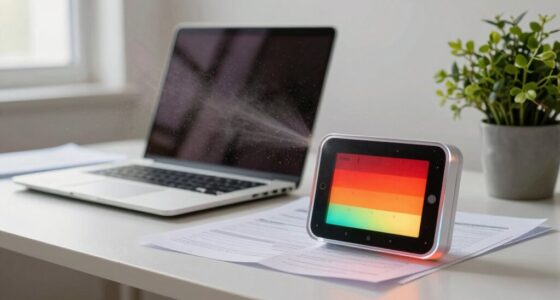
To build a quieter work zone, start by identifying and reducing loud noise sources, such as machinery or busy areas. Use sound-absorbing materials like foam panels or mineral wool to dampen echo and background noise. Incorporate sound masking systems and create designated quiet zones. Establish policies to limit loud activities during peak times and encourage personal measures like earplugs or noise-canceling headphones. Keep monitoring noise levels and adjustable solutions in place to maintain a calm, focused environment—there’s more to the approach if you stay tuned.
Key Takeaways
- Incorporate sound-absorbing materials like foam panels and mineral wool to dampen noise and reduce reverberation.
- Design workspace layouts that separate noisy equipment and high-traffic areas from quiet zones.
- Use noise-canceling headphones, earplugs, and establish quiet zones to help employees manage noise exposure.
- Regularly monitor noise levels with sound level meters, identify sources, and maintain equipment to prevent excess noise.
- Implement clear noise policies, schedule noisy tasks during off-peak hours, and promote a culture of noise awareness and reduction.
Understanding Noise Fatigue and Its Effects

While noise is often dismissed as a minor annoyance, prolonged exposure can lead to noise fatigue, a state of mental and physical exhaustion caused by constant or loud sounds. When you experience this, your body and mind become overwhelmed, reducing your ability to focus and increasing stress levels. You might feel irritable, tired, or even physically drained after just a few hours in a noisy environment. Noise fatigue doesn’t just affect your mood; it hampers productivity and can impair decision-making. Over time, it may contribute to health issues like headaches, increased blood pressure, and sleep disturbances. Recognizing these effects helps you understand why creating a quieter work zone isn’t just about comfort—it’s about safeguarding your well-being and ensuring ideal performance.
Identifying Common Noise Sources in Workplaces
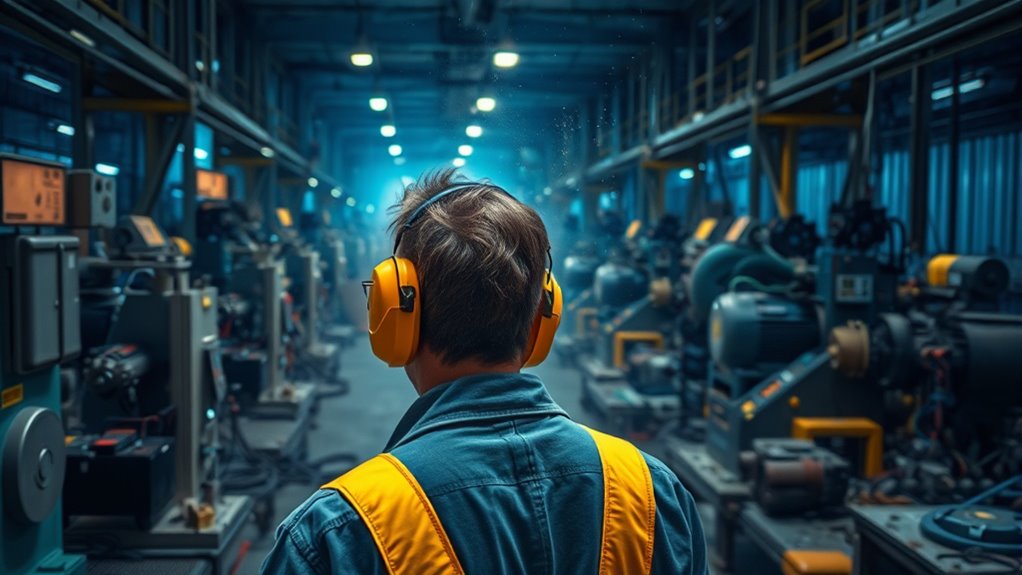
Understanding the common noise sources in workplaces is essential for creating a quieter environment. You should start by identifying loud machinery, tools, and equipment that produce consistent noise levels. Office environments often have background sounds from printers, phones, and conversations. Manufacturing floors may have conveyor belts, drills, and compressors contributing to noise. Human activities, like talking loudly or moving furniture, also add to the overall soundscape. Additionally, HVAC systems and ventilation units can generate constant background noise. Recognizing these sources helps you pinpoint problem areas and prioritize noise control efforts. Pay attention to times when noise levels spike, and note equipment or activities that seem particularly disruptive. By understanding where noise originates, you can develop targeted solutions to reduce overall fatigue and improve workplace comfort.
Designing an Acoustic-Friendly Workspace
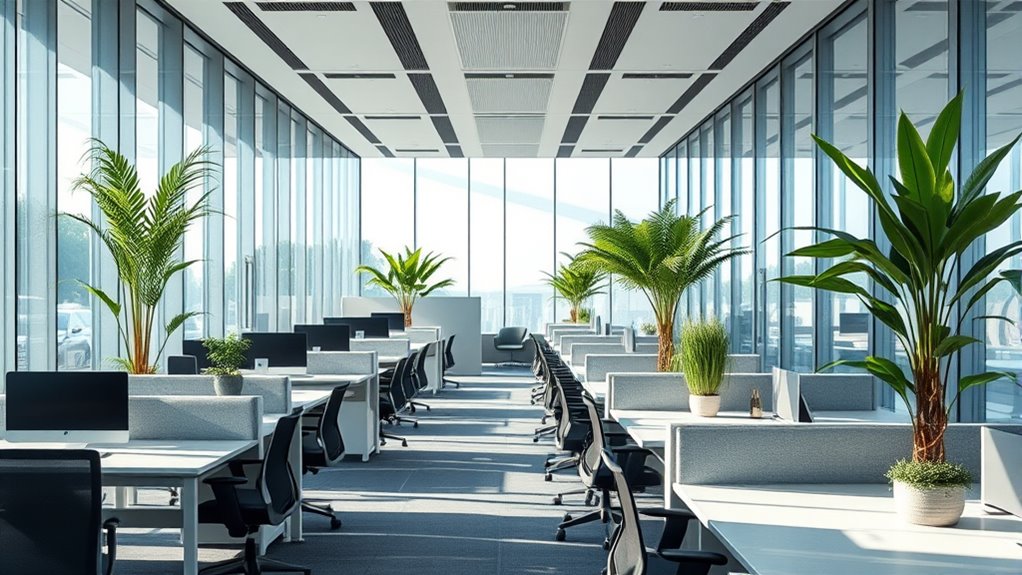
You can diminish noise levels by choosing sound absorption materials that dampen echoes and muffle background sounds. Optimizing your workspace’s layout ensures that noisy areas are separated from quiet zones, creating a balanced environment. By thoughtfully applying these design strategies, you make your work zone more comfortable and less fatiguing.
Sound Absorption Materials
Have you considered how sound absorption materials can transform your workspace into a quieter environment? These materials absorb sound waves, reducing echo and background noise. To create an effective acoustic setup, think about:
- Acoustic Panels: Hang these on walls to absorb sound reflections and minimize reverberation.
- Ceiling Tiles: Install sound-absorbing tiles overhead to dampen noise from above.
- Carpet or Rugs: Cover hard floors with plush carpets to absorb impact noise and footsteps.
- Soft Furnishings: Use upholstered chairs, fabric dividers, and wall hangings to further dampen sound transmission.
Spatial Layout Optimization
Designing an acoustic-friendly workspace begins with carefully planning the spatial layout to minimize noise transfer and enhance sound absorption. Position noisy equipment away from quiet zones, and create designated areas for collaboration that are separated by partitions or furniture barriers. Use open-plan spaces thoughtfully; incorporate zones with sound-absorbing panels or ceiling baffles to contain noise. Arrange workstations so that high-traffic areas don’t disrupt concentration, and consider the flow of movement to reduce sound collision points. Strategically place natural sound barriers like plants or storage units to block sound paths. By thoughtfully organizing the space, you limit noise spillover and create a calmer environment. This proactive approach markedly reduces noise fatigue, improving focus, productivity, and overall well-being.
Choosing the Right Sound Absorbing Materials
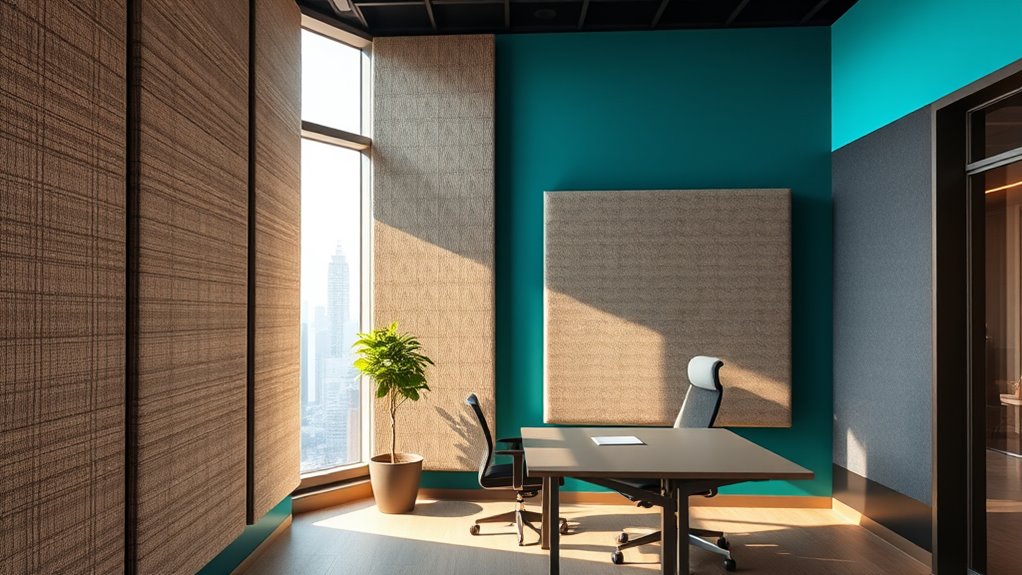
When choosing sound absorbing materials, you need to take into account their effectiveness and how durable they are over time. You also want options that fit your budget and are easy to install without causing delays. Making the right choice ensures your workspace stays quiet and functional long-term.
Material Effectiveness and Durability
Choosing the right sound-absorbing materials is essential for guaranteeing their effectiveness and longevity in a noisy work zone. You want materials that not only reduce sound but also withstand daily wear and tear. Consider these factors:
- Material Density: Denser materials, like mineral wool, absorb sound better and last longer.
- Resilience: Materials that resist moisture, mold, and damage maintain their sound-absorbing qualities over time.
- Fire Resistance: Fire-rated options protect safety and ensure compliance.
- Ease of Maintenance: Durable, easy-to-clean surfaces prevent deterioration and keep noise reduction top-notch.
Cost and Installation Ease
Selecting sound-absorbing materials that are affordable and easy to install can substantially streamline your efforts to create a quieter work zone. You want solutions that fit your budget and don’t require complex setup. Options like foam panels or fabric-wrapped insulation are budget-friendly and simple to mount. Consider the weight and size to ensure quick installation without special tools. Here’s a quick comparison:
| Material Type | Cost & Installation Ease |
|---|---|
| Acoustic Foam Panels | Low cost, lightweight, easy to attach with adhesive or clips |
| Mineral Wool Panels | Moderate price, straightforward mounting, durable |
| Fabric Panels | Slightly higher cost, simple to hang, customizable |
Choosing the right materials balances affordability with ease, helping you create an effective, budget-conscious soundproof zone.
Implementing Sound Masking Solutions
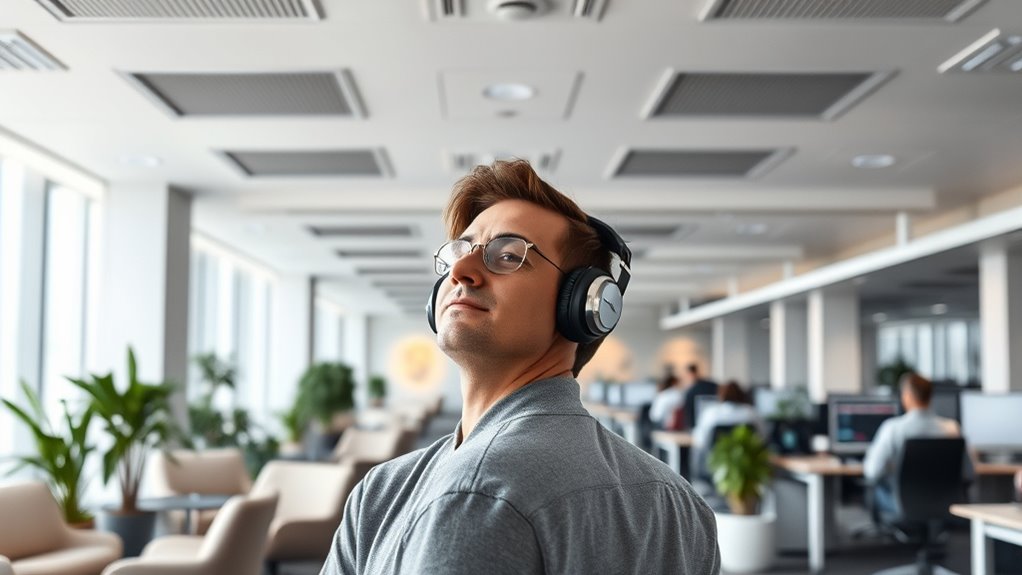
Implementing sound masking solutions can considerably reduce noise fatigue by seamlessly blending background sound into your workspace. This creates a more comfortable environment, helping employees focus and feel less overwhelmed. To get started, consider these steps:
- Assess your space to identify noise sources and suitable sound masking zones.
- Choose a sound masking system designed for your office size and acoustics.
- Install speakers strategically to ensure even sound distribution without creating hotspots.
- Regularly adjust volume levels based on employee feedback and changing noise levels.
Establishing Noise-Reducing Policies and Practices

To effectively reduce noise fatigue, establishing clear noise-reducing policies and practices is essential. You should set guidelines that limit loud activities during peak hours and encourage quiet zones for focused work. Implement policies that require employees to use headphones or mute unnecessary conversations in open spaces. Regularly communicate the importance of maintaining a quieter environment and enforce these rules consistently. Consider scheduling noisy tasks during less busy times to minimize disruption. Provide training to staff on noise awareness and best practices for maintaining a peaceful work zone. By creating a culture that values noise management, you help reduce stress and fatigue. Clear policies ensure everyone understands their role in maintaining a quieter, healthier workspace.
Encouraging Personal Noise Control Measures

While establishing noise policies sets the foundation for a quieter workspace, empowering you to take personal control over your noise environment can appreciably boost your comfort. Here are some ways to do that:
- Use noise-canceling headphones during noisy tasks to block distractions.
- Set personal volume limits on your devices to prevent excessive noise.
- Create designated quiet zones for focused work and communicate their location.
- Wear earplugs when noise levels become overwhelming, especially during busy periods.
Taking these steps helps you manage your immediate environment, reducing fatigue and improving productivity. Personal noise control measures complement workplace policies and ensure you can tailor your workspace to suit your needs. This proactive approach makes a noticeable difference in your daily comfort and focus.
Monitoring and Maintaining a Quieter Environment
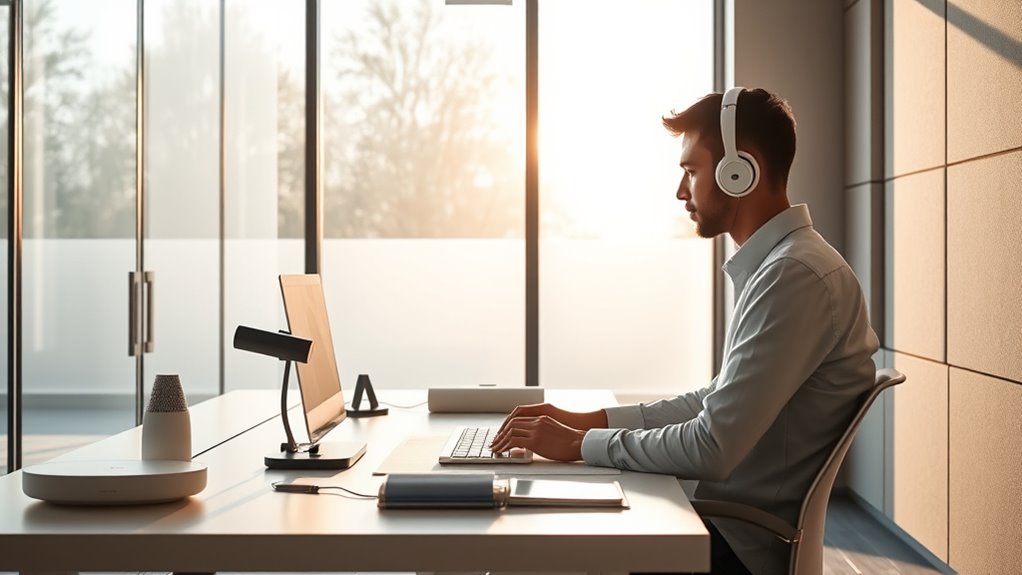
Regularly monitoring your work environment helps identify noise sources before they become disruptive. Use sound level meters or apps to measure noise levels throughout the day, noting peak times and areas. Keep a log of excessive noise incidents and analyze patterns to pinpoint recurring issues. Once identified, maintain quieter conditions by addressing these sources—whether it’s replacing noisy equipment, adding sound-absorbing materials, or rearranging workspaces. Regular maintenance is key; ensure machinery is well-maintained to prevent unnecessary noise. Educate staff about noise policies and encourage them to report disturbances promptly. By actively tracking and managing noise levels, you create a safer, more comfortable environment, reducing fatigue and boosting productivity. Consistent monitoring ensures your work zone stays as quiet and efficient as possible.
Frequently Asked Questions
How Do Noise Levels Affect Employee Productivity and Mental Health?
High noise levels can profoundly decrease your productivity and harm your mental health. When noise is overwhelming, you’re more likely to become distracted, fatigued, and stressed, which reduces focus and efficiency. Over time, constant noise exposure can lead to anxiety, irritability, and burnout. To stay productive and maintain mental well-being, it’s essential to create a quieter work environment, use noise-canceling tools, and take regular breaks in peaceful settings.
What Are the Latest Innovations in Soundproofing Technology?
You’ll find that the latest soundproofing innovations include advanced acoustic panels made from eco-friendly materials, which absorb noise more effectively. Active noise control systems now use AI to detect and cancel unwanted sounds in real-time. Additionally, innovative window glazing with triple or quadruple layers reduces outside noise considerably. These technologies help you create a quieter, more focused work environment, boosting productivity and mental well-being.
How Can Managers Effectively Enforce Noise Reduction Policies?
Think of noise reduction policies like a garden; you must tend to them regularly. You can start by setting clear expectations, providing ongoing training, and using signage as reminders. Conduct regular audits and involve employees in feedback to foster ownership. For example, one manager implemented a quiet zone policy, resulting in a 30% drop in noise complaints within a month. Consistent enforcement and communication keep the policies effective and respected.
Are There Specific Regulations or Standards for Workplace Noise Levels?
Yes, there are specific regulations and standards for workplace noise levels. You should follow OSHA guidelines, which typically set the permissible exposure limit at 85 decibels over an 8-hour shift. Additionally, OSHA requires employers to implement hearing conservation programs if noise levels surpass this limit. Check your local regulations too, as they may have stricter standards. Regular noise assessments help guarantee compliance and protect your team’s health.
How Do Individual Differences Influence Noise Fatigue Experiences?
Think of your mind as a sponge soaking up noise; your personal sensitivity determines how quickly it becomes saturated. If you’re more sensitive, loud environments drain your energy faster, making noise fatigue feel like a heavy weight. Conversely, if you’re less sensitive, you might tolerate noise longer but still risk exhaustion. Recognizing your unique response helps you implement strategies like quiet breaks or noise-canceling gear to protect yourself.
Conclusion
Creating a quieter workspace is like planting seeds of calm in a noisy world. When you reduce noise fatigue, you’re nurturing clarity, focus, and well-being—allowing harmony to grow where chaos once reigned. Each effort to silence the clatter becomes a gentle hand tending to your environment’s soul. Embrace these changes, and watch as tranquility blooms, turning your workspace into a sanctuary where productivity and peace flourish side by side.