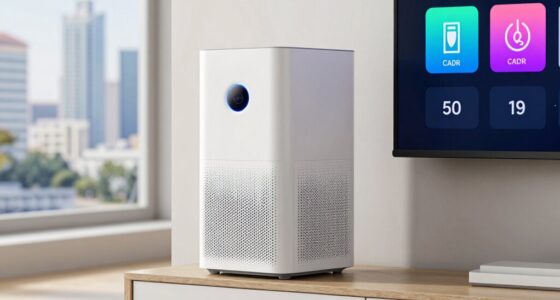
If you’re considering noise management for shared spaces, white noise machines offer quick, flexible sound masking to drown out distractions and interruptions. Room treatments, on the other hand, are permanent solutions that absorb and diffuse sound for better acoustics and privacy. While white noise is portable and adjustable, treatments improve natural sound quality long-term. Combining both approaches can give you effective, customized noise control. Keep exploring to discover which solution best fits your needs and space.

Get comfort and recovery gear delivered free — and shop member deals
- Fast, free delivery on millions of items
- Access to Prime Big Deal Days deals on October 6–7
- Prime Video, Amazon Music and more included
Key Takeaways
- White noise machines provide immediate, adjustable sound masking for privacy, while room treatments offer permanent sound absorption and diffusion.
- Treatments reduce echo and sound transmission at the source, improving overall acoustic quality, unlike white noise which masks sounds temporarily.
- White noise is portable and cost-effective for quick adjustments; treatments involve permanent installation and higher upfront costs.
- Combining both methods can mask intrusive noises while enhancing room acoustics for a more natural sound environment.
- Choice depends on space needs, budget, and long-term goals, with treatments offering sustainable improvements and white noise providing flexible solutions.

When it comes to managing sound in shared spaces, choosing between white noise machines and room treatments can considerably impact comfort and productivity. Both options aim to improve acoustic privacy and reduce distractions, but they do so in different ways. Understanding how each approach works helps you make an informed decision based on your space’s needs. White noise machines generate consistent, ambient sounds that mask distracting noises, creating a uniform sound environment. This constant background sound can help you focus by minimizing sudden noises that might interrupt your workflow or conversations. It’s especially effective in open offices or communal areas where conversations, phones, and movement create a constant barrage of sound. By providing a steady sound absorption, white noise machines act as a buffer, making it easier for you to concentrate and maintain privacy during calls or meetings.
On the other hand, room treatments involve physical modifications to your space, such as installing acoustic panels, ceiling tiles, or diffusers. These treatments aim to directly absorb and diffuse sound waves, reducing echo and overall noise levels. When properly implemented, they significantly improve acoustic privacy by preventing sound from bouncing around and transmitting between different areas. This approach not only enhances sound absorption but also improves the overall sound quality within a room, making conversations clearer and reducing background noise. Unlike white noise machines, room treatments target the root cause of sound issues by controlling how sound travels and is absorbed in the environment. As a result, they often provide a more natural and comfortable acoustic environment, especially in spaces with high ceilings or hard surfaces that reflect sound. Additionally, sound absorption through room treatments can be a more sustainable and aesthetically pleasing option over time. Incorporating acoustic design principles can further optimize the effectiveness of these treatments. Properly planned acoustic environments can also contribute to long-term comfort, making the space more welcoming and functional. Furthermore, effective room treatment can help reduce the need for constant sound masking, creating a more serene environment overall.
While white noise machines are portable and easy to set up, they are more of a temporary fix that masks rather than eliminates noise. Room treatments, though more permanent and potentially costly, offer a tailored solution that improves the room’s inherent acoustic properties. If your goal is to achieve acoustic privacy and optimal sound absorption without relying on external devices, investing in room treatments can be a worthwhile choice. However, if you need a quick, flexible solution that can be easily adjusted or moved, white noise machines are practical. Ultimately, the best approach depends on your space’s specific needs, budget, and desired level of sound control. Combining both strategies can also offer a comprehensive solution, masking intrusive sounds while directly improving the room’s sound environment.
As an affiliate, we earn on qualifying purchases.
Frequently Asked Questions
How Do I Choose Between White Noise and Room Treatment?
You should choose based on your needs for sound masking or acoustic control. If you want to mask background noise and create privacy, white noise is effective. For reducing echo and improving sound quality, room treatments like acoustic panels are better. Consider the space’s acoustics and your goals—white noise offers a quick fix, while room treatments provide a more permanent solution for sound quality.
Can White Noise Improve Concentration in Shared Workspaces?
They say, “A clear sound makes a clear mind,” and white noise can indeed improve concentration in shared workspaces. It acts as sound masking, reducing distracting noises, and pairs well with acoustic barriers to create a calmer environment. By softening background sounds, white noise helps you focus better, especially in noisy settings. Just remember, everyone’s different, so give it a try to see if it boosts your productivity.
Are There Any Health Risks Associated With White Noise?
White noise is generally safe for most people, but prolonged noise exposure can raise health concerns like hearing loss or stress. If you’re exposed to high volumes or continuous noise, it may impact your well-being. To minimize risks, keep the volume at a comfortable level and take regular breaks. If you experience headaches or discomfort, consider reducing noise exposure or consulting a health professional.
How Much Does Room Treatment Typically Cost?
Room treatment costs vary widely, typically ranging from a few hundred to several thousand dollars, depending on the size of the space and the complexity of the setup. In a cost comparison, basic treatments like foam panels are affordable and easy to install, while custom solutions or professional installation can increase costs. Consider installation considerations, such as space layout and material choices, to guarantee effective sound management without overspending.
What Materials Are Best for Effective Room Treatment?
For effective room treatment, you want materials that excel in sound absorption, like acoustic panels. These panels absorb unwanted sound waves, reducing echo and noise. You can also consider bass traps for low frequencies and diffusers to scatter sound evenly. Choose high-density foam or fabric-covered panels for better absorption. Proper placement of these materials guarantees ideal noise control, making your shared space more comfortable and acoustically balanced.
acoustic panels for room treatment
As an affiliate, we earn on qualifying purchases.
As an affiliate, we earn on qualifying purchases.
Conclusion
Imagine stepping into a shared space where the gentle hum of white noise softly blankets every corner, or where carefully crafted room treatments create a calm oasis amid the chaos. Both options have their charm—white noise offers a constant, soothing background, while room treatments sculpt a peaceful sanctuary. Consider your needs like choosing between a cozy blanket or a quiet forest; either way, your shared space becomes a refuge where noise no longer intrudes but simply fades into the background.
As an affiliate, we earn on qualifying purchases.
As an affiliate, we earn on qualifying purchases.
Fall Picks
fall essentials
As an affiliate, we earn on qualifying purchases.