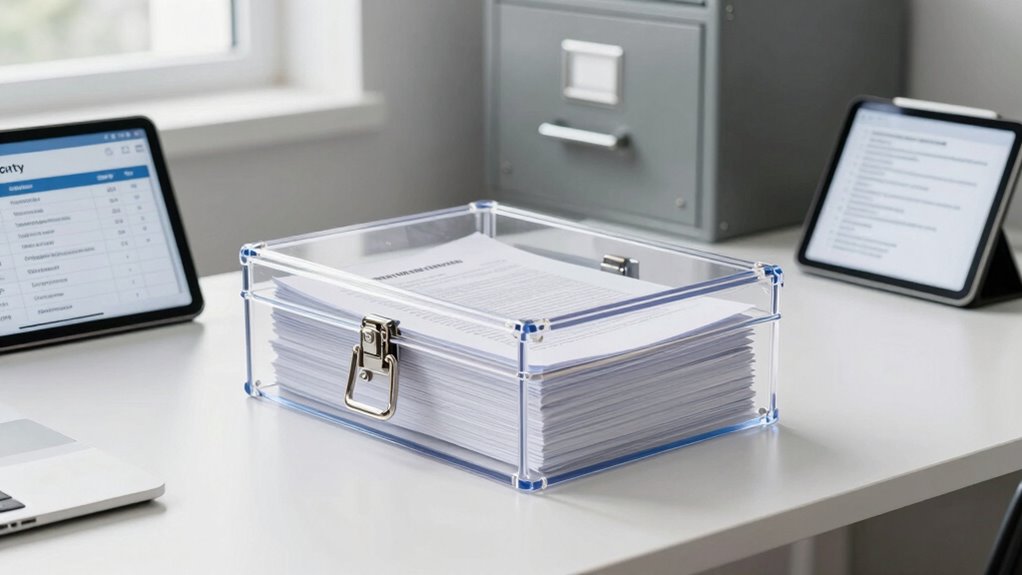

You should prioritize physical security for sensitive office documents like financial reports, legal contracts, proprietary research, and personnel files. These materials contain private data and legal or reputational risks if leaked or stolen. Use locked cabinets, limited access, and secure storage areas to protect them. Proper handling and transport are also essential. To learn how to implement these security measures effectively, keep exploring the best practices for safeguarding your important documents.
Listen free for 30 days with Audible
Thousands of audiobooks and originals — cancel anytime.
As an affiliate, we earn on qualifying purchases.
Key Takeaways
- Financial reports with sensitive financial data requiring confidentiality and regulatory compliance.
- Legal contracts with binding legal obligations and potential litigation risks.
- Proprietary research and intellectual property critical to maintaining competitive advantage.
- Personnel files containing private employee information protected by privacy laws.
- Documents with reputational or legal impact if leaked, such as strategic plans or client data.
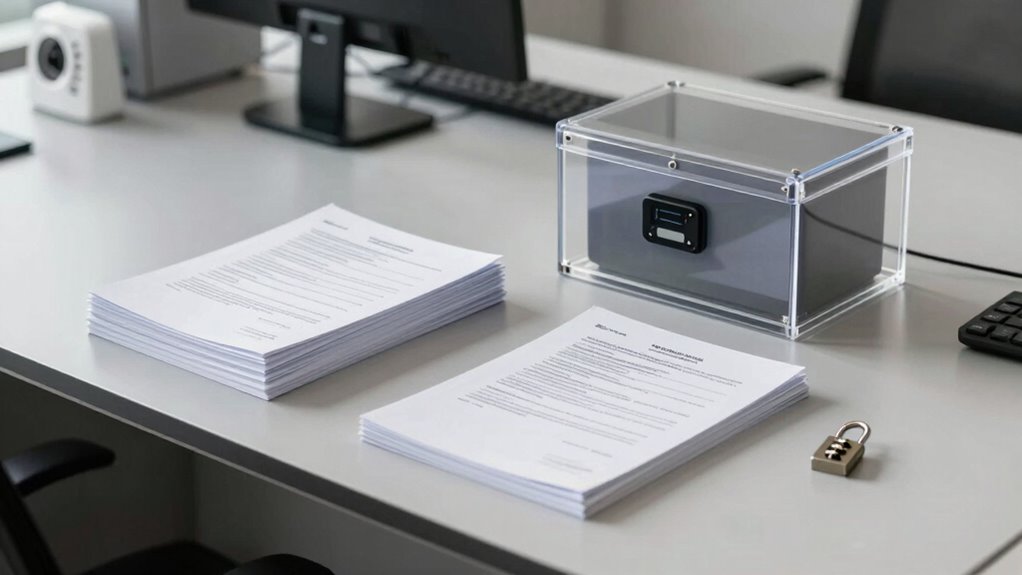
Have you ever wondered how secure your office documents really are? In today’s digital landscape, many assume that electronic files are protected by passwords or encryption, but physical security remains just as essential. Certain documents, especially those containing sensitive information, demand better physical security measures to prevent unauthorized access. When considering which office documents deserve this level of protection, start by evaluating their content’s confidentiality and potential impact if compromised. Financial reports, legal contracts, proprietary research, and personnel files often contain private details that could damage your company’s reputation or violate privacy laws if leaked. These documents, stored physically or digitally, should be safeguarded with robust access control measures, such as locked cabinets or restricted digital permissions, coupled with digital encryption to prevent unauthorized viewing.
Digital encryption plays a critical role in protecting sensitive electronic documents, ensuring that even if someone gains access, the information remains unreadable without the decryption key. However, physical copies lack this layer of security unless you implement strict physical controls. For physical documents, access control becomes paramount. You need to limit who can handle or view these files, using locked drawers, safes, or secure rooms with restricted entry. It’s essential to track who accesses these documents and when, creating a chain of custody that deters internal theft or accidental exposure. High-value or confidential documents should be stored in safes or secure areas, with access granted only to authorized personnel. Additionally, regularly auditing access logs helps identify any suspicious activity, reinforcing your security measures.
Beyond storage, consider how documents are transported or shared within your office. Distributing sensitive information on unsecured mediums or leaving physical copies unattended can expose them to theft or loss. Establish clear protocols for handling and transferring sensitive materials, such as using secure courier services or encrypted digital channels when possible. Training employees on the importance of physical security and access controls also plays a critical role in maintaining confidentiality. You want your team to understand that security isn’t just about digital safeguards but also about physical precautions. Recognizing the importance of physical document security helps organizations protect valuable information from both internal and external threats. Ensuring proper security protocols are in place can significantly reduce the risk of unauthorized access and potential data breaches. Additionally, implementing physical security measures tailored to your office environment can further enhance overall protection.
As an affiliate, we earn on qualifying purchases.
Frequently Asked Questions
How Often Should Physical Document Security Protocols Be Reviewed?
You should review your physical document security protocols at least annually, or more often if there are significant changes in your organization. During these reviews, confirm digital encryption and access controls are up-to-date to protect sensitive information. Regularly evaluating these protocols helps you identify vulnerabilities and adapt to new security threats, maintaining the confidentiality and integrity of your documents effectively.
What Are the Best Practices for Securely Shredding Sensitive Documents?
Think of document disposal like sealing a time capsule—once shredded, those sensitive papers can’t be pieced back together. To securely shred documents, follow shredding standards that specify cross-cut or micro-cut methods for maximum security. Always use reputable shredding equipment, and guarantee disposal is thorough. Regularly review and update shredding protocols, just like you’d double-check the contents before sealing a time capsule for future safety.
Are There Specific Office Environments With Higher Security Risks?
Yes, certain office environments face higher security risks, especially those handling sensitive data like financial, healthcare, or legal information. In these settings, a data breach can expose confidential information, leading to legal consequences and reputational damage. You should implement stricter physical security measures, such as restricted access and secure storage, to protect essential documents and prevent unauthorized personnel from compromising confidential information.
How Can Employee Training Improve Document Security?
Think of employee training as your secret weapon—like a trusty sword in medieval times. It boosts employee awareness, helping them recognize potential security breaches. You can improve document security by regularly updating staff on security protocols, emphasizing the importance of physical safeguards, and conducting simulated drills. When employees understand their role, they become the first line of defense, keeping sensitive documents safe from theft or damage.
What Legal Consequences Arise From Document Security Breaches?
If you experience a document security breach, legal liabilities can arise, including fines and lawsuits. You might face sanctions for failing to protect sensitive information, especially if confidential breaches expose client or employee data. These legal consequences can damage your reputation and lead to costly settlements. To avoid this, guarantee proper physical security measures are in place, and train employees on confidentiality protocols to minimize the risk of breaches.
locked filing cabinets for documents
As an affiliate, we earn on qualifying purchases.
As an affiliate, we earn on qualifying purchases.
Conclusion
Think of your office documents as treasures locked away in a vault—you wouldn’t leave them unguarded. Prioritize securing sensitive files like financial records, legal documents, and employee data. By doing so, you’re not just protecting paper and pixels; you’re safeguarding your company’s reputation and trust. Remember, a single breach can be the crack that shatters your entire fortress. Keep your defenses strong—because some documents are worth more than gold.
As an affiliate, we earn on qualifying purchases.
As an affiliate, we earn on qualifying purchases.
Flea & tick season Picks
flea and tick prevention
As an affiliate, we earn on qualifying purchases.