TL;DR

Get comfort and recovery gear delivered free — and shop member deals
- Fast, free delivery on millions of items
- Access to Prime Big Deal Days deals on October 6–7
- Prime Video, Amazon Music and more included
Fit&Well published a personal trainer’s four-move dumbbell circuit intended to work the upper body, lower body and core in about 15 minutes. The routine calls for three sets of 12 repetitions per exercise, but the article says beginners may need longer and should rest as needed.
Fit&Well has published a personal trainer’s four-exercise dumbbell circuit intended to build full-body strength in about 15 minutes, offering a short workout option for people balancing exercise with work and family commitments. The routine combines squats, hinges, lunges and floor presses, with the trainer advising readers to prioritize sound form and take rests as needed.
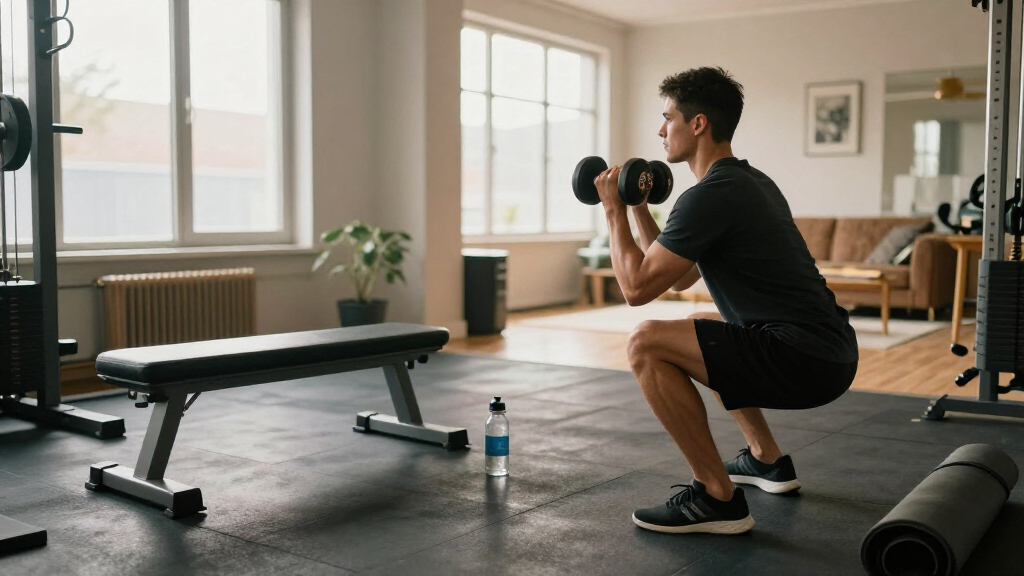
The circuit pairs lower- and upper-body movements in each exercise: a dumbbell squat to press, a deadlift to row, a lateral lunge to biceps curl, and a glute bridge to chest press. The article specifies three sets of 12 repetitions for each movement. After completing the exercises, readers repeat the routine from the beginning.
The Fit&Well report says the session may run longer than 15 minutes for people who have only recently started exercising regularly. It recommends moving at a comfortable pace and resting when needed. The trainer’s guidance is to shorten rest periods or move more quickly as strength and endurance develop, while not sacrificing form for speed.
The instructions include movement-specific form cues. For the squat to press, readers are told to keep the spine from rounding and avoid leaning forward, using lighter dumbbells if needed. For the deadlift to row, the article advises maintaining a neutral spine and avoiding shrugged shoulders; beginners can first practice the deadlift without weights. The lateral lunge instructions emphasize controlled hip movement and keeping the elbows close during curls. In the bridge and press, the trainer advises engaging the glutes and avoiding excessive arching of the lower back.
A Short Option for Busy Schedules
The routine addresses a practical barrier to exercise identified in the report: clients may have work and family commitments that make longer workouts difficult to fit in. Its format also combines several movement patterns, so a short session can involve the legs, chest, back, shoulders, arms and core rather than focusing on one area alone. That is the intended value of the trainer’s recommendation, rather than a guarantee of a particular result.
The 15-minute estimate depends on pace, rest and experience. The article explicitly allows extra time for people new to regular exercise, making the circuit adaptable in duration while keeping its stated structure. Readers should treat the clock as an estimate and use a pace that lets them control the weights and complete each movement comfortably.
That distinction matters for anyone trying to follow a timed workout: moving faster is not presented as the main measure of success. Fit&Well’s report says technique should take priority, and that pain beyond ordinary muscle fatigue is a reason to stop. The guidance makes the routine more useful as a template than as a timed challenge that every reader must complete within 15 minutes.
How the Four Moves Fit Together
The trainer’s selection alternates between standing exercises and a floor-based press. The squat to press combines a squat with an overhead lift; the deadlift to row links a hip hinge with an upper-back pull. The lateral lunge to curl adds side-to-side leg movement and an arm curl, while the glute bridge to chest press pairs hip extension with a press from the floor. Together, these moves are presented as a circuit targeting multiple areas in one session.
The article describes the recommendation in the setting of days when a workout seems difficult to schedule. It does not provide a separate training plan, a progression schedule, or details about the trainer’s identity in the material supplied here. Its practical directions focus on the four exercises, repetition count, pacing, and technique.
Equipment needs are limited to a pair of dumbbells and a mat for the floor exercises. The report does not prescribe a particular dumbbell weight. Its advice to reduce the load if posture falters points readers toward choosing weights they can control, with a no-weight deadlift practice suggested for beginners learning that movement.
The 15-Minute Estimate Varies
The report does not state the trainer’s name or provide a publication date in the supplied text. It also does not identify the intended dumbbell weight, define how long readers should rest, or explain whether the 12 repetitions for each exercise are counted per side or in total in every movement. The lateral lunge instructions describe alternating sides within a repetition, but the supplied material does not clarify how the set count should be applied to each side.
The article presents the workout as a trainer’s recommendation; the supplied material does not include research testing this specific circuit or evidence that completing it in 15 minutes produces a defined strength outcome. Actual duration and difficulty will vary with a reader’s experience, load, pace and rest breaks.
Adjust Pace to Your Ability
Readers who try the circuit can begin with a manageable dumbbell weight and take the time needed to learn each movement. The report recommends practicing the deadlift without weights if a reader is new to it, and lowering the hips between repetitions during the glute bridge if that makes the movement more manageable. It also advises stopping if pain exceeds muscle fatigue and checking with a doctor.
As strength and endurance improve, the trainer suggests reducing rest periods or increasing tempo, provided technique remains controlled. The source does not announce a follow-up workout or a further milestone; the next step described is for readers to apply the routine at a pace appropriate to their current ability.
Key Questions
Which exercises are in the circuit?
The four exercises are the dumbbell squat to press, deadlift to row, lateral lunge to curl, and glute bridge to chest press.
How many repetitions and sets does the report prescribe?
Fit&Well’s report lists three sets of 12 repetitions for each exercise, with the full routine repeated from the beginning after all four movements.
Does every reader need to finish in 15 minutes?
No. The report says beginners may take longer and recommends moving at a comfortable pace and resting as needed. The 15-minute description is an estimate for the workout.
What should someone do if an exercise causes pain?
The trainer says the movements may feel challenging but should not cause sharp pain. The report advises stopping if pain goes beyond muscle fatigue and checking with a doctor.
Source: rss
Fall Picks
fall essentials
As an affiliate, we earn on qualifying purchases.