Even at home, securing your desk is essential to protect sensitive information and valuables from unauthorized access or theft. Using physical locks on drawers, keeping important papers out of sight, and setting access controls prevent casual intruders or family members from gaining unwanted entry. Digital security, like strong passwords and regular updates, further safeguards your data. These simple steps make a big difference in keeping your workspace safe; exploring more ways can help you stay protected.
Key Takeaways
- Protects sensitive personal and financial information from accidental or unauthorized access.
- Prevents theft or misuse of valuable devices and documents.
- Ensures family members or visitors cannot access confidential materials.
- Complements digital security measures to provide comprehensive protection.
- Maintains organized workspaces, reducing risks of data breaches and physical theft.
Ever wondered how to keep your home workspace protected? It’s a question many overlook, but securing your desk is essential, especially when handling sensitive information or valuable items. Basic desk security isn’t just about locking drawers or hiding documents; it involves a combination of strategies like password protection and physical locks to safeguard your workspace effectively. Even in a home environment, where you might feel more relaxed, the risk of unauthorized access remains. Someone could stumble upon confidential files, or a curious family member might accidentally reveal sensitive information. That’s why implementing simple yet effective security measures can make a big difference.
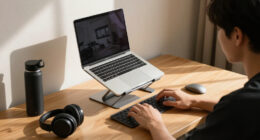
Securing your home workspace is vital to protect sensitive information and valuable items from unauthorized access.
The first step is making sure you use strong, unique passwords for all your digital accounts. Password protection isn’t just about keeping hackers out; it’s about creating a barrier that makes unauthorized access difficult. Use complex combinations of letters, numbers, and symbols, and avoid common phrases or predictable patterns. Regularly updating your passwords adds an extra layer of security. For added safety, consider using password managers that securely store your login information, so you don’t have to remember each one. This way, even if someone gains physical access to your workspace, they won’t be able to access your digital information without the correct passwords.
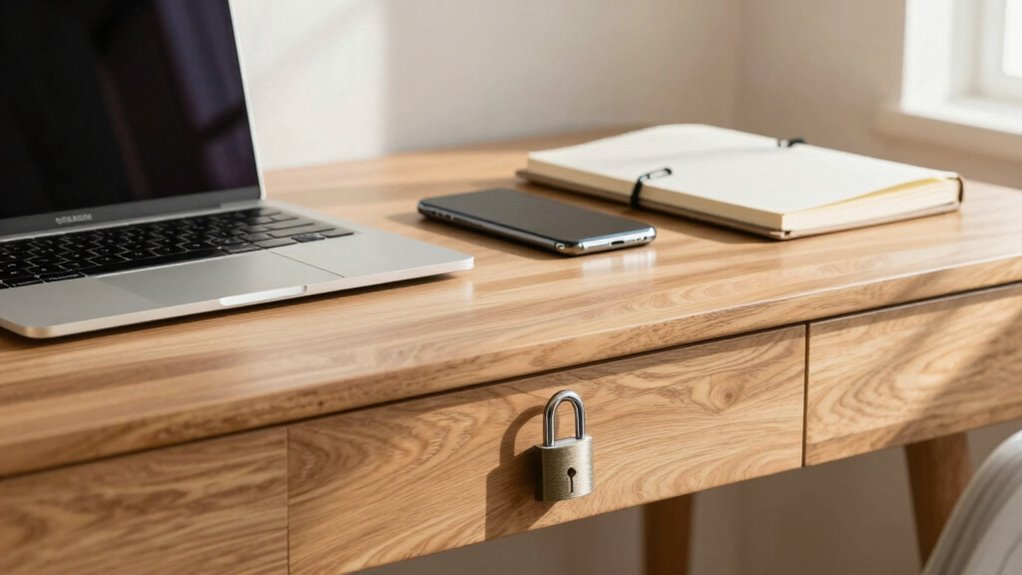
Physical locks are equally significant in maintaining security at your home desk. Lockable drawers or cabinets provide a straightforward way to protect important documents, devices, or personal items. When you step away from your workspace, locking these storage units prevents accidental or intentional access by others. If you work with particularly sensitive data or valuable gadgets, investing in lockable filing cabinets or safes can give you peace of mind. Even simple padlocks on drawers can act as a deterrent against casual intruders. Remember, physical security complements your digital safeguards—together, they create a more complete protection system. Incorporating biodiversity principles into your workspace organization, such as choosing eco-friendly storage solutions, can also promote sustainable living practices. Additionally, considering dust-proofing solutions can help keep your workspace cleaner and extend the lifespan of your equipment.
Keeping your workspace organized and limiting access to only trusted individuals also plays an essential role. Don’t leave confidential papers lying around or share your passwords casually. Regularly reviewing who has access to your workspace and securing entry points prevents unauthorized viewing or theft. Establishing clear access controls and understanding cybersecurity fundamentals can further strengthen your security posture. Employing physical security measures like security cameras or alarms can also act as a visual deterrent to potential intruders. Maintaining a routine of locking up valuables and updating passwords ensures that your home workspace remains a protected environment. Basic desk security isn’t complicated, but it’s necessary for protecting your personal and professional information. Taking these simple steps now can save you from headaches later, giving you confidence that your home office is a safe and secure space.

Under Desk Drawer Slide-Out – Lockable Metal Storage Drawer with Cable Management for Office & Home (Single, Non-Bracketed)
- Premium Carbon Steel Construction: Durable matte black finish
- Built-in Cable Management: Cable holes and clips included
- Multiple Mounting Options: Bracket and non-bracket versions available
As an affiliate, we earn on qualifying purchases.
As an affiliate, we earn on qualifying purchases.
Frequently Asked Questions
How Often Should I Update My Desk Security Measures?
You should update your desk security measures at least quarterly or whenever you notice new threats. Regular access control reviews ensure only authorized people can access sensitive data, while security audits help identify vulnerabilities. Keep your software and passwords current, and regularly reassess your security practices. Staying proactive prevents breaches, maintains data integrity, and guarantees your home workspace remains secure against evolving threats.
What Are the Best Tools for Securing Sensitive Documents?
You’ve got to play it safe when securing sensitive documents. Use tools like document encryption to protect files from prying eyes and opt for secure storage solutions like locked drawers or safes. Combining these methods guarantees your information stays confidential. Don’t put all your eggs in one basket—spread out your security measures for maximum protection. With the right tools, you can keep your sensitive documents under lock and key.
Can Physical Security Prevent Digital Data Theft?
Yes, physical security can prevent digital data theft by adding physical barriers and implementing access control measures. You can lock cabinets or rooms where sensitive devices or data are stored, ensuring only authorized individuals can access them. This reduces the risk of theft or tampering. Combining physical barriers with access control helps protect your digital information, making it harder for intruders to compromise your data even if they breach other security layers.
How Do I Secure My Home Wi-Fi for Desk Work?
Securing your home Wi-Fi is like locking your front door—essential for safety. You should enable wireless encryption, such as WPA3, to prevent unauthorized access. Use strong, unique passwords and update them regularly through good password management habits. Additionally, change default router credentials and keep firmware updated. These steps help protect your desk work from cyber threats, ensuring your sensitive data stays private and secure at all times.
What Are Common Security Mistakes at Home Desks?
You often make security mistakes at your home desk by neglecting password hygiene and secure storage. You might reuse passwords across accounts or choose weak ones, making it easy for hackers to access your data. Additionally, failing to securely store sensitive information or passwords increases your vulnerability. To improve, create strong, unique passwords and store them securely using a password manager. Regularly updating your credentials is also essential to keep your home workspace safe.

Amazon Basics Steel Home Security Safe Box with Electronic Keypad Lock for Documents, Jewelry, Valuables, 1.8 Cubic Feet, Black, 13.8"W x 13"D x 19.7"H
- Capacity: 1.8 cubic feet for valuables
- Secure Access: Electronic keypad with backup key
- Battery Powered: Requires AA batteries (not included)
As an affiliate, we earn on qualifying purchases.
As an affiliate, we earn on qualifying purchases.
Conclusion
Even at home, practicing basic desk security protects your personal information and devices. Did you know that 60% of data breaches originate from small businesses and individual users? By locking your screens, using strong passwords, and being cautious with sensitive data, you’re considerably reducing your risk. Remember, simple habits make a big difference. Stay vigilant, keep your information safe, and enjoy peace of mind knowing that your home workspace is secure.

NordPass Premium, Unlimited Devices, 2-Year, Password Manager, Digital Code
- Autofill Login Credentials: Automatically save and fill login info
- Password Health Check: Identify weak or reused passwords
- Emergency Access: Trusted contacts can request vault access
As an affiliate, we earn on qualifying purchases.
As an affiliate, we earn on qualifying purchases.
As an affiliate, we earn on qualifying purchases.