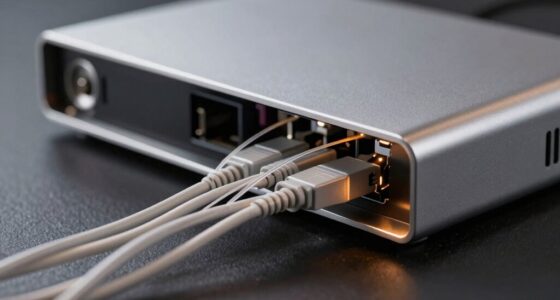
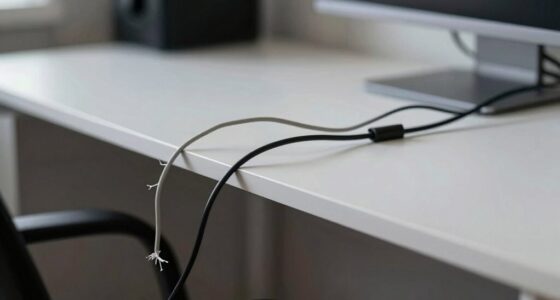
The most regretted power strip position is behind furniture or in corners, where access is difficult. When placed in hard-to-reach spots, you’ll struggle to plug and unplug devices, risking neglect and safety issues. Over time, this leads to safety hazards, overheating, and reduced surge protection. Poor placement also increases trip hazards and complicates emergency unplugging. If you keep these points in mind, you’ll avoid common pitfalls and guarantee safer, more convenient power management. Keep exploring for more helpful tips.
Key Takeaways
- Placing power strips behind furniture or in hard-to-reach areas makes daily use and emergency unplugging inconvenient.
- Positioning near heat sources or moisture reduces surge protection effectiveness and shortens device lifespan.
- Using power strips in cluttered or enclosed spots hampers ventilation, increasing overheating risk.
- Overloading outlets due to inaccessible placement can cause safety hazards and fire risks.
- Ignoring ease of access leads to neglect, resulting in failed devices and compromised safety over time.

Have you ever thought about where to position your power strip and later wished you’d chosen differently? It’s a common mistake many make, and the consequences can be frustrating. The most regretful placement tends to be when you set up your power strip in a spot that’s either hard to access or doesn’t provide ideal surge protection. You might initially think a corner or behind furniture is convenient, but over time, that decision often leads to inconvenience and even safety hazards.
When you place your power strip in a hard-to-reach location, outlet accessibility becomes a major issue. You could find yourself constantly crawling under desks, shifting furniture, or stretching cords just to plug in or unplug devices. This inconvenience discourages regular use and can lead to unplugging essential devices in emergencies or during power surges. The goal should be to choose a spot where you can easily reach the power strip without hassle, ensuring that daily use and emergency access are both straightforward.
Surge protection is another critical consideration that’s often overlooked when positioning a power strip. Many assume all strips offer the same protection, but placement influences their effectiveness. If you set your power strip too close to heat sources, moisture, or clutter, it may become less reliable over time. Additionally, a power strip placed behind furniture or in a cluttered corner might not receive sufficient ventilation, which can cause overheating and reduce the surge protection’s lifespan. To maximize surge protection, position your strip in a well-ventilated, open area where it’s less likely to be exposed to environmental stressors. Proper power strip placement can significantly extend its lifespan and ensure optimal safety. Being aware of ventilation and environmental factors can help maintain the longevity of your surge protector. If you don’t consider these factors, it may lead to reduced safety and increased risk of damage or fire.
Furthermore, a poor placement can also impact safety. For instance, plugging a power strip into an outlet behind a heavy piece of furniture can mean cords stretch across walkways, creating tripping hazards. If the strip is in a cramped or inaccessible location, you might be tempted to overload it or bypass safety features, increasing the risk of electrical fires or damage. The ideal spot offers both accessibility and safety, with enough space to prevent cord strain and overheating.

ALESTOR 6 Ft Surge Protector Power Strip with 12 Outlets and 4 USB Ports
- Multi-Function Power Strip: 12 AC outlets and 4 USB ports
- Heavy Duty Extension Cord: 6-foot long power cord for flexibility
- High Surge Protection: 2700 Joules surge protection with overload safety
As an affiliate, we earn on qualifying purchases.
As an affiliate, we earn on qualifying purchases.
Frequently Asked Questions
How Do I Determine the Optimal Power Strip Placement?
To determine the most suitable power strip placement, you should prioritize cable management and surge protection. Position it near your devices for easy access, avoiding tangled cords. Place it on a stable surface or mount it securely to prevent accidents. Keep it away from moisture and heat sources. Ensuring good cable management reduces clutter, while choosing a power strip with surge protection safeguards your electronics from power surges, offering both convenience and safety.
Does Power Strip Position Affect Electrical Safety?
Is your power strip positioned safely? Yes, it affects electrical safety. Proper placement minimizes risks like overheating or accidental unplugging. Keep it on a stable, flat surface away from water and heat sources. Using surge protection can shield your devices from power surges that threaten damage. Avoid daisy-chaining multiple strips, which increases fire risk. When positioned correctly, your setup becomes safer, protecting both your devices and your home.
Can Improper Placement Cause Damage to Devices?
Improper placement of your power strip can definitely cause damage to your devices. If it’s positioned poorly, it might lead to loose connections or overloads, risking power surges that harm electronics. Using surge protection helps safeguard against voltage spikes, while good cable management prevents tangling and accidental disconnections. Make certain your power strip is placed on a stable, flat surface and away from heat sources to keep your devices safe and functioning properly.
What Are the Best Practices for Power Strip Organization?
You should organize your power strips with surge protection and keep wireless charging devices nearby, but don’t let your cables become a tangled jungle. Use cable clips or sleeves to keep things tidy, avoid overloading outlets, and make sure the strip is in a safe, accessible spot. Remember, a well-organized power strip setup prevents damage, keeps your devices safe, and makes your space look less like a disaster zone.
How Often Should I Reassess My Power Strip Setup?
You should reassess your power strip setup every few months to guarantee ideal cable management and surge protection. Regular check-ins help identify tangled cords, wear, or overload risks, preventing potential hazards. Reassessing allows you to reposition the power strip for easier access and better organization. By maintaining a routine, you ensure your setup stays safe, functional, and efficient, reducing the likelihood of electrical issues or damage to your devices.
As an affiliate, we earn on qualifying purchases.
Conclusion
Choosing the wrong power strip position might seem minor, but it can lead to inconvenience and safety issues later on. Did you know that over 30% of electrical fires are caused by improper power strip placement? By simply placing your strip in a well-ventilated, accessible spot, you can avoid trouble and keep your space safer. So, think ahead and position your power strip wisely—you’ll thank yourself down the line!
As an affiliate, we earn on qualifying purchases.
As an affiliate, we earn on qualifying purchases.