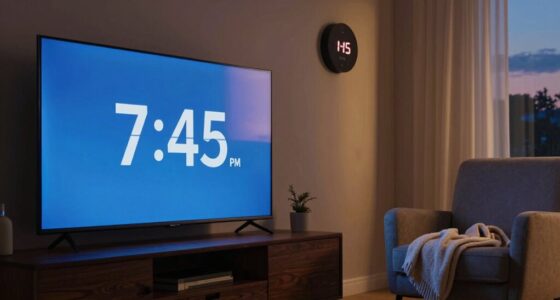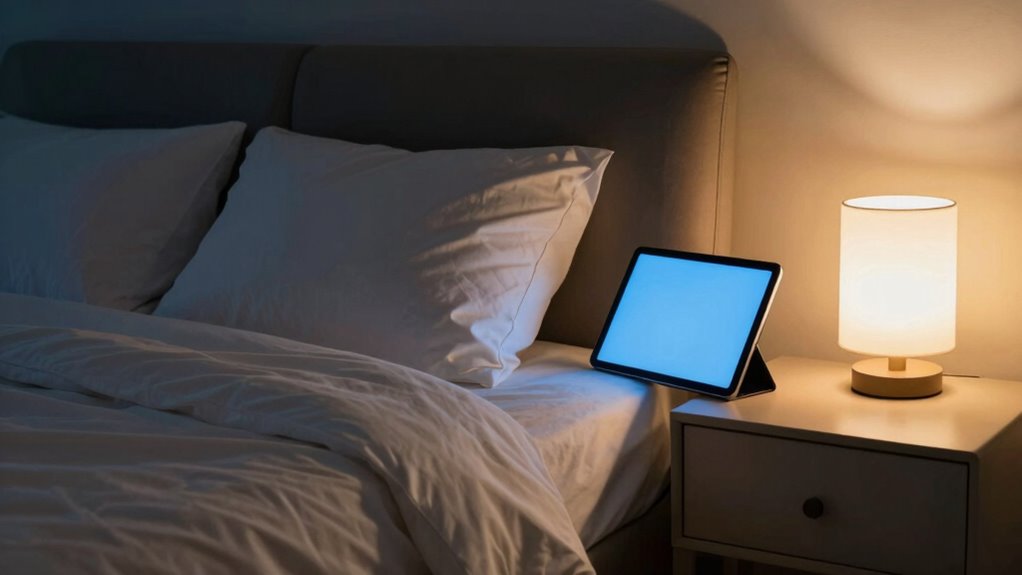
Blue light impacts sleep more than screen brightness because it suppresses melatonin, making it harder to fall asleep and disrupting your circadian rhythm. Brightness mainly affects how comfortable you feel when looking at your screen, but it doesn’t directly interfere with melatonin production. Reducing blue light exposure, especially in the evening, is key for better sleep. Stay with us to discover practical ways to manage both for improved rest.

Get comfort and recovery gear delivered free with Prime
- Fast, free delivery on millions of items
- Prime Video, Amazon Music and more included
- Member-only deals all year
Key Takeaways
- Blue light suppresses melatonin production, directly delaying sleep onset, while brightness alone has minimal impact on sleep hormones.
- High brightness can cause discomfort and eye strain but doesn’t significantly affect sleep quality without blue light.
- Blue light exposure in the evening disrupts circadian rhythms more than brightness adjustments do.
- Using blue light filters reduces melatonin suppression, whereas lowering brightness mainly improves visual comfort.
- Managing blue light exposure is more critical for sleep health than simply reducing screen brightness.
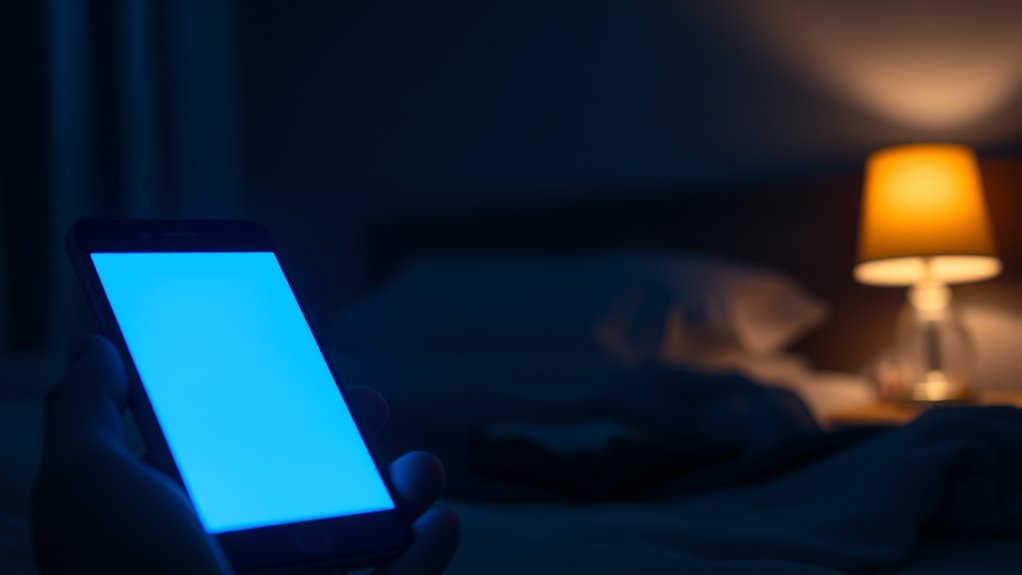
When choosing the right display settings, understanding the difference between blue light and brightness is essential. Both can influence your sleep, but they do so through different mechanisms. Blue light, which is part of the visible spectrum emitted by screens, plays a crucial role in regulating your circadian rhythm. This internal clock controls your sleep-wake cycle and is highly sensitive to light exposure. When you’re exposed to blue light during the evening, it can interfere with your natural rhythm by suppressing melatonin production—the hormone responsible for signaling to your body that it’s time to sleep. Melatonin suppression delays your sleep onset, making it harder to fall asleep and reducing sleep quality overall.
Brightness, on the other hand, refers to how intense the light emitted by your device appears. While high brightness levels can cause discomfort or eye strain, they don’t directly influence your circadian rhythm in the same way blue light does. Instead, overly bright screens can make it more difficult for your eyes to relax, especially in low-light environments, which can contribute to difficulty winding down at night. However, brightness alone isn’t enough to markedly impact melatonin levels unless it’s paired with blue light exposure. This means that even a dim screen emitting a lot of blue light can be more disruptive to your sleep than a bright screen with minimal blue light.
When you’re managing your sleep hygiene, it’s important to weigh both factors. Reducing blue light exposure in the evening helps prevent melatonin suppression, allowing your circadian rhythm to stay aligned with the natural day-night cycle. This can be achieved by enabling blue light filters or “night mode” features on your devices, or by limiting screen time altogether before bed. Adjusting brightness settings can also help, but the key is to find a balance that reduces eye strain without causing discomfort. Lowering brightness in the evening, combined with blue light reduction, creates a more sleep-friendly environment.
Additionally, understanding the impact of light exposure on circadian rhythm can help you develop better habits for overall health and well-being. Ultimately, understanding how blue light impacts melatonin suppression and how brightness affects comfort can help you make better choices about your screen use. By controlling both, you support your circadian rhythm and improve your chances of falling asleep quickly and enjoying restorative sleep. It’s not just about dimming your screens but about managing the quality and timing of your light exposure, ensuring your sleep patterns stay healthy and consistent.
As an affiliate, we earn on qualifying purchases.
Frequently Asked Questions
How Does Blue Light Exposure Affect Melatonin Production?
Exposure to blue light suppresses your melatonin production, which is vital for regulating sleep. When blue light hits your eyes, it causes melatonin suppression, making it harder to fall asleep and disrupting your circadian rhythm. This circadian disruption can lead to poor sleep quality and fatigue. To protect your sleep, limit blue light exposure in the evening by using filters or wearing blue light glasses, especially before bed.
Can Increasing Screen Brightness Improve Sleep Quality?
Increasing screen brightness can lead to more sleep disruption because brighter screens emit more light, which can interfere with your melatonin production. When your screen is too bright, your body perceives it as daytime, making it harder to fall asleep. To improve sleep quality, it’s better to lower your screen brightness in the evening and reduce overall light exposure before bed, promoting natural melatonin release.
Are There Any Benefits to Using Blue Light Filters Before Bed?
Using blue light filters before bed is like giving your sleep environment a gentle shield. They reduce blue light exposure, which can interfere with melatonin production, much like blue light therapy aims to improve sleep patterns. These filters help you wind down more naturally, making it easier to fall asleep and enjoy restful nights. Incorporating them into your bedtime routine can markedly enhance your overall sleep quality.
Does Ambient Brightness Impact Sleep More Than Screen Light?
Ambient lighting and bedroom brightness can impact your sleep more than screen light. When your room is too bright, it signals your brain that it’s daytime, making it harder to fall asleep. You should dim your ambient lighting and keep your bedroom dark or use soft, warm lights in the evening. Creating a sleep-friendly environment helps your body produce melatonin naturally, improving your overall sleep quality.
How Do Different Devices Vary in Blue Light Emission?
Different devices vary markedly in screen emission, especially blue light levels. Smartphones and tablets tend to emit higher blue light compared to e-readers, which often have minimal blue light since they use e-ink technology. Laptops and monitors can emit varying blue light intensities depending on settings and quality. You should consider device variation when managing blue light exposure, especially before bedtime, to help protect your sleep quality.
blue light blocking screen protector
As an affiliate, we earn on qualifying purchases.
As an affiliate, we earn on qualifying purchases.
Conclusion
So, next time you’re binge-watching your favorite show under a neon glow or squinting at a blinding screen, remember—you’re not just ruining your eyes, but sabotaging your sleep too. Blue light and brightness are like mischievous gremlins, lurking behind your eyelids, plotting to turn your dreams into a chaotic, sleepless circus. So, go on, dim those screens and give your snooze button a fighting chance—your pillow will thank you.
As an affiliate, we earn on qualifying purchases.
As an affiliate, we earn on qualifying purchases.
Halloween Picks
halloween
As an affiliate, we earn on qualifying purchases.