If you often get headaches from your desk lights, the cause might be harsh, flickering, or poorly placed bulbs that cause eye strain. Check if your lighting is uneven, too bright, or creates glare and reflections. Pay attention to the color temperature and whether your lighting feels comfortable on your eyes. Properly identified issues will help reduce discomfort, and uncovering these details now can lead to a more comfortable workspace—if you keep exploring, you’ll find out how.

Get comfort and recovery gear delivered free with Prime
- Fast, free delivery on millions of items
- Prime Video, Amazon Music and more included
- Member-only deals all year
Key Takeaways
- Harsh or flickering LED lighting can cause eye strain, leading to headaches.
- Poorly positioned or uneven lighting increases eye effort and discomfort.
- Low-quality bulbs with improper color temperature or high flicker contribute to visual fatigue.
- Excessive blue or yellow light from desk lamps can strain eyes over time.
- Adjusting lighting for evenness, brightness, and flicker-free operation helps prevent headaches.
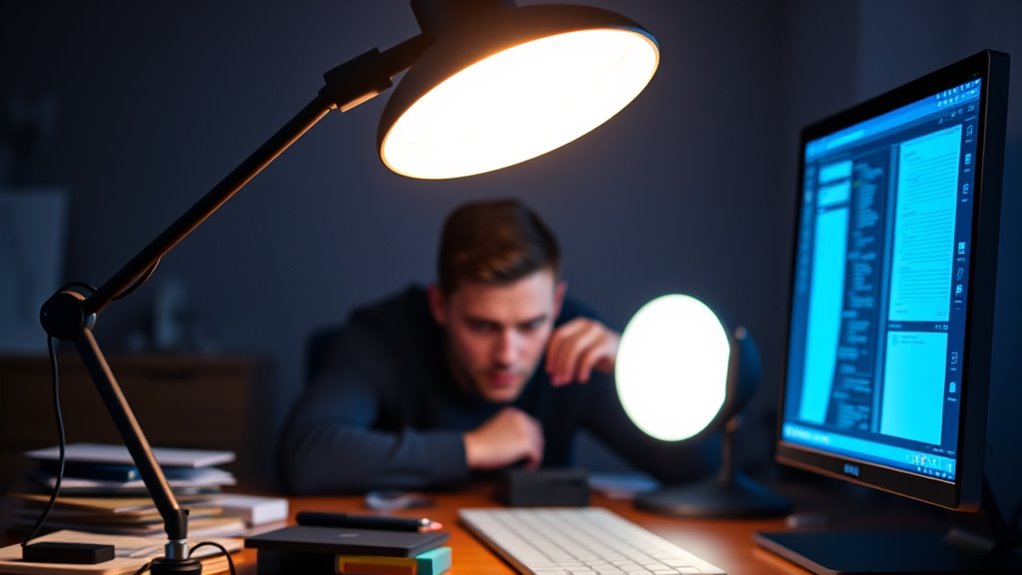
If you spend long hours at a desk, you’ve probably noticed that certain lighting conditions can trigger headaches. One common cause is eye strain, which often results from working under inadequate or harsh lighting. The type of bulbs you use plays a significant role here, especially with the increasing popularity of LED bulbs. While LED bulbs are energy-efficient and long-lasting, not all are created equal when it comes to comfort. Some LED bulbs emit a harsh, flickering light or have a color temperature that’s too cool or too warm, both of which can cause eye strain over time. You might not realize it at first, but persistent eye strain can lead to headaches, fatigue, and even dizziness.
Long hours at a desk with harsh LED lighting can cause eye strain and headaches.
When choosing your desk lighting, pay close attention to the quality of the LED bulbs. Look for options labeled as “flicker-free” or with a high CRI (Color Rendering Index). These bulbs tend to produce a more natural, consistent light that’s easier on your eyes. It’s also helpful to select bulbs with a color temperature around 3000K to 4000K, which mimics natural daylight without being too harsh. This helps reduce eye fatigue caused by overly blue or yellow lighting. Proper placement of your light source is equally important. Positioning your LED desk lamp at an angle that minimizes glare and reflections can make a big difference in reducing eye strain.
Eye strain isn’t just about the brightness level; it’s also about how your eyes work to focus and adjust to the lighting environment. When your eyes constantly strain to read or see clearly, headaches often follow. If your workspace has uneven lighting or shadows, your eyes have to work harder, increasing the risk of discomfort and headaches. To prevent this, ensure your lighting is evenly distributed and doesn’t create harsh contrasts. Using adjustable LED desk lamps allows you to control both brightness and direction, helping you find the most comfortable setup.
Additionally, choosing proper lighting conditions and ensuring your workspace is well-ventilated can contribute to reducing eye fatigue and associated headaches. Ultimately, identifying whether your headaches are linked to your desk lighting involves paying attention to how your eyes feel during and after work. If your eyes feel tired or sore, or if you notice headaches that seem to worsen after long periods in front of your computer, consider evaluating your lighting choices. Upgrading to high-quality, flicker-free LED bulbs, adjusting your workspace lighting, and maintaining good eye hygiene can all make a substantial difference. Proper lighting isn’t just about illumination; it’s about protecting your eyes from strain and preventing headaches before they start.
As an affiliate, we earn on qualifying purchases.
Frequently Asked Questions
Can Specific Desk Light Colors Trigger Headaches?
Certain desk light colors can trigger headaches, especially if the color temperature is too high or low. Cool white or blue-tinted lights with high light saturation may cause eye strain and migraines for some people. You should try adjusting your desk light to a warmer, softer color temperature and reduce light saturation, which can help minimize the risk of headaches and improve overall comfort during work.
Are LED Lights More Likely to Cause Headaches Than Incandescent?
Ever wonder if LED lights are more headache-inducing than incandescent? Generally, LED lights can trigger migraines due to their flicker and brightness, despite their durability and energy efficiency. Incandescent bulbs emit a warmer, softer glow that’s less likely to cause discomfort. While LEDs last longer and save energy, their intense, flickering light might be harder on your eyes, making headaches more common if you’re sensitive.
How Does Flickering Light Impact Headache Frequency?
Flickering light can increase your headache frequency by overstimulating your eyes and brain, making it harder to relax. Light flicker, even if subtle, acts as a migraine trigger and can worsen existing headaches. If you notice more headaches when exposed to flickering light, it’s best to switch to steady, flicker-free lighting. Reducing exposure helps minimize migraine triggers and keeps your headache frequency under control.
Should I Wear Blue Light Glasses for Headache Prevention?
You should consider wearing blue light glasses, as studies show they can reduce eye strain for 60% of users. Blue light effects include disrupted sleep and increased headaches, making eye protection strategies essential. These glasses block or filter blue light, minimizing digital eye strain. If you spend hours at a screen, blue light glasses might be a helpful preventative tool to keep headaches at bay and protect your eyes.
Can Eye Strain From Desk Lighting Lead to Migraines?
Yes, eye strain from poor desk lighting can lead to migraines. When your workspace isn’t ergonomic, you might strain your eyes trying to see clearly, especially without enough natural light exposure. This constant strain can trigger migraines over time. To prevent this, optimize your workspace with proper lighting, incorporate natural light, and take regular breaks. Adjusting your lighting setup helps reduce eye strain and lowers migraine risk.
adjustable color temperature desk lamp
As an affiliate, we earn on qualifying purchases.
As an affiliate, we earn on qualifying purchases.
Conclusion
If you ignore the signs, those pesky headaches could turn into a full-blown migraine apocalypse, disrupting your entire life! Sometimes, it’s just the desk light causing chaos, but other times, it’s a sneaky underlying problem waiting to explode. Don’t let a simple fix turn into a headache nightmare. Pay attention, make small changes, and reclaim your peace. Your head—and your sanity—will thank you for catching the real cause before it’s too late!
As an affiliate, we earn on qualifying purchases.
As an affiliate, we earn on qualifying purchases.
Fall Picks
fall essentials
As an affiliate, we earn on qualifying purchases.