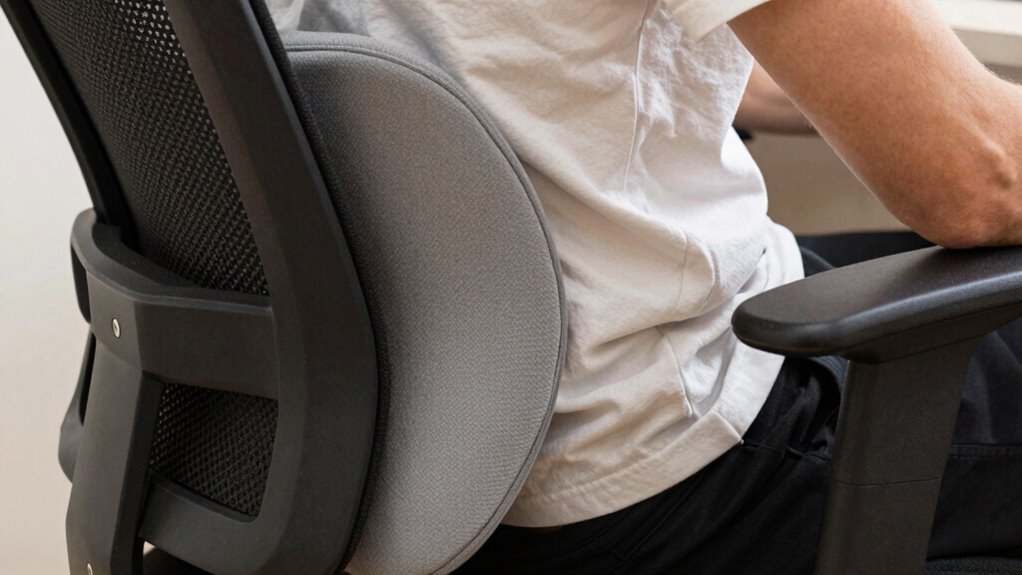

Lumbar support helps stabilize your lower back by maintaining its natural curve, which promotes proper posture and reduces strain during prolonged sitting or driving. It’s designed to fill the gap between your back and the chair, easing discomfort and supporting spinal alignment. However, it’s only a partial solution and doesn’t fix underlying issues like muscle imbalances or structural problems. To learn how to use it effectively and its limitations, keep exploring this topic further.
Key Takeaways
- Lumbar support maintains the natural curve of the lower back, promoting proper posture and reducing strain during prolonged sitting.
- It provides immediate relief from lower back discomfort but does not fix underlying issues like muscle imbalances or structural problems.
- Proper use involves adjusting supports for comfort and combining them with ergonomic practices to prevent muscle weakening.
- Lumbar support is a temporary aid; overreliance can weaken core muscles and worsen long-term back health.
- It works best when paired with good posture habits and regular exercise, not as a standalone solution for back pain.

Lumbar Support Pillow for Office Chair, Office Home Essentials,Gifts for Mom,Dad, Back Support Pillow for Car, Chair Cushions,Back Pain Relief Improve Posture,Mesh Cover Double Adjustable Straps
- Extended Adjustable Straps: Fits more chairs securely
- Ergonomic Back Support: Relieves back pain and tightness
- Supports Proper Posture: Maintains natural spine curve
As an affiliate, we earn on qualifying purchases.
As an affiliate, we earn on qualifying purchases.
What Is Lumbar Support and How Does It Work?
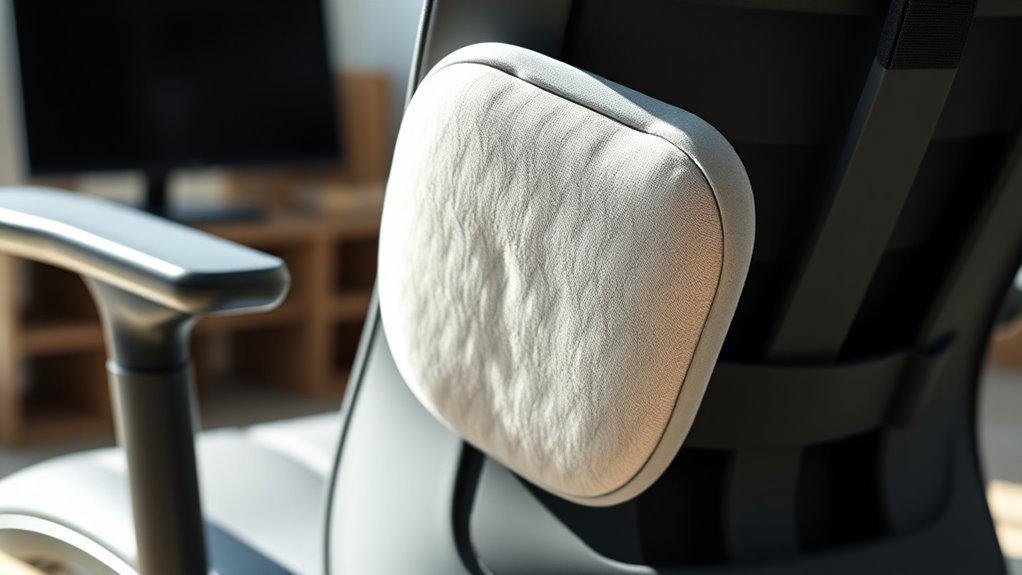
Lumbar support refers to features or devices designed to maintain the natural curve of your lower back, providing relief and promoting proper posture. It works by filling the gap between your lower back and the chair, encouraging your spine to stay in a healthy alignment. When you sit without support, your lower back tends to slouch or flatten, which can cause strain. Lumbar supports can be built into chairs or added separately, like cushions or braces. They apply gentle pressure to your lumbar region, helping to stabilize your spine. This support not only reduces discomfort but also prevents poor posture from becoming a long-term habit. By maintaining the correct curvature, lumbar support helps keep your back healthy during prolonged sitting periods.
Lumbar Support Pillow for Office Chair, Office Home Essentials,Gifts for Mom,Dad, Back Support Pillow for Car, Chair Cushions,Back Pain Relief Improve Posture,Mesh Cover Double Adjustable Straps
- Extended Adjustable Straps: Fits more chairs securely
- Ergonomic Back Support: Relieves back pain and tightness
- Supports Proper Posture: Maintains natural spine curve
As an affiliate, we earn on qualifying purchases.
As an affiliate, we earn on qualifying purchases.
The Benefits of Using Lumbar Support

Using lumbar support offers immediate relief from lower back pain and discomfort, especially if you spend long hours sitting. It promotes proper spinal alignment, reducing strain on your lumbar region. This can lead to better posture and decreased muscle fatigue. Additionally, lumbar support helps prevent long-term issues like herniated discs or chronic pain. To visualize its benefits, consider this table:
| Benefit | How It Helps | Result |
|---|---|---|
| Reduces muscle tension | Eases muscle strain during sitting | Less discomfort |
| Improves posture | Supports natural spine curve | Less slouching, better alignment |
| Prevents pain flare-ups | Maintains proper lumbar position | Fewer pain episodes |
| Decreases fatigue | Less effort to maintain good form | Increased comfort |
| Supports long-term health | Prevents degenerative issues | Sustained back health |

OPTP The Original McKenzie Lumbar Roll – Standard Density Low Back Support
- Product Type: Standard Density Lumbar Support Pillow
- Dimensions: 11” long x 4.75” diameter
- Support Level: Moderate support, also available in Firm
As an affiliate, we earn on qualifying purchases.
As an affiliate, we earn on qualifying purchases.
Common Types of Lumbar Support Devices
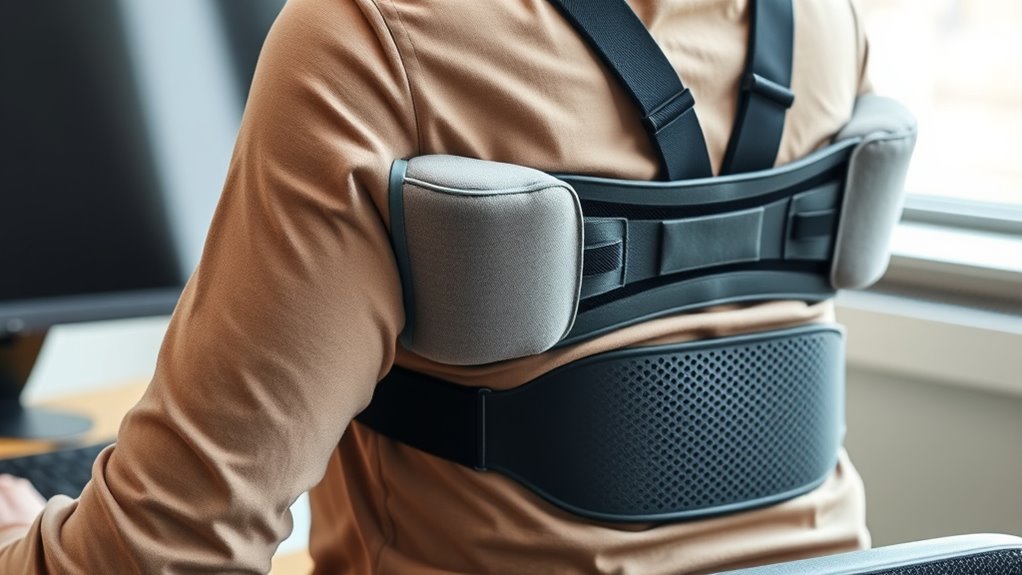
There are several popular lumbar support devices you can use to improve your posture and reduce back pain. Ergonomic back supports, office chair cushions, and posture correctors are common options that target different needs. Understanding how each type works helps you choose the best solution for your daily comfort.
Ergonomic Back Supports
Ergonomic back supports are designed to provide targeted relief by promoting proper spinal alignment and reducing strain during prolonged sitting. These devices come in various forms, including lumbar rolls, adjustable cushions, and supportive braces. Lumbar rolls are portable and easily attach to chairs, offering immediate support to the lower back. Adjustable cushions often feature customizable firmness and height, allowing you to tailor support to your needs. Supportive braces wrap around the lower torso, providing firm stabilization and maintaining proper posture. These supports help prevent slouching, reduce muscle fatigue, and encourage a healthier sitting position. While they can be effective, their success depends on correct usage and consistency. Ergonomic back supports serve as valuable tools, but they work best when combined with good ergonomic practices.
Office Chair Cushions
Office chair cushions are popular and effective tools for providing lumbar support during long hours at your desk. They come in various shapes and materials, making it easy to find one suited to your needs. Some cushions offer firm support, while others are softer for comfort. Using a cushion can help maintain proper spinal alignment and reduce pressure on your lower back.
| Cushion Type | Best For |
|---|---|
| Memory Foam | Long-lasting support, comfort |
| Gel-filled | Temperature regulation, softness |
Choosing the right cushion depends on your preferences and back issues. Keep in mind, while they provide additional support, they aren’t a substitute for proper posture or ergonomic adjustments. A good cushion can complement other lumbar support strategies effectively.
Posture Correctors
Posture correctors are effective devices designed to support proper spinal alignment and reduce strain on your lower back. They typically come in forms like braces, straps, or elastic bands that you wear around your shoulders and torso. By gently pulling your shoulders back and aligning your spine, they help prevent slouching and promote better posture. Some are adjustable, allowing you to customize the fit for comfort and effectiveness. However, they’re not a cure-all; relying solely on a posture corrector can weaken your muscles over time. It’s best to use them as a supplement to strengthening exercises and ergonomic adjustments. When worn correctly and consistently, posture correctors can remind you to maintain proper alignment, especially during long periods of sitting or standing.

Kepwaa Posture Corrector for Women and Men, 5 Full Back Support Brace Rods, Adjustable Shoulder Straightener, Relief for Upper and Lower Back, Neck, Lumbar, Scoliosis, Hump, Black Yellow, Medium
- Full Back Support with 5 Rods: Provides stable support and pain relief
- Relieves Neck and Back Pain: Corrects posture and promotes spinal health
- Ergonomic and Comfortable Fit: Fits natural curves without armpit compression
As an affiliate, we earn on qualifying purchases.
As an affiliate, we earn on qualifying purchases.
How Proper Posture Works With Lumbar Support
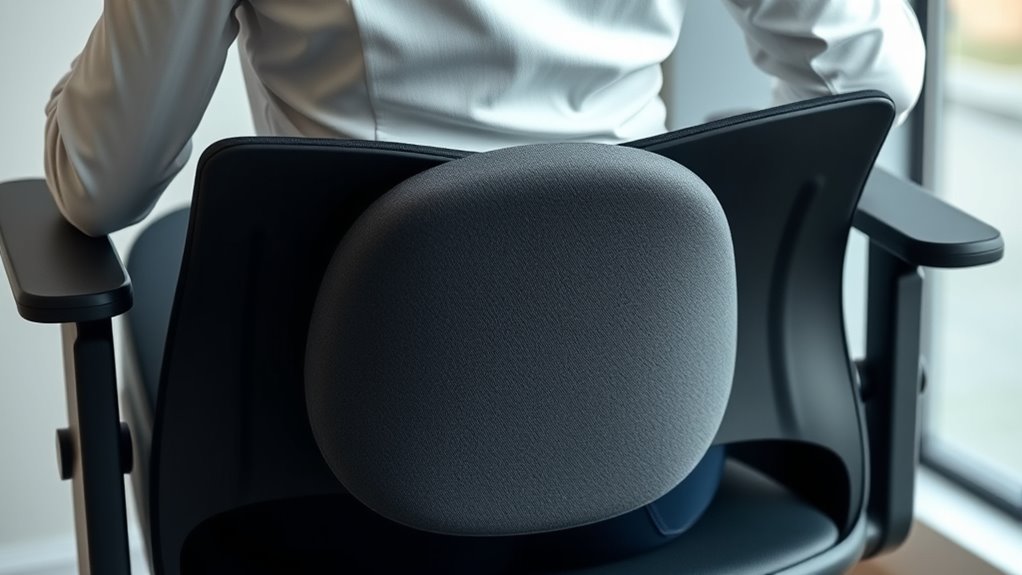
When you maintain proper posture with lumbar support, your spine stays aligned and healthy. This helps preserve your natural curves and reduces strain on muscles and discs. Remember to adjust your support as needed to keep these benefits consistent.
Spinal Alignment Benefits
Proper lumbar support helps maintain spinal alignment, which is essential for preventing discomfort and long-term injury. When your lower back is supported correctly, your spine stays in its natural position, reducing strain on muscles, ligaments, and discs. This support helps distribute your body’s weight evenly, preventing slouching or arching that can cause misalignment. As a result, your posture stays upright and balanced, minimizing pressure points that lead to pain. Proper alignment also encourages your muscles to work efficiently, reducing fatigue and tension. Over time, consistent use of lumbar support helps reinforce good posture habits, decreasing the risk of developing chronic back issues. In short, supporting your lumbar region promotes a healthier, more aligned spine that can handle daily activities with less discomfort.
Maintaining Natural Curves
Maintaining the natural curves of your spine is key to preventing strain and discomfort. When you sit with proper alignment, your lumbar support helps preserve these curves, reducing pressure on your discs and muscles. To do this effectively:
- Keep your lower back pressed gently against the lumbar support, ensuring it fills the natural inward curve.
- Sit upright with your shoulders relaxed and your hips slightly tilted back.
- Avoid slouching or leaning forward, which flattens the lumbar curve and causes strain.
Posture Reminders
How does proper posture enhance the effectiveness of lumbar support? When you sit with good posture, you help your lumbar support do its job better. Sitting upright, with your back aligned and shoulders relaxed, ensures the support maintains the natural curve of your lower back. This prevents slouching or leaning forward, which can diminish the support’s benefits. Using posture reminders—like notes, alarms, or ergonomic accessories—keeps you aware of your positioning throughout the day. Consistently maintaining proper posture allows the lumbar support to distribute pressure evenly, reducing strain and discomfort. Over time, good habits reinforce spinal health and maximize the support’s effectiveness. Remember, lumbar support isn’t a magic fix; it works best when combined with mindful posture habits.
Limitations of Lumbar Support in Back Pain Relief
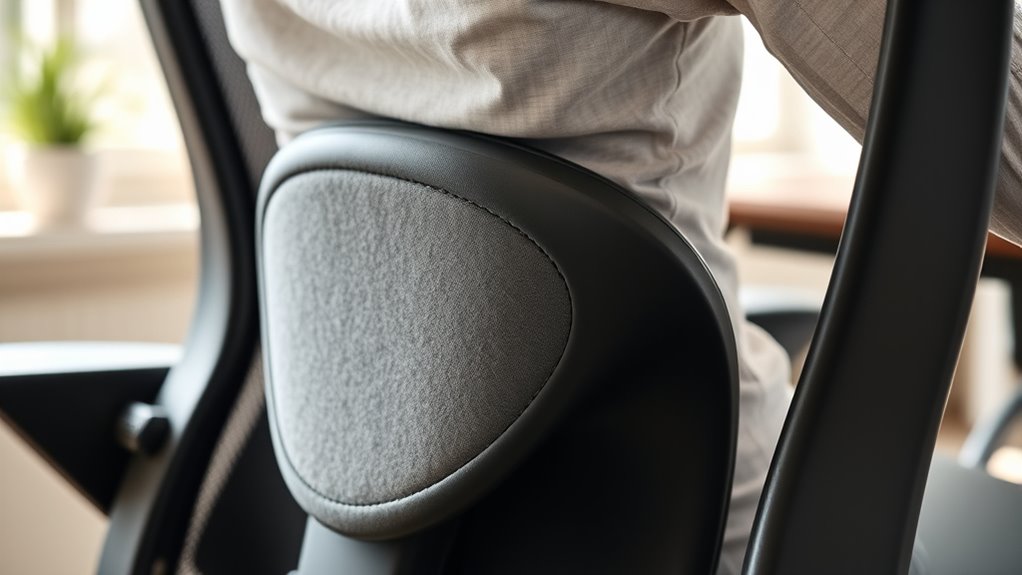
While lumbar support can provide temporary relief for some individuals, it often falls short as an extensive solution for back pain. It may help with immediate comfort, but it doesn’t address the root causes or underlying issues. Here are some limitations to keep in mind:
- It’s a Band-Aid: Lumbar support offers short-term relief but doesn’t fix muscle imbalances or structural problems.
- Dependency Risk: Relying too much on support can weaken core muscles over time, making pain worse when unsupported.
- Not a One-Size-Fits-All: Different issues require different treatments; lumbar support isn’t effective for everyone or every type of back pain.
Understanding these limits helps you seek comprehensive care rather than solely relying on support devices.
When to Use Lumbar Support for Maximum Effectiveness

Knowing when to use lumbar support can maximize its benefits and prevent overreliance. Use lumbar support during activities that strain your lower back, such as long periods of sitting at a desk, driving, or working at a computer. It’s most effective when you need to maintain proper spinal alignment or reduce pressure on your lumbar region. Avoid relying on it constantly; instead, use it as a temporary aid to improve posture and reduce discomfort. Adjust the support to fit comfortably and ensure it promotes natural spinal curves. Remove it periodically to avoid muscle weakening. Recognize signs that you need support, like persistent back fatigue or pain after prolonged sitting, and apply it accordingly to promote healthier posture and prevent long-term issues.
Myths and Misconceptions About Lumbar Support
Many people believe that using lumbar support will automatically fix all back problems, but this is a misconception. Lumbar support can help improve posture and reduce discomfort, but it isn’t a cure-all. Relying solely on it won’t address underlying issues like muscle weakness or structural problems. Here are some common myths:
- Lumbar support is a fix-all solution – It’s a helpful tool but not a replacement for proper exercise or medical treatment.
- Any lumbar support works the same – Different designs serve different needs; not all are suitable for everyone.
- Using lumbar support eliminates the need for good posture – You still need to maintain awareness and proper posture, even with support.
Understanding these myths helps you use lumbar support effectively.
Tips for Choosing the Right Lumbar Support for You
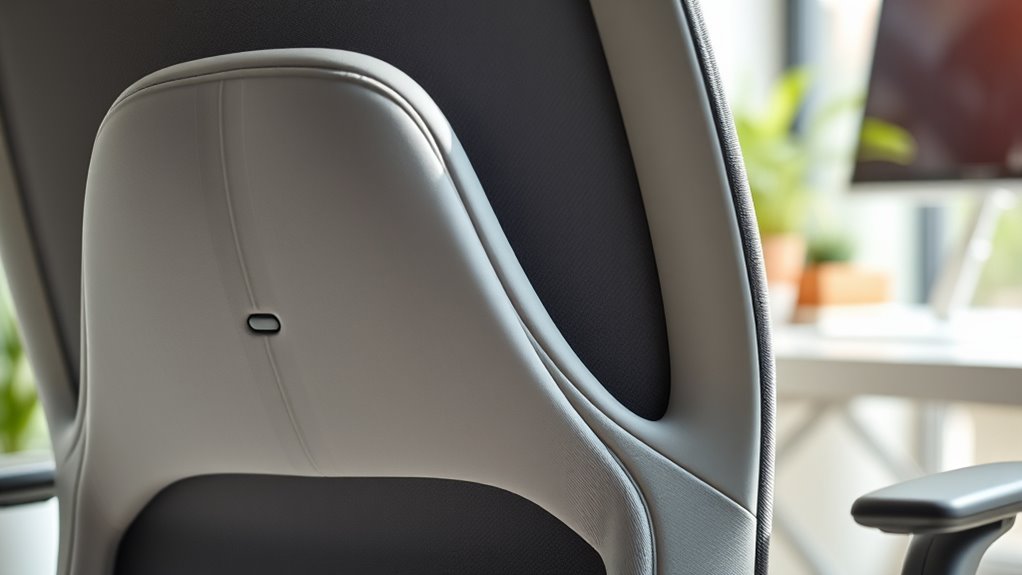
Choosing the right lumbar support starts with understanding your specific needs and body type. First, assess your posture habits and any existing back pain. Do you sit for long periods or have a history of lower back issues? This will help determine the firmness and shape you need. Look for adjustable options, so you can customize the fit and support level. Consider the material—breathable fabrics prevent discomfort during extended use. If you’re frequently on the go, a portable, lightweight support may suit you better. Test different designs if possible, ensuring they align comfortably with your lower back’s natural curve. Remember, the best lumbar support provides firm, targeted support without restricting movement or causing discomfort. Tailoring your choice to your body ensures better relief and posture.
Frequently Asked Questions
Can Lumbar Support Prevent All Types of Back Pain?
Lumbar support can’t prevent all types of back pain, but it can help reduce strain on your lower back during prolonged sitting. If your pain stems from poor posture or muscle fatigue, using proper lumbar support can make a difference. However, for issues like herniated discs or structural problems, lumbar support alone isn’t enough; you might need medical treatment or physical therapy for effective relief.
Is Lumbar Support Suitable for Pregnant Women?
Lumbar support can be suitable for pregnant women, but it depends on individual needs and comfort. You should choose a support that gently alleviates lower back pressure without causing discomfort. Make sure it fits well and doesn’t restrict movement or blood flow. Consult your healthcare provider before using any support to ensure it’s appropriate for your pregnancy, especially if you experience any pain or discomfort.
How Long Should I Wear Lumbar Support Daily?
You should wear lumbar support for about 1 to 3 hours daily, especially during activities that strain your back. It’s important not to overuse it, as prolonged use can weaken your muscles. Listen to your body—if you feel discomfort or pain, remove it and give your muscles a break. Consult with a healthcare professional for personalized advice, especially if you have existing back issues or pregnancy concerns.
Does Lumbar Support Work for Sciatica?
Yes, lumbar support can help with sciatica, but it’s not a cure-all. You might feel relief by reducing pressure on your lower back and improving posture, which eases nerve compression. However, it won’t eliminate the root cause. Keep in mind, combining support with other treatments like stretching or physical therapy offers the best chance for lasting relief. Don’t rely solely on lumbar support—use it as part of an all-encompassing plan.
Are There Risks of Over-Relying on Lumbar Support?
Yes, over-relying on lumbar support can lead to weakened core muscles and decreased natural spinal stability. When you constantly depend on it, your muscles might stop engaging properly, potentially worsening back issues in the long run. To avoid this, use lumbar support as a temporary aid, and focus on strengthening your core muscles through exercises. Balance support use with active movement and proper posture to maintain overall back health.
Conclusion
Think of lumbar support as your trusted compass through the maze of back health. It guides you toward better posture and comfort, but remember, it’s not a magic wand. Like a sturdy ship needs both a good hull and skilled navigation, your back benefits most when combined with proper habits. Use lumbar support wisely, and you’ll steer clear of the iceberg of chronic pain, sailing smoothly toward a healthier, more comfortable life.