
TL;DR

Get comfort and recovery gear delivered free with Prime
- Fast, free delivery on millions of items
- Prime Video, Amazon Music and more included
- Member-only deals all year
A Fit&Well personal trainer said daily offset child’s pose was followed by improved mobility and near-resolution of mid-back pain after nine days, during a two-week trial. The account is an individual experience, not a controlled study, and does not establish that the stretch treats back pain generally.
A Fit&Well certified personal trainer reported that daily offset child’s pose was followed by improved mobility and mid-back pain that was “pretty much gone” after nine days in a two-week personal trial. The result is an individual account, not evidence from a clinical study, so it cannot show that the stretch will relieve pain for other people.
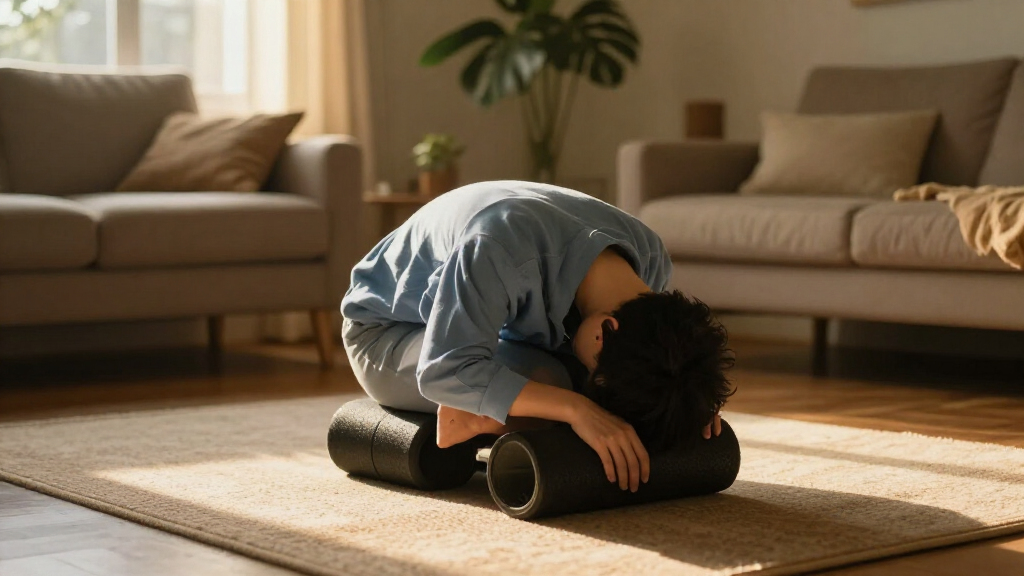
The trainer said nagging mid-back pain flared while picking up a toddler-aged child and that recent flexibility practice had lapsed. They chose offset child’s pose because it was easy and gentle, starting with a 30-second hold on each side. The routine involved getting onto hands and knees, widening the knees, bringing the toes together, sitting the hips back toward the heels, then reaching both arms to one side and holding before switching sides.
The practice began twice a day. After a few days, the trainer said the position felt more comfortable and increased holds to 45 seconds. They later extended each side to 60 seconds; by the final three days, that was the hold time. When the back began to feel better around the midpoint, the trainer reduced the routine to once a day.
The trainer described initial stiffness in the shoulders and back, followed by greater comfort and range of motion. They reported that after nine days, the pain had largely subsided, sitting was more comfortable, carrying their child was easier, and they could do chest presses with heavier weights. They said they planned to keep the stretch in their routine several times a week. No measurements, clinical examination, or comparison routine were reported.
A Personal Result, Not a Trial
The account gives readers a specific example of a low-equipment mobility routine and describes how one person adjusted it over time. It may prompt people with stiffness to ask whether gentle movement is comfortable for them, but one person’s improvement does not establish cause and effect. Back pain can have different causes, and the report does not establish that stretching is suitable treatment for a particular condition.
The source also emphasizes adapting the pose rather than forcing it. That distinction matters: a position that increases pain or feels unsafe should not be treated as a test of willpower. Readers with ongoing, severe, or unexplained symptoms, a recent injury, or a relevant health condition should seek individualized advice from a qualified health professional rather than relying on this anecdote.
Popular right now

Vitamix Propel Series 750 Professional-Grade Blender, 4 Programs, Black

LG 85-Inch QNED73B Mini LED 4K Smart TV (2026)

Dyson Ball Animal 3 Upright Vacuum
As an affiliate, we earn on qualifying purchases.
How the Stretch Was Adapted
The stretch used was offset child’s pose, with both arms reaching to one side to lengthen the back and then to the other. Physical therapist Dr. Michael Nula, quoted in the Fit&Well report, said the movement lengthens muscles along the mid and lower back while the hips and knees move through a comfortable range. He said it may help relieve muscle tension and reduce joint compression; those are his professional comments, not findings from the trainer’s personal experiment.
Nula cautioned against forcing the position. If the hips do not reach the heels, he suggested placing a pillow there so the pose meets the person’s available range. The report also advised consulting a physician when medical conditions or injuries raise doubts about doing the stretch. The trainer said focusing on long, deep breaths helped them move further into the pose, but that observation is personal and was not independently tested.
What the Two Weeks Cannot Show
The report does not say whether the trainer’s pain was assessed by a clinician, what caused it, or how its severity was tracked. It also provides no control group, objective mobility measurements, or evidence separating the effect of the pose from other changes over the same period. The account therefore cannot establish that the stretch caused the improvement or predict how someone else might respond.
It remains unclear whether the benefit lasted beyond the two-week trial. The trainer said they intended to continue practicing several times a week, but the source does not report later results. The report also does not provide a complete screening guide for people whose injuries or medical conditions could make the position unsuitable.
Whether the Routine Continues
The trainer said the next step was to keep offset child’s pose in their overall health routine, aiming for several sessions each week, though they acknowledged daily practice might not continue. The report provides no follow-up confirming whether the pain stayed away or whether the routine remained comfortable.
For readers considering the movement, the source describes short holds on both sides and recommends easing into the position, using a pillow if needed, and not forcing the stretch. Anyone uncertain because of an injury or medical condition should ask a physician or qualified clinician for guidance. No broader clinical finding or follow-up study is presented in the report.
Key Questions
What stretch did the trainer use?
The trainer used offset child’s pose: from hands and knees, widen the knees, bring the toes together, sit the hips back as comfortable, and reach both arms to one side. Hold, then repeat on the other side.
How long did the trainer hold the stretch?
They began with 30 seconds per side, increased to 45 seconds after a few days, and reached 60 seconds per side during the final three days of the trial.
Did the trial prove the stretch treats mid-back pain?
No. It was a single person’s self-reported experience, without a control group or clinical measurements. It cannot establish that the stretch caused the improvement or that it will work for others.
Should someone push through discomfort to do the pose?
No. The physical therapist quoted in the report cautioned against forcing the position and suggested using a pillow if the hips do not comfortably reach the heels. People with injuries, medical conditions, or concerns should seek professional guidance.
Source: fitandwell.com