TL;DR

Get comfort and recovery gear delivered free with Prime
- Fast, free delivery on millions of items
- Prime Video, Amazon Music and more included
- Member-only deals all year
Fit&Well published a three-exercise kettlebell routine designed to train core stability at home in about 10 minutes. The workout uses a half-kneeling halo, a single-arm suitcase carry and a dead bug variation; its trainer advises beginners to prioritize control and form before increasing weight.
Fit&Well has outlined a three-move kettlebell workout intended to take about 10 minutes and train core stability at home. Certified kettlebell specialist Faith Ellis recommends a half-kneeling halo, a single-arm suitcase carry and a kettlebell dead bug variation, with beginners starting at a manageable weight and focusing on technique.
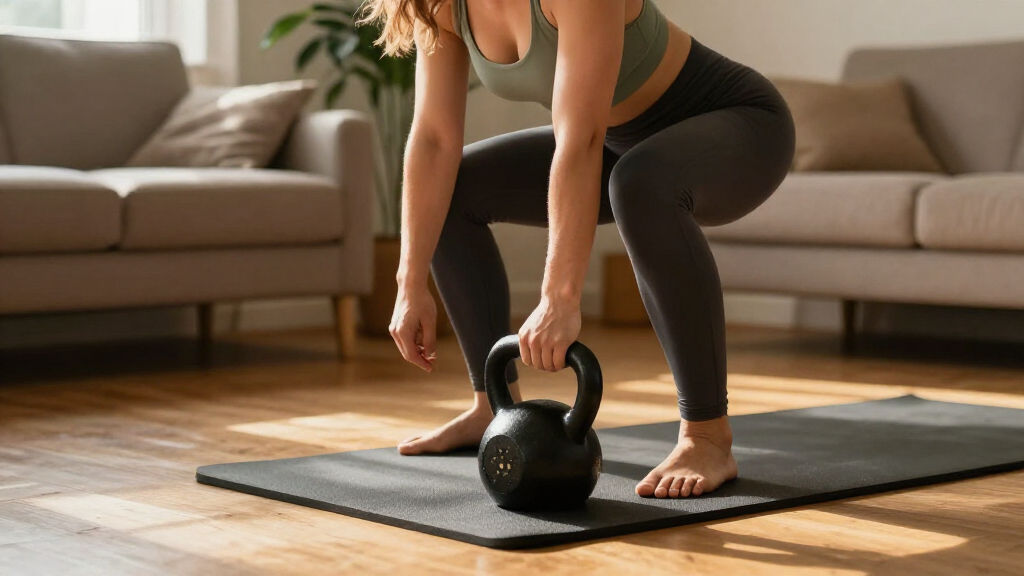
The routine is prescribed for three sets of each exercise. For the half-kneeling halo, Ellis recommends starting with a 10–18 lb (4–8 kg) kettlebell. Kneel with one knee down and the opposite foot planted, hold the weight by its horns at chest height, then circle it around the head while keeping the hips square. The plan calls for four circles in each direction per side.
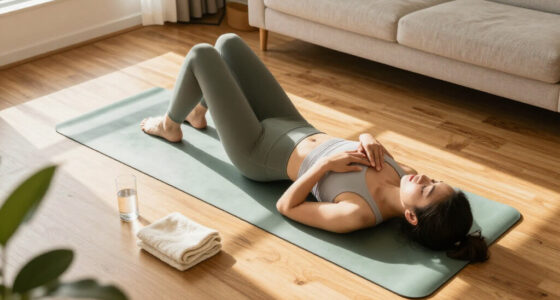
The suitcase carry is performed standing and walking with a kettlebell held at one side for 30 seconds, before switching hands. Fit&Well suggests starting around 18–26 lb (8–12 kg), provided the load can be carried with control. The final exercise is a dead bug with a kettlebell pullover: lying on the back, the exerciser holds a light weight over the chest, keeps the knees bent above the hips and alternates lowering a leg while moving the weight behind the head. The suggested range is six to eight repetitions per side, using a 10–18 lb (4–8 kg) kettlebell.
Ellis’s progression advice is to add weight only after a set feels easy and can be completed with good form. Fit&Well reports that increases of 4–8 lb (2–4 kg), more repetitions or slower repetitions are options. The article does not provide a timed breakdown for each movement, so the exact pace needed to complete all three sets in 10 minutes may vary.
A Short Routine Built Around Stability
The plan offers readers a compact home workout using one piece of equipment rather than a gym setup. Its three movements challenge the trunk in different positions: circling a weight around the head, resisting a sideways pull while walking, and coordinating arm and leg movement while lying down.
Ellis describes the goal as training the core to stabilize and transmit force, rather than relying only on repeated spinal flexion. That is the trainer’s explanation of the exercise selection, not evidence in the source that this particular routine produces a measured strength outcome. For readers, the practical value is a defined set of exercises and starting guidance; results will depend on factors such as technique, load and consistency.
Popular right now

Bose QuietComfort Ultra Wireless Noise-Cancelling Headphones with Spatial Audio, Black

De'Longhi 15-Bar Pump Espresso Machine with Milk Frother & Temperature Control

Vitamix 5200 Professional-Grade Blender, 64 oz. Container, Black
As an affiliate, we earn on qualifying purchases.
Ellis’s Advice for New Lifters
Fit&Well frames a kettlebell as a versatile home-training tool, citing its use for strength, mobility and cardiovascular exercise. The report attributes that assessment to Ellis, a certified kettlebell specialist and founder of The KettleBelle. It also says single-arm and offset movements ask the torso to resist rotation and lateral bending.
For newcomers, Ellis recommends a light-to-medium starting weight and gradual progression. Her stated priorities are controlled breathing, a neutral spine and sound movement form before adding load. The article gives suggested weights for each exercise, but those ranges are starting points in the report, not individualized prescriptions.
““Kettlebell exercises require the core to stabilize and transmit force rather than just flex the spine.””
— Faith Ellis, certified kettlebell specialist and founder of The KettleBelle, as quoted by Fit&Well
Timing and Individual Suitability
The report presents the routine as a 10-minute workout but does not specify rest intervals or explain how the three sets fit into that duration. Actual completion time will depend on pace, transitions and rest. It also does not report testing results or establish that the routine will produce a particular amount of core-strength improvement.
Individual ability and appropriate kettlebell weight can differ. The source does not give modifications for people with injuries, pain or other health concerns. Anyone unsure whether the movements suit them should seek advice from a qualified fitness professional; stop if an exercise causes pain.
Progress Only With Good Form
Fit&Well’s guidance is to repeat the movements with a load that permits control, then progress gradually when each set feels easy and technique remains consistent. That may mean adding a small amount of weight, increasing repetitions or slowing the movement, rather than attempting to make every session harder.
The next step for readers is to try the routine at a comfortable pace and judge whether the suggested exercises and timing are practical for them. The source does not announce a follow-up study, a measured outcome or a scheduled update, so no further development is specified.
Key Questions
What exercises are in the kettlebell workout?
The routine includes a half-kneeling halo, a single-arm suitcase carry and a kettlebell dead bug with a pullover. Fit&Well recommends three sets of each.
What weight should a beginner use?
The report suggests 10–18 lb (4–8 kg) for the halo and dead bug, and around 18–26 lb (8–12 kg) for the carry. These are general starting suggestions from the article; choose a load that allows controlled movement and good form.
How long does the workout take?
Fit&Well presents it as a 10-minute workout, but does not provide rest periods or a timed schedule for completing all three sets. The time may vary with pace and breaks.
How should someone progress the exercises?
Ellis advises increasing the challenge only when a set feels easy and can be completed with good form. Options in the report include adding 4–8 lb (2–4 kg), doing more repetitions or slowing the repetitions.
Source: fitandwell.com