HDR can boost your work when you’re doing creative tasks like photo editing, video editing, or graphic design, as it provides richer colors and better contrast. However, for routine office work like editing documents or spreadsheets, HDR offers little benefit and might cause distractions or fatigue. It also requires proper calibration to guarantee color accuracy. If you’re curious about when to activate or disable HDR for ideal productivity, keep exploring the details.
Key Takeaways
- HDR enhances visual clarity for creative tasks like photo editing, video production, and color grading.
- It offers limited or no benefits for routine office activities such as document editing and spreadsheets.
- Proper calibration is crucial when using HDR to ensure accurate color reproduction, especially for professional work.
- Enable HDR in high-contrast multimedia or creative tasks, but disable it during text-heavy or color-critical work.
- Future professional monitors may incorporate advanced HDR features, making it more relevant for creative professionals.
Top picks for "work help pointles"
Open Amazon search results for this keyword.
As an affiliate, we earn on qualifying purchases.
When HDR Enhances Visual Clarity in Creative Tasks
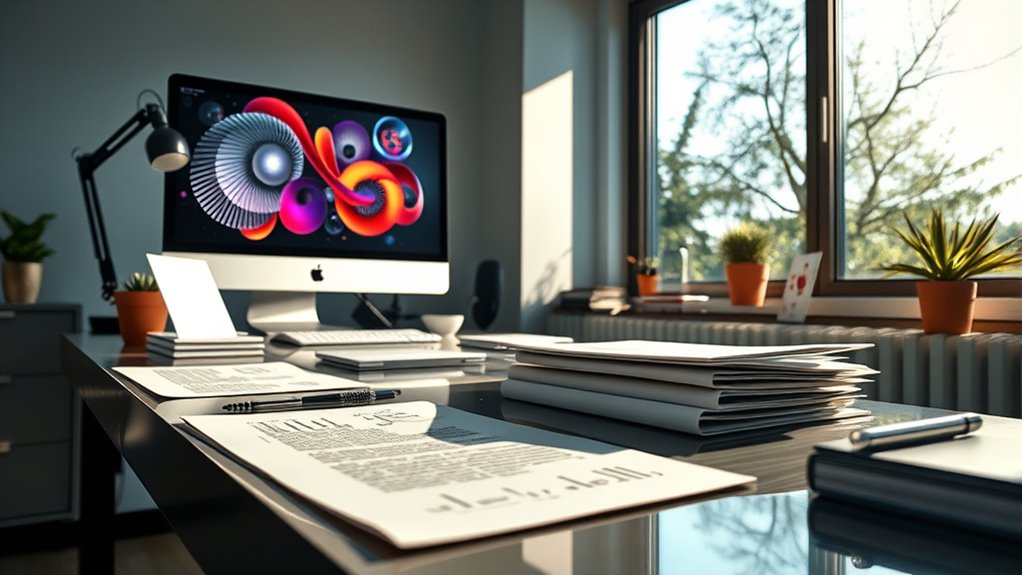
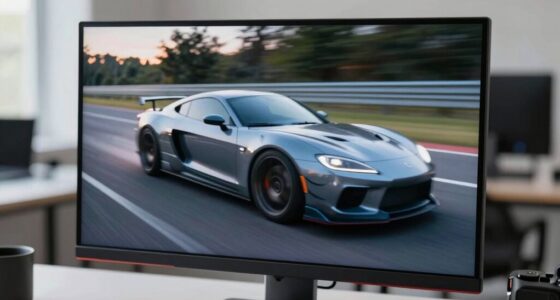
High Dynamic Range (HDR) technology considerably boosts visual clarity in creative tasks by providing a broader range of colors and contrast. When you’re working on photo editing, graphic design, or video production, HDR helps you see details that standard displays might miss. This means you can accurately evaluate shadows, highlights, and color gradations, ensuring your work is precise. HDR’s enhanced contrast makes images appear more vibrant and true to life, which is vital for creative professionals demanding accuracy. It allows you to detect subtle differences in tone and color, reducing guesswork and minimizing errors. If your work relies on detailed visuals, HDR can significantly improve your workflow by giving you a more realistic preview of your final output.
Limitations of HDR in Routine Office Work
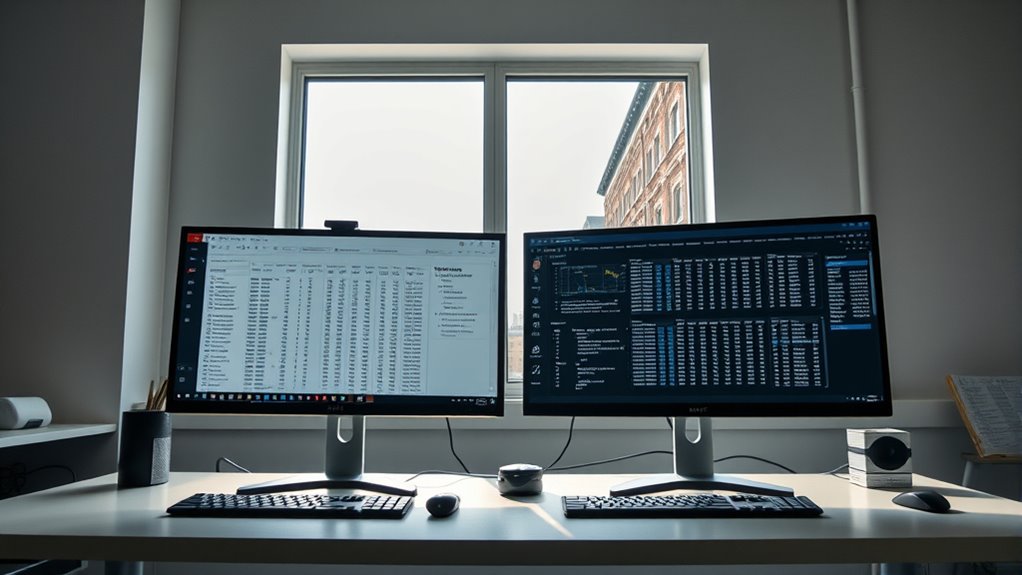
While HDR considerably improves visual clarity for creative tasks, its benefits don’t extend as much to routine office work. For everyday tasks like document editing, email, or spreadsheets, HDR’s enhanced contrast and brightness often go unnoticed. In fact, it can sometimes cause distractions or visual fatigue without offering significant advantages. Furthermore, many standard office applications don’t support HDR content, limiting its usefulness. You might also face compatibility issues with older hardware or software, making HDR more of a hassle than an asset. Finally, HDR can increase power consumption and reduce battery life on portable devices, which isn’t ideal for daily work routines.
- Limited support in common office apps
- No notable improvement in text clarity
- Increased eye strain without benefit
- Compatibility issues with older hardware
- Higher energy use impacts portability
Impact of HDR on Color Accuracy and Calibration
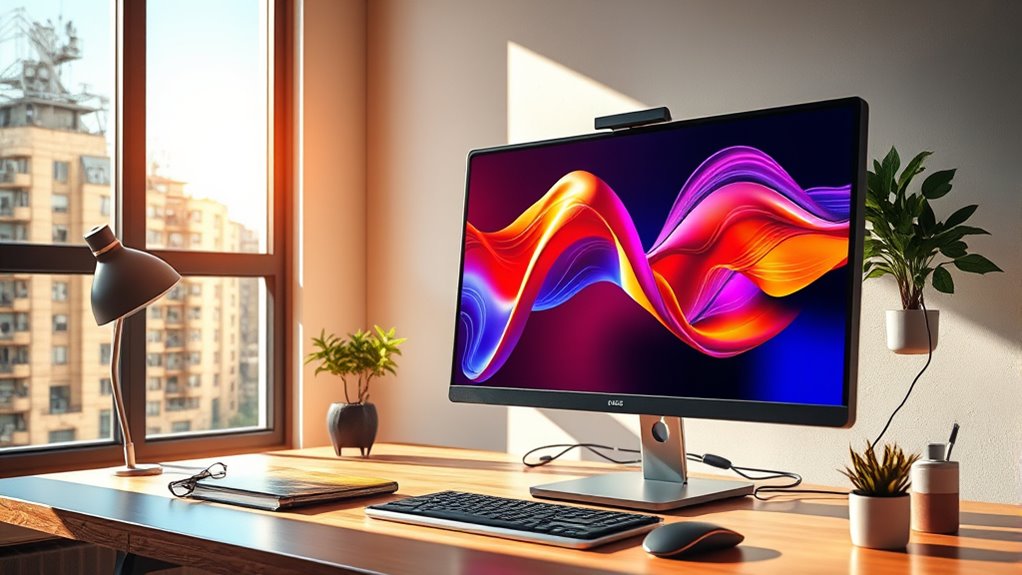
HDR can considerably enhance visual vibrancy, but it also complicates color accuracy and calibration. When you enable HDR, your display tries to reproduce a wider range of brightness and colors, which can lead to inconsistencies if not properly calibrated. You might notice colors appear oversaturated or highlights lose detail, especially if your monitor isn’t designed for professional color work. To maintain accurate colors, calibration becomes more critical with HDR enabled. You need to adjust settings carefully and use calibration tools tailored for HDR content. Without proper calibration, your color representation can be inaccurate, impacting tasks that require precise color matching. Ultimately, HDR’s enhanced contrast can be beautiful, but it demands more attention to calibration to ensure color fidelity remains intact.
Optimizing Your Workspace: When to Enable or Disable HDR
Knowing when to enable or disable HDR can substantially impact your viewing experience and work efficiency. If your workspace has variable lighting or you’re working on color-sensitive tasks, toggling HDR appropriately ensures clarity and reduces eye strain. Enable HDR when viewing high-contrast content, such as detailed images or videos, for richer visuals. Disable HDR in bright environments to prevent glare or washed-out images. Consider turning off HDR during text-heavy tasks or when precise color accuracy is critical, as HDR can sometimes obscure details.
- Adjust for ambient lighting to prevent eye fatigue
- Use HDR for multimedia editing, but disable for text work
- Enable HDR to enhance contrast in dark or complex scenes
- Turn off HDR if colors seem oversaturated or inconsistent
- Regularly calibrate your display for ideal settings
Future Trends: Is HDR a Necessary Feature for Professional Monitors?
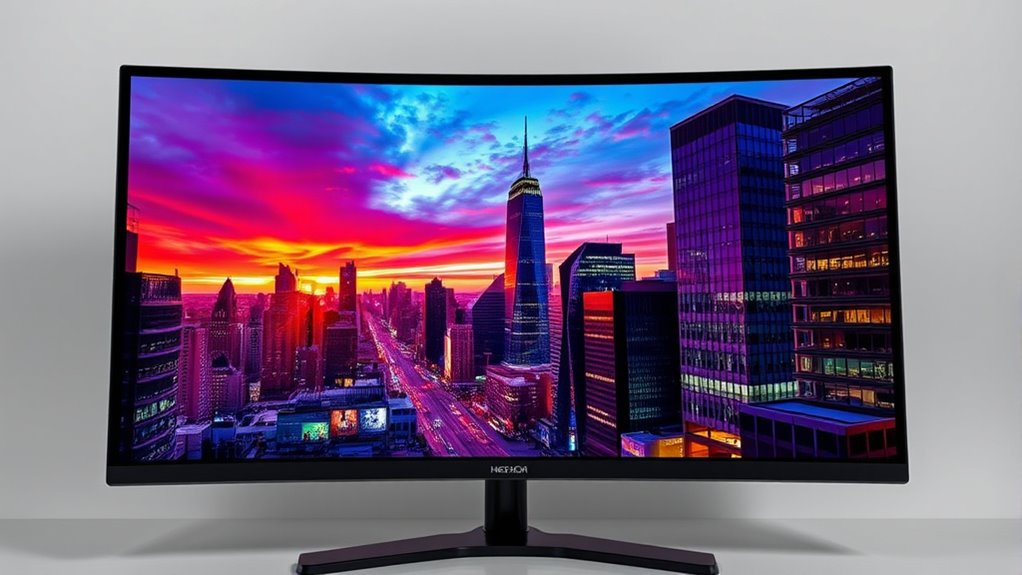
As display technology advances, the role of HDR in professional monitors is increasingly coming into focus. You might wonder if HDR will become a standard feature for your work setup. Current trends suggest HDR’s importance varies by industry. For creative professionals like photographers and video editors, HDR offers better color accuracy and dynamic range, making it a valuable tool. However, for tasks like coding or data analysis, HDR’s benefits are minimal. Future monitors may incorporate more advanced HDR capabilities, but not everyone will need them. As technology evolves, you’ll have to decide whether investing in HDR-equipped monitors aligns with your specific needs. While HDR can enhance visual workflows, it’s not a universal necessity for all professional applications.
Frequently Asked Questions
Can HDR Improve Multitasking Efficiency in Professional Environments?
HDR doesn’t directly improve multitasking efficiency in professional environments. Instead, it enhances visual quality, making images and videos more vibrant and detailed. If your work involves graphic design, video editing, or data visualization, HDR can help you see finer details, potentially speeding up your workflow. However, for general multitasking like email or document processing, HDR offers little benefit. Focus on better organization and multitasking tools for efficiency.
How Does HDR Affect Energy Consumption on Monitors?
HDR can increase your monitor’s energy consumption because it requires more power to produce brighter highlights and a wider color range. When you enable HDR, your display works harder, especially with high brightness levels, which may lead to higher electricity use. If conserving energy is your goal, you might want to turn off HDR during less demanding tasks, as it can markedly impact power consumption.
Is HDR Compatibility Standard Across All Professional Software?
HDR compatibility isn’t a universal language in professional software; it’s more like a dialect that some programs speak fluently while others barely understand. You’ll find it well-supported in high-end editing and design tools, bringing images to life with vibrant hues. But in many traditional or specialized applications, HDR remains an optional accent rather than a core feature. So, don’t expect all software to sing the same tune when it comes to HDR.
What Are the Cost Differences Between HDR and Non-Hdr Monitors?
HDR monitors typically cost more than non-HDR models, often ranging from $200 to over $1,000 extra depending on size, resolution, and HDR capabilities. You might pay a premium for enhanced color accuracy and contrast, especially in high-end displays. However, if your work doesn’t require detailed color grading or high dynamic range, investing in an HDR monitor may not be cost-effective. Consider your specific needs before spending extra.
Does HDR Require Specialized Hardware for Optimal Performance?
Think of HDR as a vivid paintbrush that needs the right canvas. Yes, HDR demands specialized hardware—like a graphics card and display—that can handle high dynamic range signals. Without these, your screen may look dull, like a watercolor missing its punch of color. So, if you want true HDR performance, investing in compatible hardware isn’t just helpful; it’s essential to access its full potential.
Conclusion
Ultimately, knowing when HDR helps and when it doesn’t is key to making the most of your workspace. If it sharpens your creative tasks, turn it on; if it muddles color accuracy, switch it off. Remember, a tool is only as good as how you use it—”a little knowledge is a dangerous thing,” so stay informed. When you adapt wisely, you turn your workspace into a true reflection of your needs.