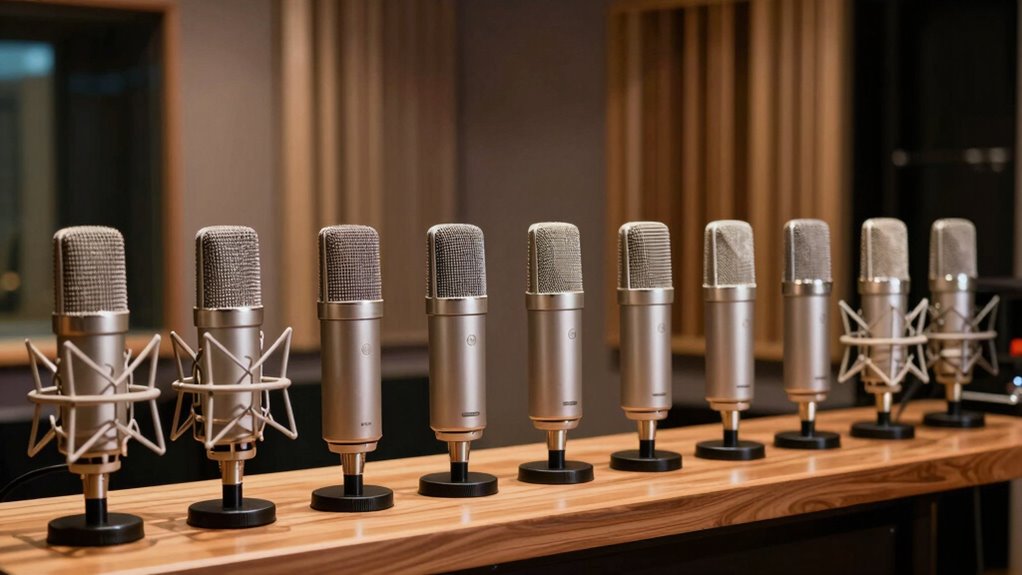

If voice clarity is the goal, the Audio-Technica AT2020 earns my top spot for its focused cardioid pickup and studio-grade detail, while the RØDE NT1 Signature Series stands out as the premium upgrade for anyone recording vocals professionally. On the budget-friendly side, the FIFINE K669 and TONOR TC-777 deliver impressively clean speech reproduction without requiring an audio interface. The main tradeoff in this category comes down to USB convenience versus XLR sound quality, plus how much background noise rejection you need if you record in an untreated room. Continue reading for the full breakdown of all 15 microphones, including who each one suits and who should skip it.

Get comfort and recovery gear delivered free with Prime
- Fast, free delivery on millions of items
- Prime Video, Amazon Music and more included
- Member-only deals all year
Complete the kit

Key Takeaways
- XLR condensers (AT2020, RØDE NT1, PROAR) consistently delivered sharper voice detail than USB models, but they demand an audio interface and quieter recording space to justify the extra cost.
- Among USB options, built-in gain control separated the winners: the FIFINE K669, ZealSound K66, and MAONO DGM20 all let you dial in levels without software, which directly reduces clipped or muddy speech.
- Gaming-focused RGB models like the FIFINE AmpliGame A6V trade some speech neutrality for style and features, making them better for streamers than for podcasters focused purely on voice accuracy.
- Several budget picks (Amazon Basics, CMTECK G009, generic gooseneck mics) are adequate for video calls but lack the sensitivity and noise handling for recording where clarity is judged closely.
- Clip-on and headset condensers (Paladou 3.5mm, Pyle-PRO PMEMS10) solve a mobility problem the desktop mics can’t, but their frequency response favors convenience over rich vocal tone.
| Paladou 3.5 mm Clip-On Condenser Microphone for PC and Mobile Devices |  | Best for Hands-Free Calls | Microphone type: Condenser | Connector: 3.5 mm audio jack | Cable length: Approximately 5 ft (1.5 m) | VIEW ON AMAZON | See Our Full Breakdown |
| MAONO DGM20 USB Gaming Microphone for PC |  | Best for Noisy Gaming Setups | Connectivity: USB and USB-C | Polar pattern: Unidirectional (cardioid) | Audio sensitivity: 10 dB | VIEW ON AMAZON | See Our Full Breakdown |
| FIFINE K669 USB Desktop Microphone for Recording and Online Meetings |  | Best for Simple USB Recording | Model: K669 | Connection: USB | Microphone type: Condenser | VIEW ON AMAZON | See Our Full Breakdown |
| Audio-Technica AT2020 Cardioid Condenser Studio XLR Microphone |  | Best for Home Studio Detail | Connectivity: Wired | Connector: 3-pin XLRM | Polar pattern: Cardioid (unidirectional) | VIEW ON AMAZON | See Our Full Breakdown |
| USB Computer Microphone with Flexible Gooseneck, Mute Button & LED Indicator – Desktop Microphone for Gaming, Streaming & Recording (Windows/Mac Compatible) |  | Best for Adjustable Desktop Positioning | Connectivity: USB | Pickup pattern: 360-degree omnidirectional | Cable length: 1.8 m / 6 ft | VIEW ON AMAZON | See Our Full Breakdown |
| Pyle-PRO PMEMS10 On-Ear Condenser Headset Microphone with 4-Pin Mini XLR Cable and Windscreen (Beige) |  | Best for Hands-Free Presenting | Model: PMEMS10 | Type: On-ear condenser headset microphone | Polar Pattern: Omnidirectional | VIEW ON AMAZON | See Our Full Breakdown |
| PROAR XLR Condenser Microphone with Desktop Stand for Vocals and Podcasting |  | Best XLR Starter Bundle | Connectivity: XLR | Polar Pattern: Cardioid (Unidirectional) | Sensitivity: -32dB ±3dB | VIEW ON AMAZON | See Our Full Breakdown |
| FIFINE K669B USB Condenser Microphone for Vocals, Podcasting, and Meetings |  | Best Plug-and-Play Value | Model: K669B | Type: USB condenser microphone | Polar Pattern: Cardioid | VIEW ON AMAZON | See Our Full Breakdown |
| ZealSound K66 USB Podcast Microphone with Noise Reduction, Gain and Mute Controls |  | Best for Multi-Device Recording | Microphone Type: USB condenser | Pickup Pattern: Cardioid | Frequency Response: 40 Hz – 18 kHz | VIEW ON AMAZON | See Our Full Breakdown |
| TONOR TC-777 USB Cardioid Condenser Microphone with Tripod and Pop Filter |  | Best Budget Starter Kit | Connectivity: USB (Type-A) | Pickup Pattern: Unidirectional cardioid | Impedance: 680 ohm | VIEW ON AMAZON | See Our Full Breakdown |
| Amazon Basics Condenser Microphone for PC with 360° Adjustable Stand |  | Best Budget Starter Pick | Connectivity: USB plug and play | Polar Pattern: Cardioid (unidirectional) | Diaphragm Size: 14mm | VIEW ON AMAZON | See Our Full Breakdown |
| CMTECK G009 USB Desktop Microphone with Mute Function |  | Best for Online Classes and Calls | Connectivity: USB | Microphone Type: Condenser | Form Factor: Flexible gooseneck | VIEW ON AMAZON | See Our Full Breakdown |
| FIFINE AmpliGame A6V USB Gaming Microphone with RGB |  | Best for Streamers | Polar Pattern: Cardioid | Sampling Rate: 192kHz | Signal-to-Noise Ratio: 70 dB | VIEW ON AMAZON | See Our Full Breakdown |
| RØDE NT1 Signature Series Studio Condenser Microphone |  | Best Premium Studio Sound | Microphone Type: Large-diaphragm condenser | Polar Pattern: Cardioid | Connectivity: XLR (requires interface) | VIEW ON AMAZON | See Our Full Breakdown |
| Logitech Blue Yeti USB Microphone with Blue VO!CE, 4 Pickup Patterns, Blackout | 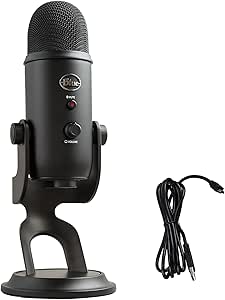 | Most Versatile All-Rounder | Microphone Type: USB condenser | Pickup Patterns: Cardioid, omnidirectional, bidirectional, stereo | Onboard Controls: Headphone volume, pattern selection, mute, gain | VIEW ON AMAZON | See Our Full Breakdown |
| condenser microphone for voice clarity | Compatibility | Connectivity | Polar pattern |
|---|---|---|---|
| Paladou 3.5 mm Clip-On Condens | Devices with a compatible 3.5 mm stereo audio jack | — | — |
| MAONO DGM20 USB Gaming Microph | — | USB and USB-C | Unidirectional (cardioid) |
| FIFINE K669 USB Desktop Microp | PC, laptop, PS4, Windows, Mac, Zoom, Discord, YouTube, Twitch | — | Cardioid |
| Audio-Technica AT2020 Cardioid | — | Wired | Cardioid (unidirectional) |
| USB Computer Microphone with F | Windows and Mac | USB | — |
| Pyle-PRO PMEMS10 On-Ear Conden | Shure systems, studio mixers | — | Omnidirectional |
| PROAR XLR Condenser Microphone | — | XLR | Cardioid (Unidirectional) |
| FIFINE K669B USB Condenser Mic | PC, Mac, laptop, PS4, PS5, Discord, OBS, Teamspeak, Twitch, Zoom, Webex | — | Cardioid |
| ZealSound K66 USB Podcast Micr | Windows PC, Mac, PS4, PS5, iPhone, iPad, USB-C devices | — | — |
| TONOR TC-777 USB Cardioid Cond | — | USB (Type-A) | — |
| Amazon Basics Condenser Microp | Windows 7/8/10+, Mac OS 10.10+ | USB plug and play | Cardioid (unidirectional) |
| CMTECK G009 USB Desktop Microp | Windows 7/8/10, macOS, PS4 | USB | — |
| FIFINE AmpliGame A6V USB Gamin | PS4, PS5, Windows, Mac | USB, 6.6 ft detachable cable | Cardioid |
| RØDE NT1 Signature Series Stud | — | XLR (requires interface) | Cardioid |
| Logitech Blue Yeti USB Microph | Mac and PC | — | — |
More Details on Our Top Picks
Paladou 3.5 mm Clip-On Condenser Microphone for PC and Mobile Devices
The clip-on design keeps the microphone near your mouth while leaving your hands free, which can help keep speech clear during calls, voice-overs, or mobile recordings. Compared with the desktop FIFINE K669, it takes up no desk space and moves with you, but it offers fewer controls and no stated headphone monitoring. Its plug-and-play 3.5 mm connection also avoids USB setup, provided your device has a compatible stereo jack. The roughly five-foot cable gives some room to move, though it is less flexible than the six-foot USB gooseneck option in this roundup. This is a straightforward choice for buyers who prioritize a small, wearable mic over studio-style positioning or adjustment.
Pros:- Clip-on form keeps the microphone close to the speaker without occupying desk space
- Plug-and-play setup requires no driver
- Works with compatible PCs, laptops, and smartphones
- Suitable for calls, streaming, gaming, and voice-over
Cons:- Requires a compatible 3.5 mm stereo audio jack
- Approximately five-foot cable limits movement compared with longer options
- No listed onboard gain control or headphone monitoring
Best for: Laptop and smartphone users who want a wearable mic for calls, streaming, or voice-over and have a compatible 3.5 mm stereo jack.
Not ideal for: Buyers whose devices lack a compatible 3.5 mm input, or who need a desktop gain knob, headphone monitoring, or advanced noise controls.
- Microphone type:Condenser
- Connector:3.5 mm audio jack
- Cable length:Approximately 5 ft (1.5 m)
- Setup:Plug and play; no driver required
- Compatibility:Devices with a compatible 3.5 mm stereo audio jack
- Design:Clip-on
Our verdict“Choose the Paladou if you want a simple wearable mic for compatible devices and do not need desktop controls or monitoring.”
MAONO DGM20 USB Gaming Microphone for PC
The cardioid pickup and one-key noise cancellation give this USB gaming mic a practical advantage when keyboard noise or room sounds compete with speech. Compared with the FIFINE K669, the DGM20 adds a mute button, gain control, and zero-latency headphone monitoring, so a streamer can adjust levels and hear the feed without extra steps. Those controls make it more suited to an active gaming desk, though the noise reduction software is listed as Windows-only, limiting that benefit on Mac. USB-A and USB-C connectivity helps with device compatibility, while corded power keeps placement tethered. RGB lighting is a style extra rather than a clarity feature; buyers focused on voice should weigh the controls and noise handling more heavily.
Pros:- Cardioid pattern focuses pickup toward the speaker
- One-key noise cancellation can suppress background noise
- Onboard mute and gain controls support quick adjustments
- Zero-latency 3.5 mm headphone monitoring
Cons:- Noise reduction software is Windows-only
- Corded USB power limits placement flexibility
- RGB lighting adds no direct benefit to voice clarity
Best for: PC gamers and streamers who want cardioid voice pickup, quick mute and gain controls, and headphone monitoring at their desk.
Not ideal for: Mac users relying on the described noise reduction software, or anyone seeking a wireless mic or a studio XLR setup.
- Connectivity:USB and USB-C
- Polar pattern:Unidirectional (cardioid)
- Audio sensitivity:10 dB
- Signal-to-noise ratio:73 dB
- Frequency response:20 KHz
- Compatible devices:PC, laptop, desktop, Mac, PS4, PS5
- Special features:One-tap mute, noise cancellation, gain control, RGB lighting, zero-latency monitoring
- Materials:Metal and plastic
Our verdict“Pick the DGM20 for a gaming desk where noise controls and live headphone monitoring matter more than wireless freedom.”
FIFINE K669 USB Desktop Microphone for Recording and Online Meetings
The cardioid pattern gives the K669 a focused starting point for clearer speech: it favors sound from the front, which can help keep some surrounding noise out of calls and recordings. Its onboard volume knob makes input adjustment more direct than on the clip-on Paladou, which has no listed level control. The sturdy metal construction also suits a fixed desk setup. Compared with the feature-rich MAONO DGM20, this FIFINE is simpler: the supplied details do not list headphone monitoring, a mute button, or noise cancellation. That keeps operation straightforward, but leaves fewer ways to manage a changing room or check your audio while speaking. Buyers should also plan around its front-facing pickup and use placement that keeps their voice in front of the mic.
Pros:- Cardioid pickup focuses on sound from the front
- Hardware volume knob allows quick input adjustments
- Metal construction helps limit vibration
- Plug-and-play USB setup
Cons:- Front-facing cardioid pickup offers limited flexibility for multiple speakers
- No headphone monitoring is listed
- No included shock mount or stand adjustments are specified
Best for: PC, Mac, or PS4 users who want a straightforward USB desktop mic with a physical level control for meetings, gaming, or voice-overs.
Not ideal for: Speakers who move around while recording, or users who need headphone monitoring, a mute button, or adjustable pickup patterns.
- Model:K669
- Connection:USB
- Microphone type:Condenser
- Polar pattern:Cardioid
- Controls:Volume knob
- Construction:Metal
- Compatibility:PC, laptop, PS4, Windows, Mac, Zoom, Discord, YouTube, Twitch
- Color:White
Our verdict“Choose the K669 for uncomplicated USB voice capture with a physical level knob, provided you can stay in front of it.”
Audio-Technica AT2020 Cardioid Condenser Studio XLR Microphone
The AT2020 is the lineup’s clearest step toward a studio-oriented XLR setup. Its custom low-mass diaphragm is described as offering extended frequency and transient response, giving recorded speech the potential for more detail than the plug-and-play USB FIFINE K669. A cardioid pattern helps reduce pickup from the sides and rear, which supports focused voice capture when the mic and speaker are positioned carefully. High SPL handling and a metal enclosure suit a broader recording environment, but this is not the easy desk option: it needs phantom power and an XLR connection, typically as part of a compatible interface setup. Compared with the MAONO DGM20, it trades gaming controls and simple USB connection for a more studio-focused signal path.
Pros:- Cardioid pattern reduces side and rear pickup
- Custom diaphragm supports extended frequency and transient response
- High SPL handling suits varied recording levels
- Rugged metal construction
Cons:- Requires phantom power
- XLR connection needs compatible recording equipment
- No onboard mute, gain knob, or headphone monitoring is listed
Best for: Home-studio vocalists and voice-over creators who already have, or plan to add, an XLR interface with phantom power.
Not ideal for: Beginners seeking a direct USB connection, onboard mute or gain controls, or a mic that works without additional audio equipment.
- Connectivity:Wired
- Connector:3-pin XLRM
- Polar pattern:Cardioid (unidirectional)
- Frequency response:20 Hz
- Sensitivity:37 dB
- Impedance:200 ohms
- Signal-to-noise ratio:74 dB
- Power source:Phantom power
- Enclosure material:Metal
Our verdict“Choose the AT2020 for a phantom-powered home studio where detailed XLR recording matters more than plug-and-play convenience.”
USB Computer Microphone with Flexible Gooseneck, Mute Button & LED Indicator – Desktop Microphone for Gaming, Streaming & Recording (Windows/Mac Compatible)
The flexible 360-degree gooseneck makes this mic easy to aim toward a speaker, and the touch mute button’s LED gives a clear visual cue when the mic is off. For voice clarity, though, its omnidirectional pickup is a real compromise: it can capture room noise from all directions, unlike the cardioid FIFINE K669 or MAONO DGM20. That makes this better suited to a quiet workspace or users who value placement flexibility over room-noise rejection. The six-foot USB cable and plug-and-play Windows and Mac support suit moving between desk positions, while the stated best capture distance of 6–12 inches means it still needs deliberate placement. Its compact base is convenient, but the mic has no audio output of its own.
Pros:- Flexible metal gooseneck allows adjustable positioning
- Touch-sensitive mute button has a visible LED status indicator
- Plug-and-play setup requires no drivers or software
- Six-foot USB cable supports flexible desk placement
Cons:- Omnidirectional pickup can capture background noise
- Best voice capture requires staying within 6–12 inches
- No audio output; monitoring must use the computer
Best for: Windows and Mac users who want a flexible desktop mic they can reposition easily in a quiet home or office.
Not ideal for: People recording in noisy rooms or users who need focused directional pickup, headphone output, or a microphone that works well from across the room.
- Connectivity:USB
- Pickup pattern:360-degree omnidirectional
- Cable length:1.8 m / 6 ft
- Compatibility:Windows and Mac
- Mute control:Touch-sensitive button
- LED indicator:Green when working; red when muted
- Materials:Metal gooseneck, ABS base, non-slip silicone pad
- Voice capture distance:6–12 inches
Our verdict“Pick this gooseneck mic for easy positioning in a quiet room, but choose a cardioid model if background noise is a concern.”
Pyle-PRO PMEMS10 On-Ear Condenser Headset Microphone with 4-Pin Mini XLR Cable and Windscreen (Beige)
Not every voice-clarity job happens at a desk. This on-ear headset keeps the capsule at a fixed distance from the mouth, which means consistent volume whether the speaker is presenting, teaching, or hosting a seminar — something a tripod mic like the TONOR TC-777 simply cannot match for a moving speaker. The beige, skin-tone finish nearly disappears on camera, and the flexible frame stays comfortable over long sessions, even with glasses. That said, the omnidirectional pattern is a double-edged sword: it captures the voice evenly but pulls in more room noise than the cardioid designs elsewhere in this lineup. It also needs a compatible Shure system or a mixer with a 4-pin mini XLR input, so it fits professional audio chains rather than casual USB setups.
Pros:- Capsule stays at consistent mouth distance for uniform voice volume
- Beige skin-tone color is nearly invisible on camera
- Lightweight flexible frame comfortable for extended wear, even with glasses or hats
- Compatible with Shure systems and studio mixers, with two windscreens included
Cons:- Omnidirectional pickup captures more background and room noise than cardioid alternatives
- Requires a compatible wireless system or mixer with 4-pin mini XLR input — not plug-and-play
Best for: Presenters, lecturers, and fitness or seminar instructors who need consistent hands-free voice pickup while speaking at length
Not ideal for: Home streamers and podcasters — the omni pattern and XLR system requirements make a USB cardioid mic like the FIFINE K669B a simpler, cleaner choice
- Model:PMEMS10
- Type:On-ear condenser headset microphone
- Polar Pattern:Omnidirectional
- Output Impedance:2k Ohms ±30%
- Connector:4-pin mini XLR
- Color:Beige / Skin Tone
- Windscreens Included:2
- Compatibility:Shure systems, studio mixers
Our verdict“This pick makes the most sense for live presenters who need stable, hands-free voice clarity and already own a compatible audio system.”
PROAR XLR Condenser Microphone with Desktop Stand for Vocals and Podcasting
Of the XLR options in this roundup — including the Audio-Technica AT2020 — this is the only one that arrives as a complete recording kit: weighted desktop stand, shock mount, pop filter, and XLR cable all in the box. That matters for a first-time podcaster who would otherwise need to source each piece separately. The cardioid back-electret capsule with 130dB max SPL handling means loud, dynamic vocal takes won’t distort, and the shock mount keeps desk thumps out of the recording. The catch is the same one the AT2020 carries: 48V phantom power is required from an interface or mixer that isn’t included, so the true cost sits above the sticker. Compared with plug-and-play models like the FIFINE K669B, you give up instant computer connectivity in exchange for a genuinely upgradeable studio chain.
Pros:- Everything needed to record arrives in the box: stand, shock mount, pop filter, and XLR cable
- 130dB max SPL handling handles loud vocals without distortion
- Weighted base and shock mount keep desk vibrations out of the recording
- Full metal chassis shields against external interference
Cons:- Requires an audio interface or mixer with 48V phantom power, sold separately
- XLR-only connection means it is not plug-and-play with computers without extra hardware
Best for: Aspiring podcasters and voiceover artists building their first XLR setup who want every accessory included in one purchase
Not ideal for: Anyone without an audio interface or mixer — the mic won’t function without 48V phantom power, making a USB model the smarter starting point
- Connectivity:XLR
- Polar Pattern:Cardioid (Unidirectional)
- Sensitivity:-32dB ±3dB
- Frequency Response:20 Hz – 20,000 Hz
- Max SPL:130dB
- Power Source:48V phantom power (external interface/mixer required)
- Enclosure Material:Metal
- Included Accessories:Desktop stand, shock mount, pop filter, XLR to XLR cable, user manual
Our verdict“This option stands out for beginners committing to an XLR workflow who want a full accessory bundle upfront rather than piecemeal buying.”
FIFINE K669B USB Condenser Microphone for Vocals, Podcasting, and Meetings
Where the PROAR demands an interface and phantom power, the K669B works the moment its USB cable hits a port — no drivers, no mixer, no fuss. That simplicity is its whole argument. The cardioid pattern does respectable background-noise rejection for calls and recording, the all-metal body feels sturdier than the price class usually allows, and the on-mic volume knob is a genuinely useful touch that cheaper competitors omit. Compared with the TONOR TC-777, it trades the shock mount and pop filter for broader platform support and that hardware volume control. The limitations are real but predictable: no Xbox or phone support, and apps like Zoom can fight the mic with auto-volume settings unless the user disables them — a small friction point worth knowing before the first meeting.
Pros:- True plug-and-play USB setup with no drivers or phantom power needed
- Durable metal construction with a stable tripod stand included
- On-mic volume knob allows quick level adjustments mid-session
- Cardioid pattern delivers clear voice while reducing background noise
Cons:- Not compatible with Xbox or phones
- Auto-volume features in apps like Zoom can cause fluctuating levels unless disabled
Best for: Remote workers, students, and casual podcasters who want clear voice pickup from a USB port with zero setup effort
Not ideal for: Console gamers on Xbox or anyone recording on a phone — neither is supported, and mobile creators should look at the ZealSound K66 instead
- Model:K669B
- Type:USB condenser microphone
- Polar Pattern:Cardioid
- Connection:USB-B to USB-A/C
- Cable Length:5.9 feet
- Power:USB-powered (no 48V phantom power required)
- Stand:Stable tripod stand
- Controls:On-mic volume knob
- Compatibility:PC, Mac, laptop, PS4, PS5, Discord, OBS, Teamspeak, Twitch, Zoom, Webex
Our verdict“This model is better suited to anyone who values effortless USB simplicity for calls and recording over expandable studio features.”
ZealSound K66 USB Podcast Microphone with Noise Reduction, Gain and Mute Controls
The K66’s strongest card is device flexibility: bundled USB-C and Lightning adapters let it record straight onto an iPhone or iPad, territory the FIFINE K669B and TONOR TC-777 can’t reach. Add a dedicated noise reduction mode, zero-latency headphone monitoring, and physical gain, echo, and mute controls, and it plays a tier above basic USB mics for creators who record in less-than-quiet spaces. That monitoring jack alone changes the workflow — you hear yourself in real time instead of discovering problems after the take. The tradeoffs: noise reduction varies with the room, so it softens rather than eliminates busy environments, and full control functionality depends on which device it’s plugged into. Compared with the K669B, you get more recording control and mobile reach; you give up some of that mic’s dead-simple, set-and-forget character.
Pros:- USB-C and Lightning adapters enable direct recording on phones and tablets
- Noise reduction mode helps tame background sounds
- Zero-latency headphone monitoring via 3.5mm jack
- Physical controls for gain, monitoring, echo, and mute
Cons:- Noise reduction effectiveness varies by environment and won’t replace acoustic treatment
- Full feature compatibility depends on the connected device
Best for: Mobile creators and hybrid podcasters who record across computers, consoles, tablets, and iPhones and want onboard control over the sound
Not ideal for: Buyers in very noisy environments expecting noise reduction to work miracles — a treated room and a cardioid mic like the FIFINE K669B will still outperform it
- Microphone Type:USB condenser
- Pickup Pattern:Cardioid
- Frequency Response:40 Hz – 18 kHz
- Sampling Rate:46 kHz
- Sensitivity:-45 dB ±3 dB
- Monitoring:Zero-latency 3.5mm headphone jack
- Controls:Microphone volume, monitoring volume, echo, mute, noise reduction
- Compatibility:Windows PC, Mac, PS4, PS5, iPhone, iPad, USB-C devices
- Included Adapters:USB-C and Lightning
Our verdict“This pick makes the most sense for creators who move between phone, tablet, and computer and want hands-on controls without an interface.”
TONOR TC-777 USB Cardioid Condenser Microphone with Tripod and Pop Filter
For a first microphone purchase, the TC-777 covers the essentials better than most entry-level rivals: the box includes a tripod, shock mount, and pop filter, the three accessories that most cheap USB mics leave out. That pop filter directly improves voice clarity by taming plosives, and the cardioid pattern keeps keyboard and fan noise at a reasonable distance. Against the FIFINE K669B, it wins on included accessories but loses on reach — a fixed USB-A connection with a 1.9m cable and no phone support. One-click mute and volume controls on the body are handy for streamers mid-broadcast. It’s a mono, single-channel mic with no headphone jack, so there’s no real-time monitoring, and Xbox owners are left out entirely — console players need to check compatibility before buying.
Pros:- Includes tripod, shock mount, and pop filter — a full starter kit out of the box
- Cardioid pickup reduces background noise for clearer speech
- Plug-and-play USB connection with one-click mute and volume controls
- Works with Windows, Mac, PS4, and PS5
Cons:- Not compatible with Xbox
- Single-channel mono design with no headphone monitoring jack
Best for: First-time streamers, students, and home-office users who want a complete accessory kit at an entry-level price
Not ideal for: Xbox gamers and anyone who needs headphone monitoring or phone recording — the single USB channel and platform limits will frustrate them
- Connectivity:USB (Type-A)
- Pickup Pattern:Unidirectional cardioid
- Impedance:680 ohm
- Signal-to-Noise Ratio:80 dB
- Channels:1
- Cable Length:1.9 m
- Compatible Devices:PC, laptop, PS4, PS5
- Included Accessories:Foldable tripod, mini shock mount, pop filter, manual
Our verdict“This option stands out for budget-conscious beginners who want every mounting and plosive-taming accessory bundled in on day one.”
Amazon Basics Condenser Microphone for PC with 360° Adjustable Stand
For anyone who wants honest voice clarity without paying for extras, this option stands out as the simplest entry point in the lineup. The cardioid pattern does real work here — it pulls the voice forward while pushing keyboard clatter and room hum back, which is more than I can say for the CMTECK G009’s conflicting polar pattern claims. The one-tap mute is a small feature that matters a lot on live calls.
The tradeoff is audio refinement. Its 75 dB signal-to-noise ratio sits below the FIFINE AmpliGame A6V’s spec sheet ambitions, and there is no software layer like the Blue Yeti’s Blue VO!CE to clean up the signal after the fact. Still, compared with the TONOR TC-777, the detachable 5/8-inch stand thread means a cheap boom arm upgrade path later — a rare courtesy at this tier.
Pros:- Genuine plug-and-play on Windows and Mac with no drivers
- Cardioid pattern isolates the voice from background noise
- One-tap mute prevents awkward on-call moments
- Detachable stand with standard 5/8-inch thread accepts boom arms
Cons:- Corded power only, no wireless flexibility
- 75 dB signal-to-noise ratio trails better-specified rivals
Best for: First-time streamers and remote workers who want plug-and-play voice clarity on a tight budget
Not ideal for: Buyers chasing studio-grade detail — the modest signal-to-noise ratio and fixed USB-only design cap its ceiling
- Connectivity:USB plug and play
- Polar Pattern:Cardioid (unidirectional)
- Diaphragm Size:14mm
- Frequency Response:20 Hz – 20 kHz
- Signal-to-Noise Ratio:75 dB
- Stand:360° adjustable, detachable, 5/8-inch thread
- Compatibility:Windows 7/8/10+, Mac OS 10.10+
Our verdict“This pick makes the most sense for buyers who want dependable voice isolation today and a boom-arm upgrade path tomorrow.”
CMTECK G009 USB Desktop Microphone with Mute Function
This model is better suited to spoken clarity on calls and lessons than to polished content creation, and that distinction is exactly why it earns a slot. The gooseneck design lets you aim the capsule directly at your mouth, which is a positioning advantage the fixed-body Amazon Basics mic can’t match — proximity is half the battle for intelligible speech. The built-in pop filter and LED mute indicator round out a genuinely practical call-focused package.
The compromises are real, though. Unlike the FIFINE K669, it won’t work with Linux, Android, or Raspberry Pi, so it’s locked to Windows, Mac, and PS4. And the spec sheet contradicts itself on whether the pickup is omnidirectional or unidirectional — if rejecting room noise is your top priority, a confirmed cardioid like the TONOR TC-777 is the safer bet.
Pros:- Flexible gooseneck allows exact mouth-to-mic positioning
- Mute button with LED indicator shows live status at a glance
- Built-in pop filter and noise-cancelling chip tame plosives and hum
- Driver-free USB connection with no external power needed
Cons:- No Linux, Android, or Raspberry Pi support
- Conflicting polar pattern specs make noise rejection claims uncertain
Best for: Students and remote professionals on video calls who need precise mic positioning and quick muting
Not ideal for: Linux or Android users, and anyone who needs guaranteed directional noise rejection for untreated rooms
- Connectivity:USB
- Microphone Type:Condenser
- Form Factor:Flexible gooseneck
- Controls:Mute button with LED, volume control
- Signal-to-Noise Ratio:76 dB
- Compatibility:Windows 7/8/10, macOS, PS4
- Build:Metal enclosure
Our verdict“Choose this if your priority is clear, well-positioned speech on calls rather than studio-quality recordings.”
FIFINE AmpliGame A6V USB Gaming Microphone with RGB
Of all the USB picks here, this one is built around the streaming workflow specifically. The quick-mute with an RGB status indicator solves a problem every streamer has experienced — the dreaded hot-mic moment — and the 192kHz sampling rate captures vocal detail that budget models like the FIFINE K669B simply don’t resolve. The bundled shock mount and pop filter mean you’re recording properly isolated audio on day one.
Two things hold it back from a broader recommendation. The RGB lighting can’t be switched off independently — it only dies when muted, which is maddening if your camera catches the glow or you just find it distracting. And the included tripod is less versatile than a boom arm, an area where the detachable-stand Amazon Basics mic actually offers more mounting freedom. Its 70 dB signal-to-noise ratio also trails the CMTECK G009 on paper, even if the higher sampling rate compensates in practice.
Pros:- 192kHz sampling rate captures noticeably more vocal detail
- Quick mute with RGB indicator prevents streaming accidents
- Shock mount and pop filter included in the box
- Plug-and-play across PS4/PS5, Windows, and Mac
Cons:- RGB lighting cannot be disabled independently of mute
- Tripod stand is less flexible than a boom arm
Best for: Twitch and YouTube streamers who want detailed vocal capture plus visual mute confirmation on camera
Not ideal for: Podcasters or call-takers who want a clean, distraction-free desk setup — the always-on RGB is hard to ignore
- Polar Pattern:Cardioid
- Sampling Rate:192kHz
- Signal-to-Noise Ratio:70 dB
- Connectivity:USB, 6.6 ft detachable cable
- Compatibility:PS4, PS5, Windows, Mac
- Lighting:RGB, 7 gradient colors
- Included Accessories:Shock mount, pop filter, tripod stand, USB cable
Our verdict“This is the streaming-first choice: brilliant voice detail and mute safety, as long as you can live with the glow.”
RØDE NT1 Signature Series Studio Condenser Microphone
Once voice clarity becomes the product itself rather than a convenience, this is where the money goes. The large-diaphragm capsule and famously low self-noise deliver a warmth and detail that small-diaphragm USB models — the Blue Yeti included — cannot reproduce from the same distance. Compared with the Audio-Technica AT2020, another XLR cardioid in this space, the complete accessory bundle of SM6 shock mount with integrated pop filter, XLR cable, and dust cover removes most of the hidden costs of going pro.
The barrier is infrastructure. There’s no USB port here: you’ll need an audio interface with phantom power before you record a single word, which adds real cost and setup complexity the plug-and-play FIFINE AmpliGame A6V avoids entirely. It’s also a studio tool, not a desk gadget — a noisy untreated room will be captured faithfully, background noise and all.
Pros:- Very low self-noise for clean, detailed vocal recordings
- Large-diaphragm cardioid design focuses on the voice
- Full bundle includes SM6 shock mount with pop filter, XLR cable, and dust cover
- Rejects room sound effectively in treated spaces
Cons:- Requires a separate audio interface with phantom power
- No USB option for quick, driver-free connectivity
Best for: Podcasters and vocalists ready to invest in an audio interface for genuinely professional voice capture
Not ideal for: Casual users without an interface — this mic simply won’t function straight out of the box
- Microphone Type:Large-diaphragm condenser
- Polar Pattern:Cardioid
- Connectivity:XLR (requires interface)
- Color:Black
- Included Accessories:SM6 shock mount with pop filter, XLR cable, dust cover
- Best Use:Vocals, streaming, studio recording
Our verdict“If you already own or plan to buy an interface, this delivers the clearest, most polished voice in the entire roundup.”
Logitech Blue Yeti USB Microphone with Blue VO!CE, 4 Pickup Patterns, Blackout
This option stands out for flexibility no other USB mic in this lineup can match. Four pickup patterns mean one mic handles solo voice work in cardioid, two-person interviews in bidirectional, and room audio in omnidirectional or stereo — the single-pattern RØDE NT1 and FIFINE AmpliGame A6V each cover only a fraction of those scenarios. Blue VO!CE software adds broadcast-style voice processing, cleaning up clarity in ways raw hardware at this price can’t.
The catch is that the software isn’t optional: Logitech G HUB must be installed for full functionality, which rules it out for anyone on locked-down work machines or Linux. Onboard gain, mute, and zero-latency monitoring partly offset that, but the Yeti is also larger and heavier on a desk than compact options like the FIFINE K669, and its side-address design trips up newcomers who speak into the top.
Pros:- Four pickup patterns cover solo, interview, and room recording
- Onboard gain, mute, and zero-latency headphone monitoring
- Blue VO!CE software adds real-time voice clarity processing
- Mounts on a stand or boom arm beyond the included desktop base
Cons:- Full functionality depends on installing Logitech G HUB
- Bulky footprint dominates a small desk setup
Best for: Multi-purpose creators who podcast, stream, record interviews, and take calls with one microphone
Not ideal for: Users on restricted or non-Windows/Mac systems who can’t install Logitech G HUB
- Microphone Type:USB condenser
- Pickup Patterns:Cardioid, omnidirectional, bidirectional, stereo
- Onboard Controls:Headphone volume, pattern selection, mute, gain
- Monitoring:Zero-latency headphone output
- Compatibility:Mac and PC
- Software:Logitech G HUB (Blue VO!CE)
- Mounting:Included desktop stand; stand/boom arm compatible
Our verdict“This is the one-mic-for-everything choice if you value pattern flexibility and software polish over plug-and-play simplicity.”

How We Picked
I judged every microphone through one lens: how clearly it reproduces the human voice. That meant prioritizing cardioid or directional pickup patterns that reject room reflections, frequency response accuracy in the speech-critical 100 Hz to 8 kHz range, self-noise levels on the studio mics, and usable onboard controls like gain and mute that prevent distorted or uneven audio. Connectivity mattered too, because a microphone that needs an interface is a different purchase decision than a plug-and-play USB model.
The ranking order reflects a simple logic: microphones that deliver the best voice detail per dollar spent and effort required sit higher. Studio XLR condensers lead for pure clarity, well-controlled USB mics fill the value tier, and convenience-first options like clip-ons and headset mics rank lower for clarity even though they win on portability. Every pick also needed honest drawbacks — no microphone here is right for everyone, and I’ve flagged exactly who should skip each one.
| condenser microphone for voice clarity | Polar pattern |
|---|---|
| Paladou 3.5 mm Clip-On Condens | — |
| MAONO DGM20 USB Gaming Microph | Unidirectional (cardioid) |
| FIFINE K669 USB Desktop Microp | Cardioid |
| Audio-Technica AT2020 Cardioid | Cardioid (unidirectional) |
| USB Computer Microphone with F | — |
| Pyle-PRO PMEMS10 On-Ear Conden | Omnidirectional |
| PROAR XLR Condenser Microphone | Cardioid (Unidirectional) |
| FIFINE K669B USB Condenser Mic | Cardioid |
| ZealSound K66 USB Podcast Micr | — |
| TONOR TC-777 USB Cardioid Cond | — |
| Amazon Basics Condenser Microp | Cardioid (unidirectional) |
| CMTECK G009 USB Desktop Microp | — |
| FIFINE AmpliGame A6V USB Gamin | Cardioid |
| RØDE NT1 Signature Series Stud | Cardioid |
| Logitech Blue Yeti USB Microph | — |
Factors to Consider When Choosing Condenser Microphone For Voice Clarity
Choosing a condenser microphone for voice clarity involves more than picking the highest-ranked model. Your room, your connection preference, and how you plan to use the mic all change which option makes sense. These are the factors I weighed — and the ones most buyers get wrong.USB or XLR: The Decision That Shapes Everything Else
The single biggest fork in the road is connectivity. USB microphones bundle the preamp and analog-to-digital converter into the mic itself, which keeps costs down and setup simple, but it caps your upgrade path — you’re locked into the mic’s internal electronics forever. XLR microphones like the AT2020 and RØDE NT1 route through an audio interface, which means better preamps, more clean gain, and the ability to keep the mic when you upgrade everything around it. The common mistake is buying an XLR mic and pairing it with a cheap interface, which can sound worse than a good USB mic. If you’re starting from zero and only need clear voice, USB is the smarter first purchase. If you already own an interface or plan to grow into music production, XLR pays off long-term.
Your Room Matters as Much as the Microphone
Condenser microphones are highly sensitive by design, which is exactly why they capture voice detail so well — and why they also capture echo, fan noise, and keyboard clatter with equal enthusiasm. A $250 studio condenser in a bare, hard-walled room will often sound worse than a $50 USB mic in a carpeted bedroom with curtains. Before spending more on a microphone, listen to a test recording in your actual space: if you hear audible room echo, treat the room first with soft furnishings or acoustic panels. This is why I ranked some less-sensitive budget mics higher than their specs alone would suggest. Buyers who ignore room acoustics are the ones most disappointed after upgrading.
Polar Pattern and Off-Axis Noise Rejection
Most microphones in this roundup use a cardioid pattern, which picks up sound from the front while rejecting noise behind the mic — ideal for a single speaker facing the capsule. The Blue Yeti’s four-pattern design adds omni and bidirectional options, useful for roundtable conversations, but each extra pattern also invites more room noise into the recording. Clip-on and headset condensers sidestep the pattern problem entirely by sitting centimeters from your mouth, which boosts voice-to-noise ratio dramatically at the cost of tone quality. Match the pattern to your use case: solo voice work wants tight cardioid, and multi-speaker scenarios justify the flexibility. A tighter pattern is almost always the safer default for clarity-focused buyers.
Onboard Controls: Gain, Mute, and Headphone Monitoring
A microphone with a physical gain dial lets you set input level once and forget it, while software-only control means fiddling with your operating system every time you switch apps — a genuine frustration for people who jump between calls and recordings. A hardware mute button matters enormously for streamers and remote workers who need instant silence during coughs or interruptions. Zero-latency headphone monitoring, found on models like the Blue Yeti and MAONO DGM20, lets you hear exactly what the mic hears, which is the fastest way to catch clarity problems before your audience does. These features don’t improve the capsule itself, but they make good sound repeatable. I weighted them heavily because consistency is half of what people perceive as ‘clear’ audio.
Bundled Accessories and Hidden Costs
The sticker price rarely tells the full story. XLR microphones require an interface, cable, and stand, which can double the real cost of an AT2020 or RØDE NT1 setup. USB mics like the TONOR TC-777 and FIFINE K669 include tripods and pop filters, which saves money but often means flimsy desk stands that transmit vibrations — a shock mount upgrade is one of the cheapest clarity improvements available. Pop filters deserve attention too: plosive ‘p’ and ‘b’ pops are the most common reason amateur voice recordings sound amateur, and not every bundle includes one. Build the accessory checklist into your budget before comparing prices. The cheapest mic with the right accessories frequently beats a pricier mic without them.
Matching the Mic to What You Actually Do
Voice clarity means different things for a podcast, a Zoom meeting, and a game stream. Meetings favor simplicity and mute buttons over raw fidelity, which is why the CMTECK G009 and Amazon Basics options exist. Podcasting and vocal recording reward detail and low self-noise, pushing you toward the AT2020, NT1, or a controlled USB mic like the ZealSound K66. Streaming adds visual and control demands, which is where the AmpliGame A6V and MAONO DGM20 with their tap-to-mute and RGB styling fit. The mistake I see most often is buying a studio mic for casual calls — you’ll hear your own breathing and room more clearly, which feels like a downgrade. Buy for your primary use, not your imagined future one.
Frequently Asked Questions
Do I need an audio interface, or is a USB condenser enough for clear voice recordings?
For most voice-focused uses — podcasts, streaming, video calls, voiceovers — a quality USB condenser is genuinely enough, and models like the FIFINE K669 or ZealSound K66 produce speech clarity that most listeners can’t distinguish from entry-level XLR setups. An interface becomes worthwhile when you need cleaner gain for quiet speakers, want to upgrade microphones independently over time, or plan to record music alongside voice. The practical threshold is this: if you’re earning money from your audio or publishing content where sound quality is judged, the XLR route (AT2020 or NT1 plus interface) gives you headroom USB can’t match. Casual users should put the interface money toward a better USB mic and room treatment instead.
Why does my condenser microphone pick up so much background noise, and can I fix it?
Condensers are designed to be sensitive, so the noise usually isn’t a defect — it’s the microphone doing its job in a noisy space. Fixes go in order of impact: first, reduce the distance between your mouth and the mic to 15–20 cm, which raises your voice above the room; second, add soft material to the room (curtains, rugs, foam panels) to kill reflections; third, enable a noise gate or suppression in software like OBS or Discord. A cardioid pattern helps only if the noise source is behind the mic, so position your computer fans and keyboard off-axis. If your environment can’t be quieted, a headset or clip-on condenser like the Pyle-PRO or Paladou sidesteps the problem by sitting right at your mouth. Software cleanup should be the last resort, as aggressive suppression makes voice sound underwater.
Is the Blue Yeti still worth buying when cheaper mics have similar specs?
The Yeti’s value isn’t in raw clarity — several cheaper microphones match or beat its speech fidelity — but in its flexibility and control features. The four pickup patterns handle interviews and multi-person recording that single-pattern mics can’t, the onboard gain dial and headphone jack make it self-contained, and Blue VO!CE software adds broadcast-style processing that would otherwise require extra tools. If you only ever record solo voice, a FIFINE K669 or TONOR TC-777 gets you 90% of the way for much less. Where the Yeti still earns its price is for creators whose needs change week to week. It’s a versatility purchase more than a pure clarity purchase.
What accessories actually improve voice clarity, and which ones are marketing fluff?
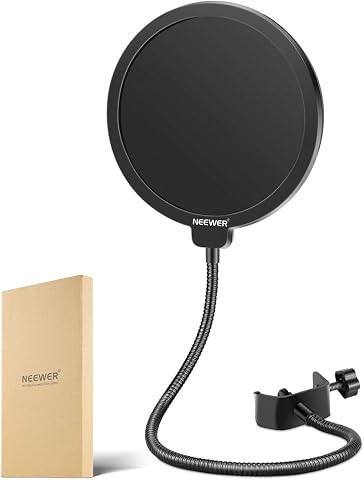
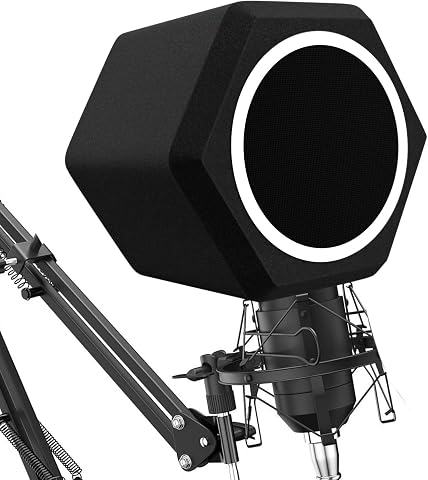
Three accessories deliver real improvements: a pop filter kills plosive blasts that ruin takes, a boom arm or shock mount stops desk vibrations and typing from traveling up the stand, and closed-back headphones let you monitor problems live. Everything else is situational. Foam windshields help outdoors but slightly dull indoor speech. Reflective filters behind the mic do far less than people expect — they can’t fix a bad room, and the money is better spent on actual room treatment. Cheap bundled tripods are the first thing worth replacing, because vibration rumble is one of the most common complaints with budget mic kits. Prioritize a pop filter and boom arm before considering anything exotic.
Can a cheap condenser microphone under $50 really deliver clear voice quality?
Yes, within clear limits. Budget condensers like the FIFINE K669 and TONOR TC-777 use capsules that handle the speech frequency range well, and for a single voice in a reasonably quiet room, the audible gap to mid-range mics is smaller than pricing suggests. Where cheap mics fall apart is in edge cases: loud environments overload their capsules, gain controls (when present) can be noisy at high settings, and build quality means shorter lifespans with daily use. The honest framing is that a $40 mic plus a $20 pop filter plus a quiet corner beats a $150 mic in a bad room every time. Spend more only when you’ve hit the ceiling of what your current mic and space can do — you’ll hear it as persistent harshness or noise you can’t remove.
Conclusion
After comparing all fifteen microphones against each other, the recommendations map cleanly onto buyer types. For best overall voice clarity, the Audio-Technica AT2020 pairs with any decent interface and delivers studio-grade speech detail that will outlast several upgrade cycles. The RØDE NT1 Signature Series is the best premium choice for vocalists and serious podcasters who want the lowest self-noise and richest tone in this lineup. On value, the FIFINE K669 wins — it nails the clarity-per-dollar balance for podcasters and home offices on a budget, with the TONOR TC-777 right behind it as the best beginner bundle thanks to its included tripod and pop filter. Streamers who want looks and tap-to-mute convenience should look at the MAONO DGM20 or FIFINE AmpliGame A6V, while the ZealSound K66 suits call-heavy users who need reliable gain and mute controls. For specific needs: the Pyle-PRO headset solves hands-free presenting, the Paladou clip-on handles mobile recording, and the Blue Yeti covers multi-person formats no single-pattern mic can. Whatever you pick, remember that a quiet room and a pop filter improve clarity more than any price jump — buy the mic that fits your space, not just your budget.