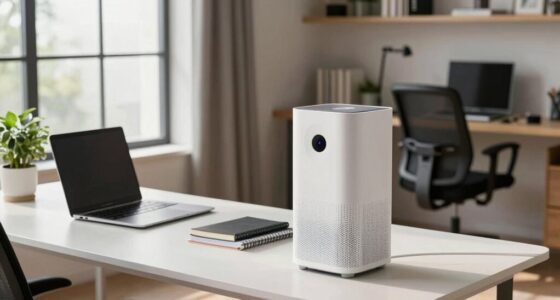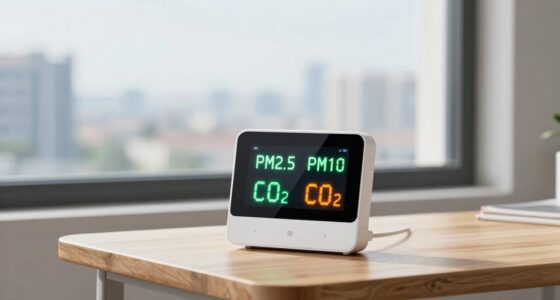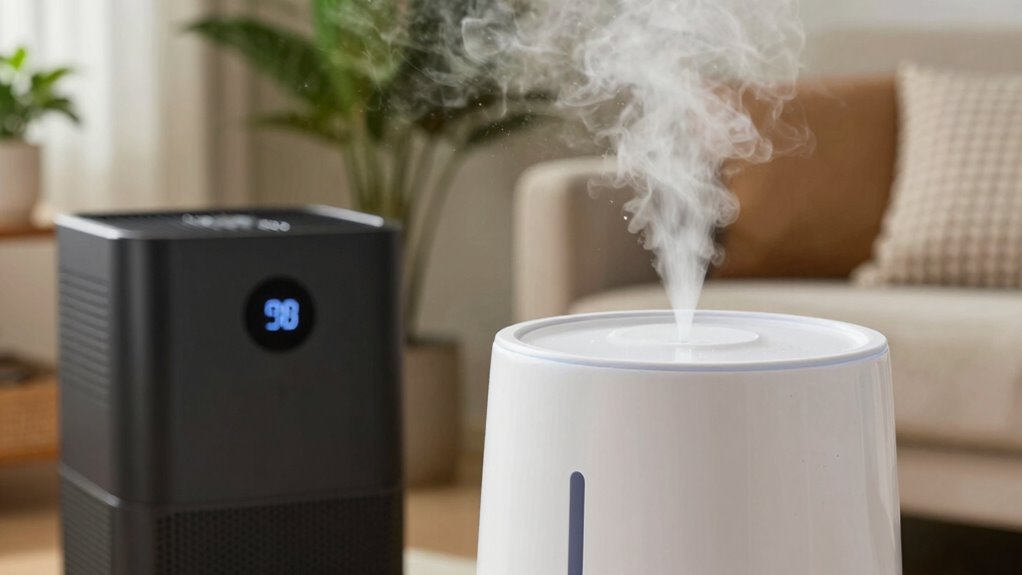

To determine if you need a humidifier or dehumidifier, first identify if your home feels dry or damp. If you notice static, cracked wood, or irritated skin, your air is too dry, so a humidifier can help. If you feel dampness, see condensation or mold, then a dehumidifier is needed. Choosing the right device improves air quality and comfort. For more tips on how to identify your specific needs, keep exploring your options.

Get comfort and recovery gear delivered free — and shop member deals
- Fast, free delivery on millions of items
- Access to Prime Big Deal Days deals on October 6–7
- Prime Video, Amazon Music and more included
Key Takeaways
- Identify if your indoor air feels dry, causing static, cracked wood, or irritated skin to determine if you need a humidifier.
- Detect signs of excess moisture, like mold, musty odors, or condensation, indicating a dehumidifier may be necessary.
- Measure indoor humidity levels with a hygrometer to decide whether humidity is too low or too high.
- Use a humidifier to add moisture in winter or dry environments; choose a dehumidifier to reduce dampness in humid conditions.
- Properly managing humidity levels (around 40-50%) helps address the specific air quality problem effectively.

Have you ever wondered whether you need a humidifier or a dehumidifier for your home? The answer largely depends on your environment and what you’re trying to improve. Both devices influence your indoor air quality, but in different ways. A humidifier adds moisture to the air, which can be beneficial if your space feels dry, especially during winter months. Conversely, a dehumidifier pulls excess moisture out, helping to prevent mold, reduce musty odors, and alleviate allergy triggers. Understanding which problem you actually have is key to choosing the right device and ensuring your air quality improves without unnecessary energy use.
Choosing between a humidifier and dehumidifier depends on your home’s moisture levels and comfort needs.
If your home feels consistently dry, you might notice static electricity, cracked woodwork, or irritated skin and sinuses. In this case, a humidifier can boost your air’s moisture content, making it more comfortable and healthier to breathe. However, keep in mind that adding moisture also impacts energy consumption. Many humidifiers run continuously or on high settings, which can lead to higher electricity bills if not managed properly. You’ll want to monitor the humidity levels with a hygrometer to prevent over-humidifying, which can have the opposite effect and promote mold growth, creating poor air quality. That’s why understanding your environment helps you avoid unnecessary energy consumption and maintains a healthy indoor atmosphere. Proper humidity management can significantly improve your comfort and energy efficiency.
On the other hand, if your home feels damp, smells musty, or you see condensation on windows, you likely need a dehumidifier. Reducing excess moisture improves air quality by limiting mold spores and dust mites, both of which thrive in humid environments. It also helps prevent structural damage to your home. Dehumidifiers tend to be energy-efficient, especially models designed for continuous operation, but they still consume electricity. Running one too long or at high capacity unnecessarily can bump up your energy bills. To optimize their efficiency, set the device to maintain ideal humidity levels—around 40-50%—and avoid running it when moisture isn’t a problem. Regular air quality checks can help you determine if your dehumidifier is working effectively. Proper humidity control is essential for maintaining a comfortable and healthy indoor environment.
As an affiliate, we earn on qualifying purchases.
Frequently Asked Questions
Can a Humidifier Also Reduce Excess Moisture?
A humidifier can’t reduce excess moisture in your indoor air; it actually adds moisture. If you’re dealing with high humidity, a dehumidifier is the right choice to improve comfort levels and prevent issues like mold. Using a humidifier in already damp conditions can worsen the problem. To maintain ideal indoor air quality and comfort, choose the right device based on whether your air is too dry or too moist.
Are Dehumidifiers Effective in Small, Enclosed Spaces?
Dehumidifiers are effective in small, enclosed spaces if you choose the right size and place the device correctly. For maximum performance, consider the room size and select a dehumidifier rated for that area. Place the device in a central location, away from walls and obstructions, to maximize airflow. Proper placement ensures efficient moisture removal, keeping the space comfortable and preventing mold growth.
How Do I Know if My Air Is Too Dry or Too Damp?
When it comes to your air quality and comfort levels, a simple rule of thumb is “trust your senses.” If your skin feels dry, your nose is often stuffy, or static electricity is high, your air might be too dry. Conversely, if you notice mold, musty odors, or condensation on windows, it’s likely too damp. Pay attention to these signs to know if your space needs a humidifier or dehumidifier.
Can Using Both Devices Harm Indoor Air Quality?
Using both devices won’t harm indoor air quality if you operate them correctly, but it can impact air purification and noise levels. Running a humidifier adds moisture, while a dehumidifier reduces dampness, maintaining balance. However, excessive use might increase dust or allergens, affecting air quality. Also, some units can be noisy, so consider noise levels to keep your environment comfortable. Proper management guarantees cleaner air and minimal disturbance.
What Are the Energy Consumption Differences Between Them?
If you think your devices are tiny energy vampires, think again! Dehumidifiers typically consume more power because they work harder to extract moisture, making them less energy-efficient. Humidifiers usually sip power, making them more eco-friendly. So, if saving on energy costs is your goal, a humidifier wins. But if you need to control moisture levels effectively, be prepared for higher power consumption from a dehumidifier.
energy-efficient dehumidifier for mold
As an affiliate, we earn on qualifying purchases.
As an affiliate, we earn on qualifying purchases.
Conclusion
So, whether you’re battling a damp cave or a desert’s dryness, knowing which device to choose is like finding the right key to your home’s climate puzzle. A humidifier breathes life into dry air, turning your space into a lush oasis. Meanwhile, a dehumidifier acts like a sponge, squeezing out excess moisture and preventing mold’s sneaky invasion. Pick the right tool, and watch your home transform from chaos to calm—your perfect climate awaits!
digital hygrometer for indoor humidity
As an affiliate, we earn on qualifying purchases.
As an affiliate, we earn on qualifying purchases.
automatic humidifier with adjustable settings
As an affiliate, we earn on qualifying purchases.
As an affiliate, we earn on qualifying purchases.
Halloween Picks
halloween
As an affiliate, we earn on qualifying purchases.