
To improve ventilation in small rooms, open windows on opposite sides to promote cross-ventilation, allowing fresh air to flow in and stale air to exit naturally. Place windows higher to release hot, stagnant air and lower windows to bring in cooler air. Keep furniture away from airflow paths and consider using fans to direct air effectively. These simple tweaks can make a big difference in airflow and air quality—continue exploring for more effective tips.

Get comfort and recovery gear delivered free — and shop member deals
- Fast, free delivery on millions of items
- Access to Prime Big Deal Days deals on October 6–7
- Prime Video, Amazon Music and more included
Key Takeaways
- Open windows on opposite sides of the room to promote cross-ventilation and natural airflow.
- Place windows higher to release hot, stagnant air and lower for bringing in cooler outdoor air.
- Use fans in conjunction with open windows to direct airflow without creating drafts.
- Keep furniture away from windows and airflow pathways to maximize ventilation efficiency.
- Slightly open windows at different times or widths to enhance fresh air intake and stale air exit.
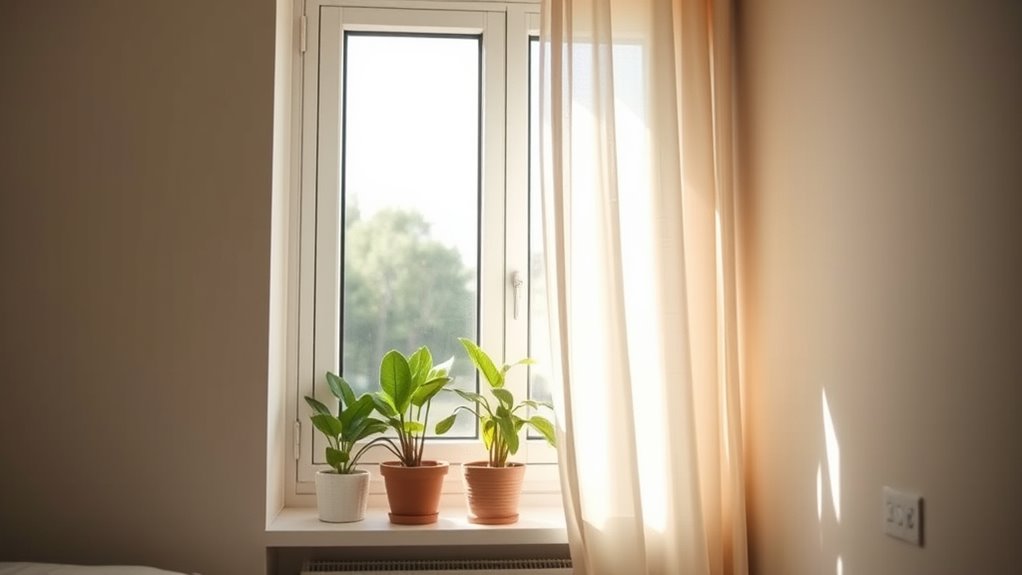
Proper ventilation is essential in small rooms to guarantee fresh air circulation and maintain a healthy environment. When you focus on good airflow, you reduce indoor pollutants, humidity, and odors, making the space more comfortable and healthier to stay in. One effective way to enhance ventilation is by understanding the air purifier benefits. An air purifier can notably improve air quality by filtering out dust, pollen, pet dander, and airborne germs. While it doesn’t replace the need for fresh air, using an air purifier in combination with proper ventilation boosts overall air cleanliness, especially in tight spaces where stale air can linger.
To maximize fresh air intake, paying attention to window placement strategies is vital. You want to position your windows in a way that promotes cross-ventilation. If possible, open windows on opposite sides of the room to create a natural airflow path. This setup allows fresh air to enter from one side and push out stale air through the other, effectively revitalizing the space. If your room has only one window, consider opening it wider or at different times of the day to catch the breeze. Also, think about the height of the windows—higher openings can draw in cooler, fresher air, while lower windows encourage warm, stale air to escape.
In small rooms, the placement of windows can make a measurable difference. For example, placing windows near the ceiling can help release hot, stagnant air, which naturally rises. Conversely, opening lower windows can bring in cooler outdoor air, especially in warmer months. Combining this with strategic window placement strategies enhances airflow without needing complex mechanical systems. Remember, even slight adjustments in how you open and close your windows can considerably improve air exchange.
In addition to window strategies, consider the position of your furniture and other obstructions. Keep pathways clear to allow air to circulate freely throughout the room. Using fans in tandem with open windows can also help direct airflow where you want it most, further improving ventilation. Just be cautious not to create drafts that make the space uncomfortable. Ultimately, your goal is to create a steady, gentle flow of air that replaces stale indoor air with fresh outdoor air, reducing pollutants and humidity levels.
As an affiliate, we earn on qualifying purchases.
Frequently Asked Questions
How Often Should I Ventilate My Small Room?
You should ventilate your small room at least 2-3 times a day to maintain good air quality. Opening windows for about 5-10 minutes each session allows fresh air to circulate and remove indoor pollutants. If the room feels stuffy or has odors, increase ventilation frequency. Regular airflow refreshes the space, helps prevent mold, and guarantees you breathe cleaner, fresher air throughout the day.
Can Plants Improve Ventilation in Small Spaces?
Think of your small room as a tiny forest, where plants act like natural air purifiers. Yes, they can improve indoor air quality by absorbing toxins and releasing oxygen, promoting natural airflow. I once kept a few peace lilies in my small apartment, and I noticed fresher air and fewer odors. While plants aren’t a complete ventilation solution, they enhance natural airflow, making your space healthier and more comfortable.
What Are the Best Window Types for Ventilation?
You should choose window options like casement, awning, or tilt-and-turn windows for ideal ventilation. These types open fully, allowing fresh air to enter and stale air to escape efficiently. During window installation, guarantee they are properly sealed to avoid drafts and leaks. Properly installed windows enhance airflow, making your small room more comfortable and ventilated. Always consult a professional to ensure the best fit and performance for your space.
Is Mechanical Ventilation Necessary for Small Rooms?
You might find that mechanical ventilation isn’t always necessary for small rooms, especially if you keep air quality and moisture control in check. Opening windows and using fans can effectively refresh the air and prevent dampness. However, if natural airflow is limited or humidity rises, installing a small ventilation system can guarantee comfort and prevent issues. Consider your room’s specific needs to decide the best approach for maintaining a healthy environment.
How Do I Reduce Drafts While Ventilating?
To reduce drafts while ventilating, you should focus on airflow optimization by opening windows gradually and on opposite sides of the room to promote gentle cross-ventilation. Use draft stoppers or weatherstripping around window frames to prevent cold air from entering. Additionally, keep vents or doors slightly open to allow for steady airflow without creating uncomfortable drafts. These steps help maintain fresh air while ensuring draft prevention.
As an affiliate, we earn on qualifying purchases.
Conclusion
So, next time you notice a stale smell or feeling stuffy, remember this simple trick. Opening a window and creating a gentle airflow can make all the difference, turning your small room into a fresh, comfortable space. It’s funny how a little ventilation can unexpectedly improve your day, isn’t it? Just a quick move, and suddenly, everything feels brighter and more breathable. Sometimes, the simplest solutions are right in front of you—just like this airflow trick.
As an affiliate, we earn on qualifying purchases.
air circulation fan for small rooms
As an affiliate, we earn on qualifying purchases.
As an affiliate, we earn on qualifying purchases.
Fall Picks
fall essentials
As an affiliate, we earn on qualifying purchases.