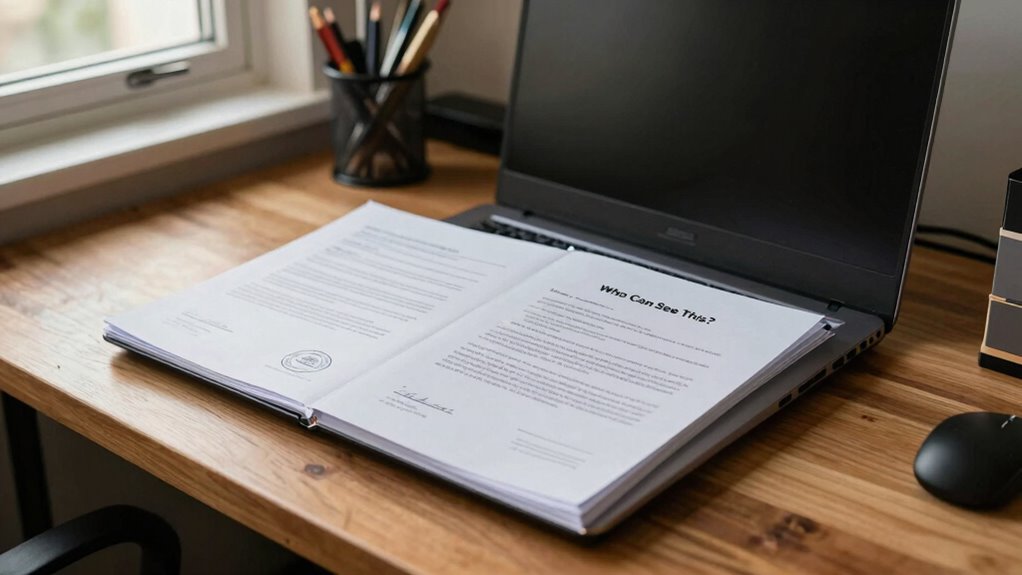

To follow the “Who Can See This?” rule, always ask yourself who needs access before sharing any home office document. Use password protection and encrypted folders to limit visibility, and set up individual user accounts on shared devices. Regularly review permissions, especially when projects end or team members change. Keep sensitive files secure and reinforce confidentiality routines. If you stay aware of these steps, you’ll better protect your privacy and data. Keep going for even more tips.
Open a free Amazon Business account
Business pricing, bulk buying and tax-exempt orders.
As an affiliate, we earn on qualifying purchases.
Key Takeaways
- Clearly define and restrict access based on each household member’s role and necessity.
- Use password protection and encryption to control who can open and view sensitive files.
- Regularly review and update sharing permissions, especially after project completion or personnel changes.
- Communicate the importance of respecting document boundaries and confidentiality routines.
- Maintain an awareness of security best practices to ensure ongoing protection of home office documents.
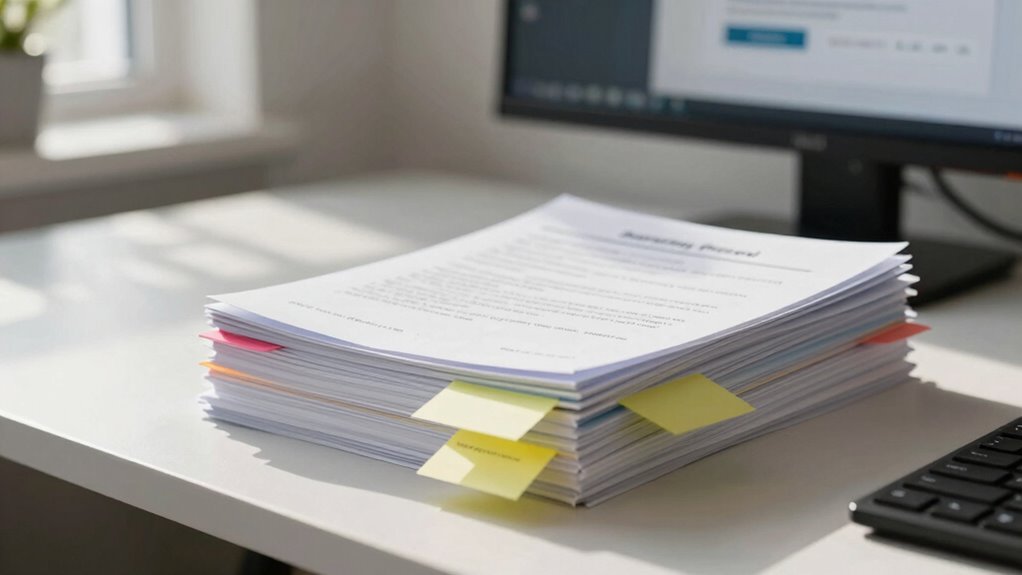
Have you ever stopped to contemplate who might see your home office documents? It’s easy to assume that your files are safe because you’re working from home, but in reality, your documents could be vulnerable if you don’t have proper safeguards in place. Implementing clear confidentiality protocols is essential to protect sensitive information from falling into the wrong hands. This means setting specific rules about who can access certain files and ensuring everyone in your household understands these boundaries. Without a structured approach, accidental disclosures or unauthorized access can happen, risking privacy breaches or data leaks.
The foundation of protecting your documents is access control. You need to determine who genuinely needs to see what and restrict access accordingly. For example, personal finances, client information, or work passwords should only be visible to you or trusted team members. Using password-protected files or encrypted folders adds an extra layer of security, making it much harder for anyone else to view sensitive content. You should also consider setting up separate user accounts or profiles on shared devices, so family members or roommates don’t unintentionally stumble upon confidential files. The goal is to minimize the number of people who can access your most sensitive information, thereby reducing risk.
Creating a habit of regularly reviewing your access controls is equally important. As your work evolves, so do your needs for confidentiality. If you share a device or collaborate with others remotely, you must revisit who has permissions and update them when necessary. For instance, if a project completes or a team member leaves, removing their access promptly prevents lingering vulnerabilities. Also, always be cautious when sharing documents via email or cloud services. Double-check permissions to confirm that only intended recipients can view or edit your files. By actively managing who can see what, you’re taking concrete steps toward safeguarding your information.
Beyond technical measures, establishing clear confidentiality protocols is vital. Communicate with everyone in your household about the importance of respecting document boundaries. Set rules such as keeping work files on secure drives, not leaving sensitive documents open on your screen, and locking your device when you step away. These simple yet effective practices reinforce your access control policies and help maintain a secure environment. Additionally, understanding the importance of content security can further enhance your protection strategies. Remember, the “Who Can See This?” rule isn’t just about technology; it’s about cultivating awareness and responsibility around your home office’s confidentiality. When you stay vigilant and consistent, you protect your data and maintain your professional integrity. Moreover, staying informed about security best practices can help you adapt to new threats as they emerge. Incorporating a security mindset into your daily routine ensures ongoing protection and resilience against potential breaches.
password protected encrypted folders
As an affiliate, we earn on qualifying purchases.
As an affiliate, we earn on qualifying purchases.
Frequently Asked Questions
How Do I Implement the “Who Can See This?” Rule Effectively?
To implement the “who can see this?” rule effectively, start by clearly labeling each document with access permissions based on sensitivity. Regularly conduct access audits to guarantee only authorized individuals view sensitive information. Use document labeling to categorize files, and set permissions accordingly. Consistently review and update access controls, and keep a log of access audits to monitor who’s viewing what, ensuring your documents stay secure.
What Types of Documents Require Strict Access Control?
Some documents are so sensitive, they could cause chaos if leaked—think of it as a digital wildfire. You need strict access control for top-secret files, confidential client data, financial reports, and legal documents. Use document classification to categorize these files and establish clear access hierarchies. This guarantees only authorized people can view or modify them, safeguarding your business from data breaches and maintaining trust.
Can I Share Sensitive Documents With Colleagues Securely?
Yes, you can share sensitive documents securely with colleagues. Use document encryption to protect the files during transfer, ensuring only authorized people can access the content. Additionally, rely on strong password management—set unique, complex passwords and share them securely, perhaps through a password manager. This combined approach safeguards your documents from unauthorized access, maintaining confidentiality and compliance with your organization’s security policies.
What Are Common Mistakes When Applying This Rule?
You might overlook key mistakes, like neglecting proper document labeling or skipping permission audits, which can lead to accidental disclosures. While it’s tempting to assume access is correct, misapplied labels and outdated permissions create vulnerabilities. Double-check labels for clarity and regularly conduct permission audits. These steps guarantee you’re accurately controlling who can see sensitive information, avoiding common pitfalls that compromise your document security.
How Often Should Access Permissions Be Reviewed?
You should conduct an access review at least quarterly to guarantee permissions stay current. Regularly updating permissions helps prevent unauthorized access and maintains data security. During these reviews, check for outdated or unnecessary permissions and make permission updates as needed. By staying proactive with access reviews, you reduce the risk of sensitive information exposure, ensuring only the right people see the right documents at the right time.
home office document security software
As an affiliate, we earn on qualifying purchases.
As an affiliate, we earn on qualifying purchases.
Conclusion
Think of your home office like a treasure chest. Only share your most valuable documents with trusted allies, and keep the rest safely locked away. The “Who Can See This?” rule is your map, guiding you through the maze of sharing. With careful attention, you guarantee your secrets stay safe, and your work remains secure. Remember, you’re the captain of this ship—navigate wisely, and your digital treasures will stay protected on your journey.
As an affiliate, we earn on qualifying purchases.
confidential document privacy protection
As an affiliate, we earn on qualifying purchases.
As an affiliate, we earn on qualifying purchases.
NFL season / tailgating Picks
team gear
As an affiliate, we earn on qualifying purchases.