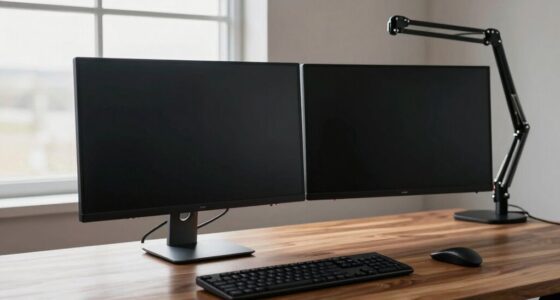
To prevent friction in a shared room with two workstations, carefully arrange the layout by placing barriers like low partitions or shelves to create personal space, and position desks at opposite ends or along different walls for privacy. Use ergonomic furniture and proper lighting to boost comfort, and keep clutter minimal with smart storage solutions. Balancing shared resources with private zones helps maintain harmony—continue exploring these strategies to optimize your workspace effectively.
Key Takeaways
- Position workstations at opposite ends or along different walls to minimize visual and auditory distractions.
- Incorporate physical barriers like low partitions or plants to create personal privacy without feeling cramped.
- Ensure adequate space for movement and easy access to shared resources, reducing clutter and friction.
- Use adjustable furniture and monitor placements aligned with ergonomic principles for comfort and focus.
- Design the layout to facilitate quick breaks and seamless communication, balancing privacy with collaboration.

Setting up two workstations in one room can boost productivity and save space, but it requires thoughtful planning. To make this arrangement work smoothly, you need to focus on creating an ergonomic setup that supports comfort and efficiency for both users. An ergonomic setup involves choosing the right desk height, adjustable chairs, and monitor placement to prevent strain and fatigue. When designing each station, think about individual needs—some people work best with a standing desk, others prefer a traditional seated position. Proper ergonomics not only increase comfort but also reduce the risk of long-term musculoskeletal issues. This means ensuring each workstation has enough space for movement and that essential equipment like keyboards, mice, and screens are positioned at appropriate heights and distances. Additionally, understanding ergonomic principles can help you optimize each space for comfort and health.
Privacy solutions are equally important when sharing a room. Without proper separation, distractions and interruptions can lower focus and productivity. Incorporate physical barriers like low partitions, bookshelves, or plant dividers to create a sense of personal space without making the room feel cramped. These barriers help minimize visual and auditory distractions, allowing each person to concentrate on their tasks. Additionally, consider layout options that position workstations at opposite ends of the room or along different walls. This arrangement can provide natural privacy and make it easier to take quick breaks without disturbing each other. You might also use acoustic panels to absorb sound and dampen noise, especially if the room is noisy or shared with others.
Lighting plays a key role in an effective dual workstation setup. Natural light is ideal, so position desks near windows if possible. Supplement this with task lighting, such as adjustable desk lamps, to ensure each station is well-lit, reducing eye strain. Keep in mind that clutter can quickly diminish the effectiveness of a shared space, so implement smart storage solutions that keep personal and work-related items organized and out of sight. Filing cabinets, under-desk drawers, or wall-mounted shelves can help maintain a clean environment and prevent distractions.
Lastly, communication and shared resources should be straightforward. Use clear signage or designated areas for common supplies to prevent confusion. Regularly check in with each other to adjust the setup for comfort and privacy. When planned carefully, two workstations in one room can function seamlessly, fostering collaboration without friction and maximizing your space.

TRALT Office Chair – Ergonomic Desk Chair with Adjustable Lumbar Support, Mesh Computer Chair, Executive Chairs for Home Office Comfortable Lumbar Support (Black)
Ergonomic Office Chair: Experience unparalleled support with our ergonomic office chair, designed to provide comprehensive assistance for your…
As an affiliate, we earn on qualifying purchases.
As an affiliate, we earn on qualifying purchases.
Frequently Asked Questions
How Can Noise Be Minimized Between the Two Workstations?
To minimize noise between the two workstations, you should implement soundproofing measures like installing acoustic panels. These panels absorb sound waves, reducing the transfer of noise. Position them strategically on shared walls and ceilings. Additionally, consider using soft furnishings and acoustic partitions to further dampen sound. These steps create a quieter environment, helping you focus and reducing distractions for both workstations.
What Are the Best Lighting Options for Shared Workspaces?
Did you know that proper lighting can boost productivity by up to 20%? For your shared workspace, opt for a combination of task lighting and ambient lighting. Task lights focus directly on work surfaces, reducing eye strain, while ambient lighting provides overall brightness that creates a comfortable environment. Using adjustable desk lamps alongside soft overhead lights guarantees both clarity and mood, helping you stay focused and comfortable throughout the day.
How to Ensure Privacy in an Open Room With Two Stations?
To guarantee privacy in an open room with two stations, you should use privacy screens to create visual boundaries and soundproof panels to reduce noise. Place privacy screens strategically around each workstation to block sightlines, and install soundproof panels on walls or ceilings to dampen sound. This setup helps maintain focus and confidentiality, making each workspace feel more private without sacrificing the open layout’s collaborative feel.
What Ergonomic Considerations Are Important for Dual Workstations?
Your workspace should be a fortress of comfort, so prioritize ergonomic details. Adjust your desk height so your elbows stay at a 90-degree angle, preventing strain. Choose chairs with proper lumbar support, ensuring your back stays aligned and relaxed. Remember, ergonomic perfection isn’t a myth; it’s about creating a balanced environment where your body can work effortlessly and stay healthy, even during long hours at dual workstations.
How Should Storage Be Organized to Avoid Clutter and Confusion?
You should organize storage using efficient solutions like labeled bins, shelves, and drawer dividers to keep clutter control tight. Keep frequently used items within arm’s reach and store less-used materials elsewhere. Regularly declutter and clean your space to prevent confusion. Implement clear labels so you and others can quickly find what’s needed, ensuring a smooth workflow without unnecessary distractions or delays.

XMYHSLO Double Desk for Two People,Two-Person Desk with Partition 47 Inch, Complete Workstation Computer Desk,for Home Office-Black
★【Dual Work Space】: The dual workstation leaves enough space for two people. Study, play games, and work together…
As an affiliate, we earn on qualifying purchases.
As an affiliate, we earn on qualifying purchases.
Conclusion
By arranging your workstations thoughtfully, you create a space where collaboration flows smoothly, like two rivers converging without turbulence. This layout becomes a bridge, symbolizing connection over conflict. When friction is minimized, productivity and harmony flourish, turning your room into a sanctuary of seamless teamwork. Remember, the right setup isn’t just furniture; it’s the foundation that transforms a shared space into a shared purpose. Embrace this balance, and watch your workspace become a beacon of cooperation.

HUANUO Dual Monitor Stand – Full Adjustable Monitor Desk Mount Swivel Vesa Bracket with C Clamp, Grommet Mounting Base for 13 to 32 Inch Computer Screens – Each Arm Holds 4.4 to 19.8lbs – White
Compatibility: To ensure compatibility with the dual monitor mount, your each monitor must meet three conditions at the…
As an affiliate, we earn on qualifying purchases.
As an affiliate, we earn on qualifying purchases.

OLIXIS 5 Drawer Mobile File Cabinet Under Desk Storage Organization with Wheels Vertical Filing Chest Rolling Wood Small Desk Printer Stand for Home Office, 15.75"D x 18.74"W x 25.39"H, Black
【Spacious & Versatile Storage】: Organize effortlessly with our 7-drawer file cabinet, offering large capacity to declutter your space….
As an affiliate, we earn on qualifying purchases.
As an affiliate, we earn on qualifying purchases.