TL;DR

Get comfort and recovery gear delivered free with Prime
- Fast, free delivery on millions of items
- Prime Video, Amazon Music and more included
- Member-only deals all year
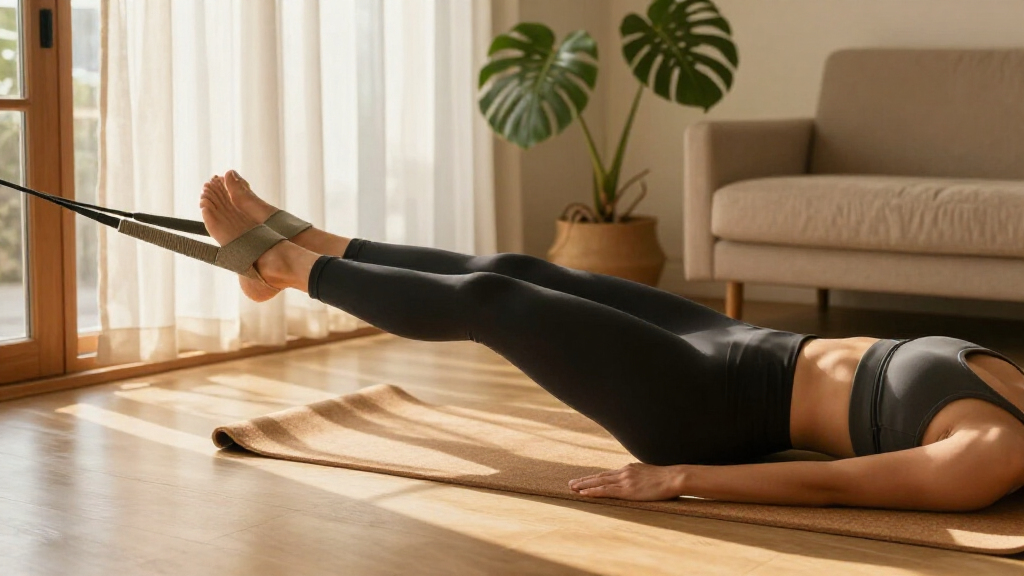
Fit&Well published a five-move Pilates leg workout that can be done at home without squats or ankle weights. The sequence uses two rounds of 8 to 12 repetitions per side; its instructor says the exercises work the legs and glutes, but the report does not provide independent evidence of specific results.
Fit&Well has published a five-move Pilates leg workout designed for people seeking a lower-body routine without squats. The sequence, attributed to Pilates instructor Lottie Anderson, founder of London studio Bondi Rise, consists of floor-based movements done for two rounds of 8 to 12 repetitions per side; ankle weights are optional, according to the report.
The exercises are the horse kick, rainbow kick, hamstring extension, kneeling lift and lower, and kneeling side kick. The first three begin on hands and knees, with wrists under shoulders and knees under hips. They involve lifting or moving one leg while keeping the torso and pelvis as steady as possible. The final two move into a supported kneeling side-plank position to work one leg at a time.
Fit&Well’s instructions call for two rounds of 8 to 12 repetitions on each side for every movement. For the horse kick, lift a straight leg behind you to hip height. The rainbow kick sweeps the raised leg in an arc from one side to the other. In the hamstring extension, bend the knee to draw the heel toward the glutes, then straighten the leg; the report advises keeping the thigh lifted throughout.
For the kneeling lift and lower, raise the top leg until it is parallel with the floor, then lower it to tap the floor and lift again. For the side kick, extend the leg in line with the hips, draw the knee toward the chest and extend it again. Anderson uses ankle weights to increase resistance, but the report says they are not required. It does not specify rest periods, total workout duration or equipment beyond the optional weights and a mat.
A Squat-Free Route to Leg Training
The routine is presented as an alternative for people who find squats uncomfortable or unsuitable. Fit&Well notes that limited ankle mobility, tight hamstrings, balance problems or tender joints can make squatting difficult. The five exercises are performed on the floor or in a supported kneeling position, although the report does not establish that they will be comfortable or appropriate for everyone.
Anderson says the sequence works the glutes and hamstrings, while some movements also engage the core to stabilize the body. She describes leg and glute strength as useful for everyday tasks such as getting up from the floor, climbing stairs and carrying a child. These are her rationale for the workout; the source does not report a trial or measured outcomes showing how much strength participants gain from this particular sequence.
The article provides a repetition count for a routine that can be done at home without specialized equipment. It says readers can perform the movements without ankle weights or use them to add resistance. The report does not provide modifications for people who cannot kneel or bear weight through their wrists.
Popular right now

Ninja Luxe Café Mini Plus Espresso and Drip Coffee Machine with AutoFroth, Stainless Steel (ES351)

Apple AirPods Max 2 Wireless Over-Ear Headphones – Midnight

Vitamix Propel Series 750 Professional-Grade Blender, 4 Programs, Black
As an affiliate, we earn on qualifying purchases.
Why the Routine Skips Squats
Squats are one option for lower-body exercise, but they are not the only way to train the legs. The Fit&Well report presents this sequence as an option for people who find squats uncomfortable, citing mobility, balance and joint tenderness as possible barriers. It does not claim that everyone who has difficulty squatting should replace squats with Pilates, or that the five movements address a particular injury or condition.
Anderson’s comments about the role of the glutes provide the article’s explanation for emphasizing these muscles. She says they help stabilize the pelvis and support movement around the lower back and knees. The source presents these points as the instructor’s explanation, not as findings from research supplied with the workout. The article’s specific contribution is the five-exercise sequence and its repetition guidance, rather than new research or a formal fitness recommendation.
“Your legs carry you through everything.”
— Lottie Anderson, Pilates instructor and founder of Bondi Rise, quoted by Fit&Well
Limits of the Published Guidance
The source does not give a publication date, explain how the routine was developed or cite testing that compares it with squats or other leg workouts. It also does not report participant outcomes, expected strength gains, a suggested schedule, rest periods or a total time to complete the sequence. Claims about muscle involvement and everyday benefits are attributed to Anderson and should not be read as guaranteed results.
Fit&Well’s instructions offer little detail on adapting the moves for different abilities. In particular, they do not say what to do if kneeling, supporting the body on the hands or holding a side-plank position causes discomfort. The report does not address injury management or advise readers with existing health concerns on whether the workout is suitable.
How Readers Can Approach the Sequence
The report does not announce a follow-up study, class or additional guidance. It gives a dose of two rounds of 8 to 12 repetitions per side and says ankle weights are optional. The source does not specify how often to repeat the workout, so no weekly schedule can be attributed to it.
People who experience pain, have a pre-existing condition or are unsure whether kneeling and wrist-supported movements are suitable can seek advice from a qualified health or fitness professional before trying the sequence. The source provides no updates, modifications or further evidence about results.
Key Questions
What are the five exercises in the Pilates leg workout?
The Fit&Well sequence includes horse kicks, rainbow kicks, hamstring extensions, kneeling lifts and lowers, and kneeling side kicks.
How many repetitions does the routine prescribe?
The instructions call for two rounds of 8 to 12 repetitions per side for each exercise.
Do you need ankle weights?
No. Anderson uses ankle weights to make the movements harder, but Fit&Well says they are optional.
Does the report show that this routine builds strength?
The report describes the exercises as a way to work the legs and glutes, but it does not provide a study, measured results or a specific estimate of strength gains.
Is the workout suitable for people who have pain or mobility limits?
The article presents the routine as an alternative for people who find squats difficult, but it does not give individual medical guidance or modifications for all mobility limits. Anyone with pain or a pre-existing condition can ask a qualified professional whether the movements are suitable.
Source: fitandwell.com