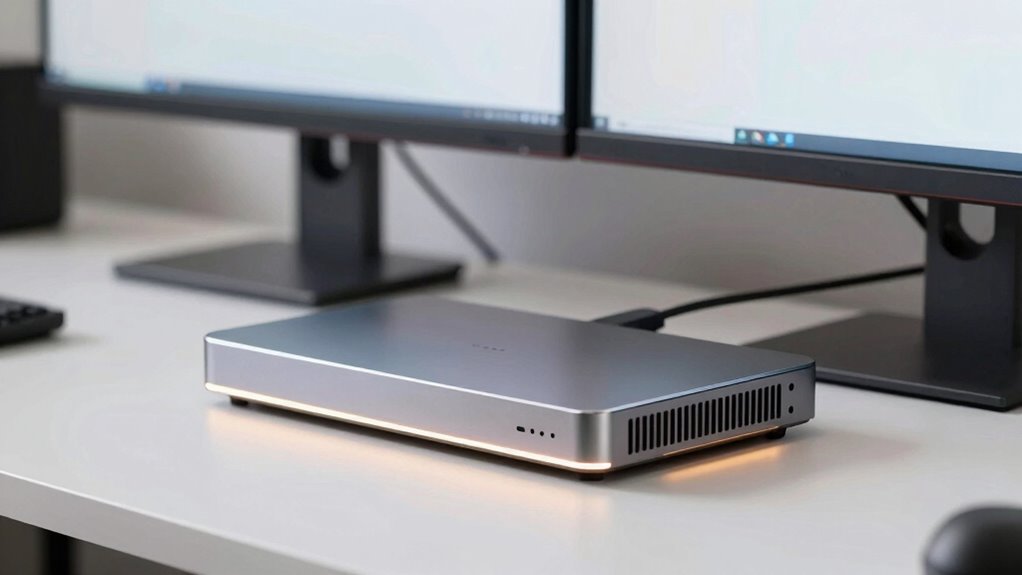
Your dual-monitor dock might run hot because it handles heavy data transfer, powers multiple devices, and manages complex components like chipsets and charging circuits, all generating heat. This is normal during high-demand use and indicates the dock is working hard. Factors like poor airflow, cluttered workspace, or direct sunlight can make it feel hotter. To keep it cool and perform well, you’ll want to optimize placement and airflow—more tips await if you keep exploring.

Get comfort and recovery gear delivered free — and shop member deals
- Fast, free delivery on millions of items
- Access to Prime Big Deal Days deals on October 6–7
- Prime Video, Amazon Music and more included
Key Takeaways
- Heavy workload from multiple monitors and peripherals increases internal component activity, raising heat levels.
- Poor workspace organization restricts airflow and traps heat, causing elevated dock temperatures.
- Placement in poorly ventilated or cramped areas impedes heat dissipation, leading to overheating.
- Regular maintenance and monitoring help prevent overheating and ensure optimal thermal performance.
- Persistent high temperatures may indicate a need for additional cooling or setup adjustments to avoid hardware damage.
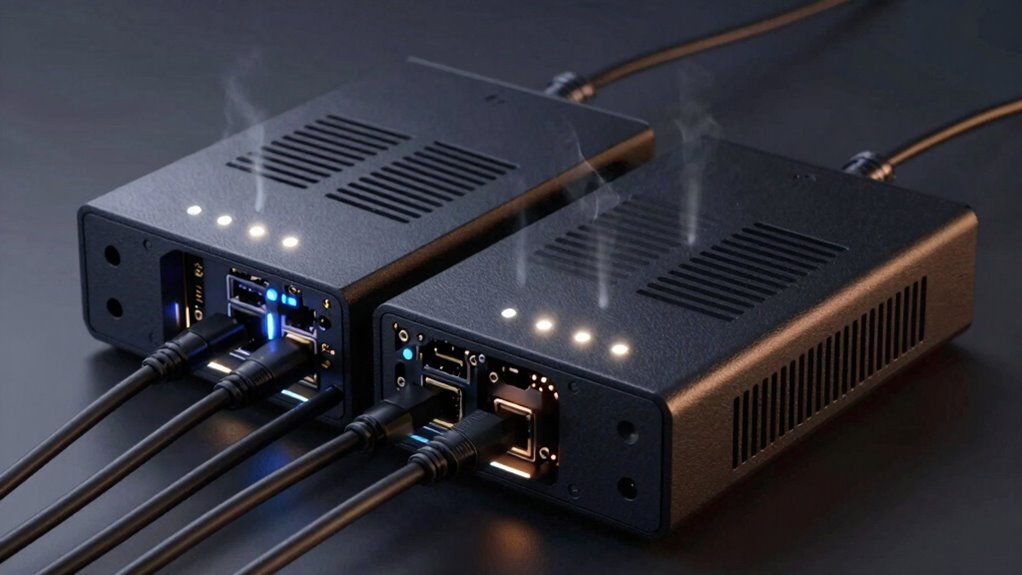
If you’ve ever noticed your dual-monitor dock feeling unusually hot, you’re not alone. Many users experience this, especially when setting up their workspace for maximum productivity. The heat buildup often points to the dock working harder than it should, which can be caused by various factors. One common reason is the device’s internal power and data transfer workload. When multiple monitors are connected, along with peripherals and other accessories, the dock’s components—such as the chipset and charging circuits—generate more heat. This isn’t necessarily a sign of malfunction, but it does warrant some attention to guarantee your setup remains safe and efficient.
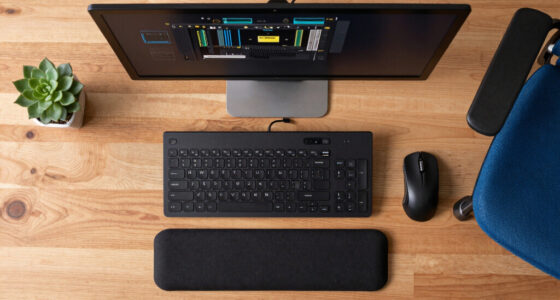
Your choice of an ergonomic setup plays a crucial role here. A cluttered workspace with poor cable management can lead to restricted airflow around your dock. When cables are tangled or overlapping, they can trap heat, preventing proper dissipation. Conversely, an organized setup with clear pathways for air circulation helps keep temperatures in check. Using cable management tools like clips, sleeves, or under-desk trays can make a significant difference. When cables are streamlined, not only does your workspace look cleaner, but your dock also stays cooler, reducing the risk of overheating.
It’s also worth considering where you position your dock. Placing it in a well-ventilated area, away from direct sunlight or heat sources, helps prevent excessive temperature build-up. Avoid stacking other electronic devices directly on top of or near your dock, as they can contribute to increased heat. Additionally, make certain your workspace isn’t overly cramped, which can restrict airflow and cause components to run hotter. Proper placement combined with good cable management creates an environment where your dual-monitor dock can operate safely, even under heavy use. Regularly monitoring your device’s thermal performance and cleaning dust from vents can further help in maintaining optimal temperatures.
While some heat is normal, continuous overheating can lead to performance issues or hardware failure over time. If your dock consistently feels very hot, even after optimizing your setup, consider using a cooling pad or an external fan to assist with heat dissipation. Regularly updating your device drivers and firmware can also improve energy efficiency, reducing unnecessary strain on the hardware. Ultimately, maintaining an ergonomic setup with proper cable management isn’t just about comfort—it’s about protecting your equipment. When your workspace is organized and well-ventilated, your dual-monitor dock can function smoothly, keeping your productivity high without risking damage from excessive heat.
As an affiliate, we earn on qualifying purchases.
Frequently Asked Questions
Can Overheating Damage My Dual-Monitor Dock Permanently?
Yes, overheating can damage your dual-monitor dock permanently. When thermal management fails, heat builds up, potentially harming internal components and reducing device longevity. Over time, excessive heat may cause malfunctions or complete failure. To protect your dock, guarantee proper airflow, avoid blocking vents, and keep it clean. Regularly monitoring temperatures and addressing overheating issues promptly helps maintain peak performance and extends your device’s lifespan.
Are There Specific Brands More Prone to Overheating?
Some brands are more prone to overheating because of lower brand reliability and inadequate heat resistance. Less reputable brands often cut corners on quality, leading to poor heat dissipation. You should prioritize well-known brands with strong track records for thermal management. By choosing a dock built with good heat resistance and reliable components, you reduce overheating risks and guarantee your device stays cool and performs at its best over time.
How Often Should I Clean My Dock to Prevent Heat Buildup?
You should clean your dock every three to six months to prevent heat buildup. Follow a regular cleaning schedule, using a soft cloth and compressed air to remove dust and debris that can block ventilation. Additionally, guarantee proper ventilation by placing your dock in a well-ventilated area and avoiding obstructions. These ventilation tips help maintain ideal airflow, reducing overheating risks and keeping your dual-monitor dock running smoothly.
Does Using Multiple Peripherals Increase the Risk of Overheating?
Ever wonder if more peripherals mean more heat? Using multiple peripherals can increase the load on your dock’s power and heat dissipation systems, potentially raising the risk of overheating. When you connect many devices, the dock works harder, generating more heat. To prevent this, make certain proper ventilation, avoid overloading the dock’s power capacity, and clean regularly. Managing peripheral power and heat dissipation keeps your setup running smoothly.
Can Placing the Dock in a Different Location Reduce Heat Issues?
Yes, placing your dock differently can reduce heat issues. Use effective placement strategies by keeping it in a well-ventilated area away from direct sunlight or heat sources. Elevate the dock slightly to improve airflow underneath and avoid clutter around it. Ventilation improvements help dissipate heat more efficiently, preventing overheating. Regularly clean dust from vents and ensure surrounding space allows for proper airflow, keeping your dock cool and functioning at its best.
cable management tools for monitors
As an affiliate, we earn on qualifying purchases.
As an affiliate, we earn on qualifying purchases.
Conclusion
So, next time your dual-monitor dock feels like a mini heater, remember it’s a sign of how much power it’s handling. Just like a busy highway, it’s working overtime to keep everything running smoothly. While some warmth is normal, keep an eye on it to avoid overheating. After all, your device’s health is the foundation of your productivity—don’t let it burn out before its time. Stay cool, and keep your setup running seamlessly.
As an affiliate, we earn on qualifying purchases.
external cooling pad for docking station
As an affiliate, we earn on qualifying purchases.
As an affiliate, we earn on qualifying purchases.
Halloween Picks
halloween
As an affiliate, we earn on qualifying purchases.