
After you request a replacement, the RMA process kicks off with a product inspection to verify any defect or issue. The team checks if your item matches your original purchase and meets return criteria. Once confirmed, they coordinate to ship a replacement, often providing tracking info and return instructions. During this process, updates are sent to keep you informed. If you’re curious about the full steps, there’s more to uncover as you explore further.
Key Takeaways
- The return request triggers a product inspection to verify defects or issues before approval.
- If approved, the defective product is confirmed, and a replacement is prepared for shipment.
- Customers receive updates on the return and shipping process, including tracking information.
- The item is securely packaged and shipped via a courier, often with instructions for returning the faulty product.
- Additional quality checks may be performed on returned items to ensure proper handling and prevent fraud.
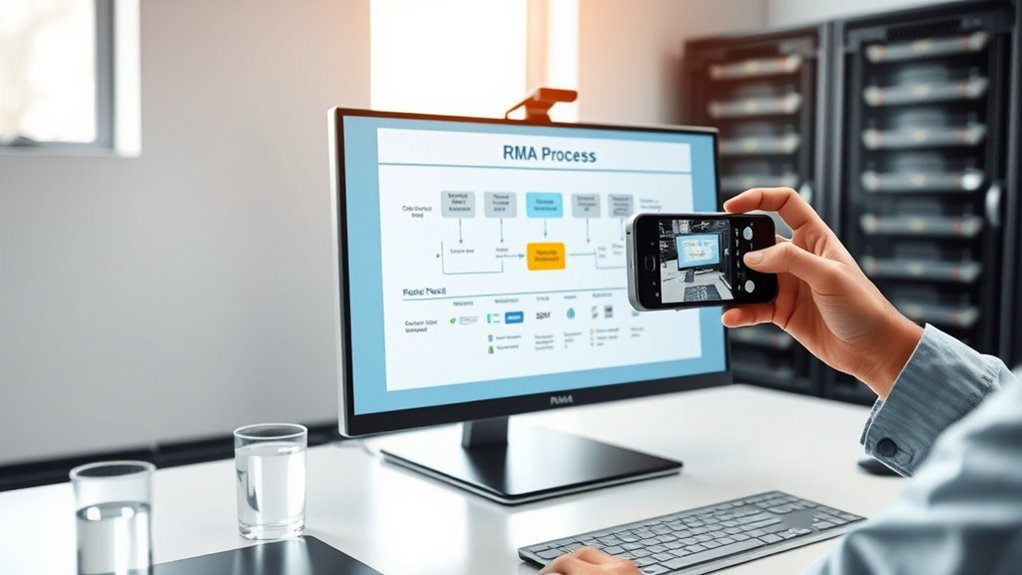
Ever wondered how companies handle defective products or returns? When you submit a return request, the process often begins with a thorough product inspection. This step is vital because it helps determine whether the item is truly defective or damaged due to mishandling. During product inspection, trained technicians evaluate the product for specific issues, such as manufacturing defects, functional failures, or physical damage. They also verify that the returned item matches the original purchase details and meets the criteria for a return or replacement. This step guarantees the company maintains quality control and prevents fraudulent claims.
Product inspection ensures quality control and prevents fraudulent returns by verifying issues and matching purchase details.
Once the product passes inspection and is confirmed to be defective, the company moves on to the shipping procedures for your replacement. Shipping procedures are carefully coordinated to guarantee a smooth and efficient exchange. After approval, the company ships out the replacement item, often using a tracking-enabled courier service. Depending on the company’s policies, they may send the replacement immediately or after receiving the defective product. Many companies also include instructions or prepaid labels for returning the faulty item, streamlining the process for you.
Throughout this process, communication is key. You might receive updates via email or through a customer portal, informing you about the status of your return and replacement. Some companies also provide estimated delivery dates for the replacement, so you’re kept in the loop. The shipping procedures are designed to protect both the customer and the company; they involve secure packaging to prevent further damage during transit and clear instructions to guarantee the returned product is sent back correctly. Sometimes, the company may also perform additional quality checks on the returned product before approving the replacement, especially if the defect isn’t immediately apparent.
The entire process is aimed at making your experience seamless and transparent. From the moment you recognize a defect to the arrival of your new product, each step—product inspection and shipping procedures—is set up to minimize delays and ensure you get a functional replacement quickly. Companies want to maintain customer trust, so they invest in efficient logistics and quality checks. This way, you’re not left in the dark and can enjoy peace of mind knowing that your return is being handled professionally. In the end, understanding these steps helps you know what to expect and how your defective product is dealt with, making the RMA process less frustrating and more straightforward.
Top picks for "proces explain happen"
Open Amazon search results for this keyword.
As an affiliate, we earn on qualifying purchases.
Frequently Asked Questions
How Long Does the Entire RMA Process Typically Take?
The entire RMA process usually takes about 1 to 3 weeks, depending on warranty coverage and repair turnaround times. Once you submit your request, it can take a few days for approval and shipping. After the item arrives at the repair center, turnaround times vary, but most repairs are completed within a week. Keep in mind, delays can happen if parts are unavailable or if additional diagnostics are needed.
Are There Any Fees Involved in Requesting an RMA?
Generally, there are no fees involved when requesting an RMA if your item falls under the return policies and warranty coverage. Companies often cover the costs for repairs or replacements during the warranty period. However, some return policies may charge a restocking fee if the item isn’t defective. Always check your warranty coverage and return policies beforehand to understand any potential charges and guarantee a smooth RMA process.
Can I Expedite the RMA Shipping Process?
Think of your RMA as a fast lane for your replacement. You can expedite the shipping process to bypass delays, ensuring your item reaches you sooner. Contact the support team to request expedited options, but keep in mind that shipping delays might still occur. Acting swiftly and choosing expedited shipping can help you reclaim your peace of mind, turning a potential obstacle into a smooth, swift journey toward resolution.
What Should I Do if My RMA Is Rejected?
If your RMA is rejected, first review the product warranty to understand coverage limits. Then, contact customer support to clarify the rejection reason and explore possible solutions. Be prepared to provide proof of purchase or additional information. Staying proactive helps you resolve the issue efficiently. Customer support can guide you through next steps, whether that’s repairing, replacing, or seeking further assistance based on your warranty terms.
Is It Possible to Track My Replacement Shipment?
Yes, you can track your replacement shipment. Once your RMA is approved and the shipment is dispatched, you’ll receive tracking updates via email or your account dashboard. You should regularly check the shipment status through the provided tracking number. This way, you stay informed about its progress, estimated delivery date, and any delays, ensuring you’re always aware of where your replacement is during transit.
Conclusion
Now that you know the ins and outs of the RMA process, you’re better equipped to handle your replacement request smoothly. Remember, staying patient and following the steps guarantees things go as planned. Don’t put all your eggs in one basket—trust the process and give it time. With a little patience and persistence, you’ll be back up and running before you know it. After all, good things come to those who wait.